
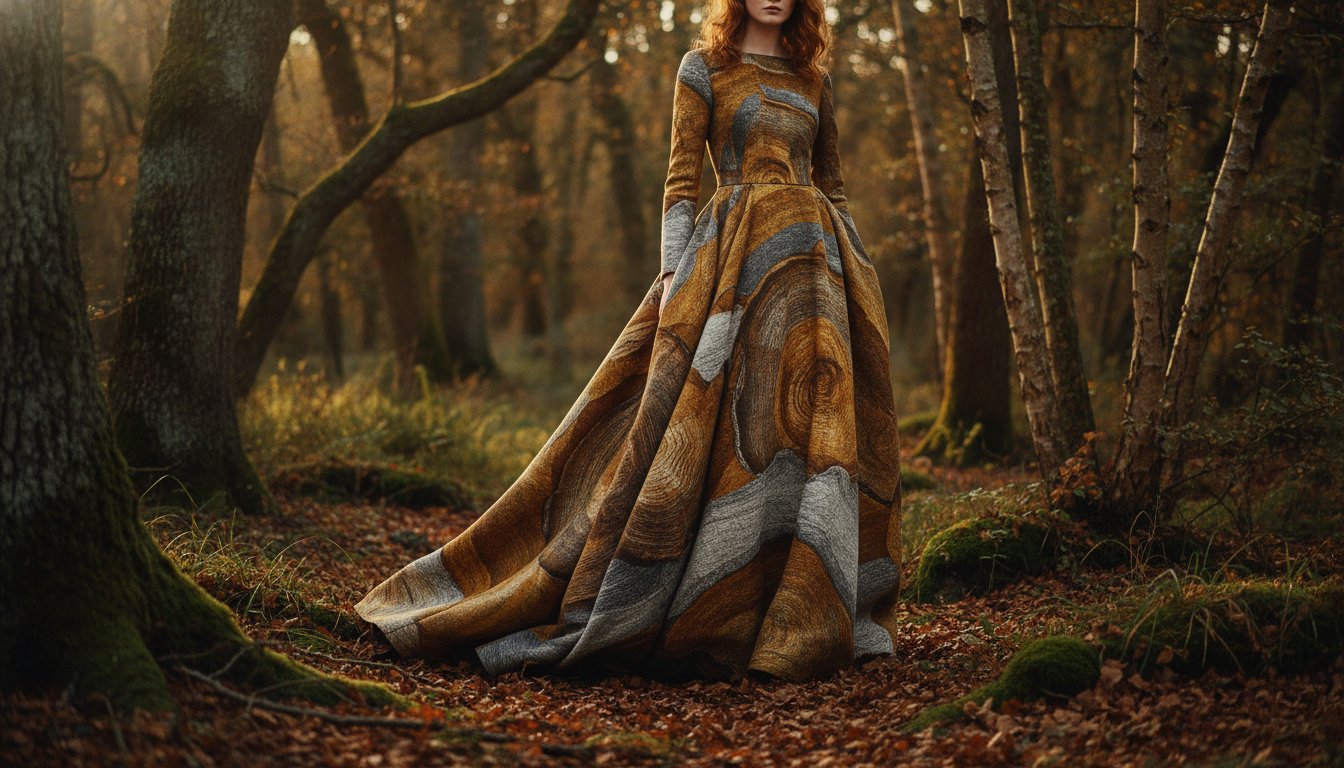
What if the clothes you wore didn't just depict the forest, but actually carried its literal heartbeat? Many of us share a quiet frustration with the high street, where woodland print clothing often leans into repetitive, kitsch motifs that feel far removed from the damp earth and ancient bark of the actual woods. It's difficult to find pieces that resonate with the true spirit of the British landscape whilst remaining genuinely sustainable. We're going to show you how woodland fashion is evolving into a more soulful, texture-driven movement for 2026. This shift prioritises the raw beauty of timber and the intricate stories found in tree rings over generic animal patterns. By the end of this piece, you'll understand the transition towards abstract woodland textures and how to find unique, artisanal alternatives that reflect a genuine connection to the earth. We'll explore the journey from the forest floor to your wardrobe, ensuring your style reflects a deep reverence for the life cycle of the trees amongst us.
Key Takeaways
- Understand the 2026 shift from literal animal motifs to biophilic textures that mirror the intricate patterns of the forest floor.
- Discover why modern woodland print clothing uses direct tree-ring impressions to create a unique "living history" for every garment.
- Learn practical ways to layer organic prints with natural fibres like wool and linen for a tactile, artisanal aesthetic.
- Explore the vital link between ethical, small-batch production and the long-term conservation of British timber and woodlands.
- Recognise why soulful, nature-driven designs offer a more enduring and authentic alternative to mass-produced high-street fashion.
The Evolution of Woodland Print Clothing: From Motifs to Textures
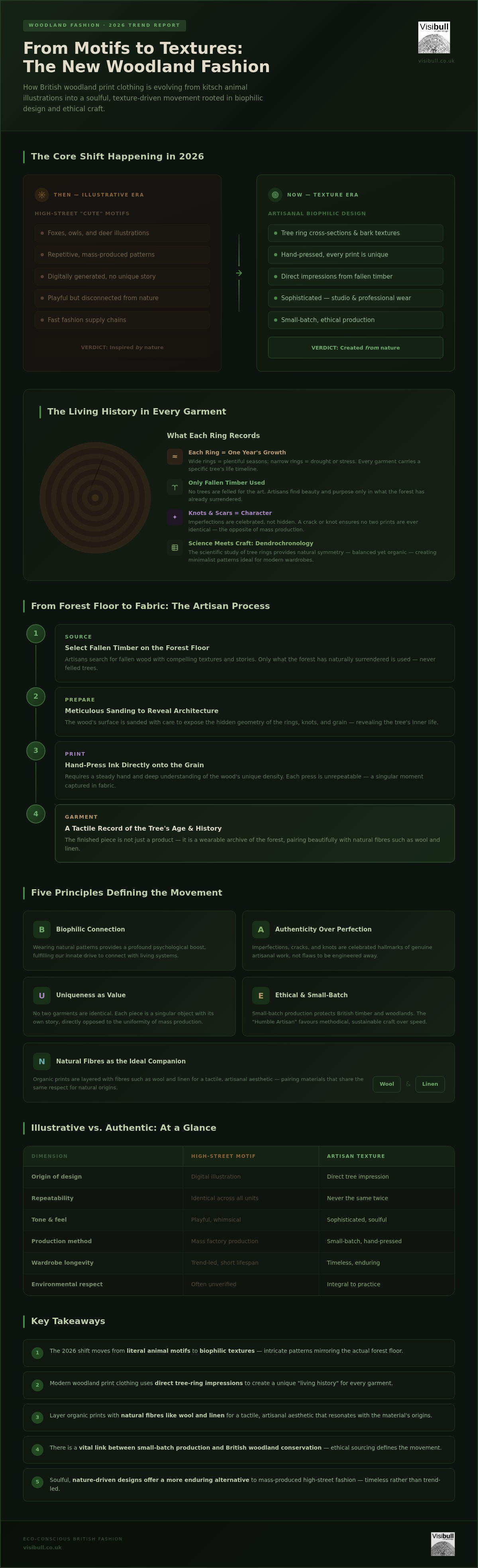
For years, woodland fashion has been synonymous with charming but literal illustrations of wildlife. We've seen an abundance of foxes, owls, and deer adorning high-street fabrics. However, 2026 marks a significant departure from these illustrative motifs. The trend is shifting towards something more visceral and grounded; the organic, abstract impressions of the forest itself. This movement prioritises the raw texture of bark and the intricate geometry of tree rings, offering a more sophisticated way to express our connection to the outdoors. The "Humble Artisan" persona is driving this change across the UK, favouring the methodical execution of hand-pressed prints over mass-produced, repetitive patterns.
The Rise of Biophilic Design in Apparel
Biophilia describes our innate tendency to seek connections with nature and other forms of life. In our increasingly urbanised lives, wearing natural patterns provides a subtle but profound psychological boost to our well-being. Whilst a picture of a fox might feel playful, a print taken directly from the cross-section of a fallen oak offers a deeper, tactile connection to the forest floor. Consumers in 2026 are looking for more than just clothing "inspired by" nature; they want garments "created from" the literal history of the timber. This shift reflects a desire for authenticity, where the fabric carries the weight and texture of the environment it represents.
Moving Beyond the "Cute" Woodland Aesthetic
The "cute" woodland aesthetic, dominated by whimsical animal characters, is slowly receding into a niche sub-culture. In its place, a more mature and artistic approach to woodland print clothing is emerging, suitable for both the creative studio and the professional wardrobe. These sophisticated designs focus on the "how" and "why" of creation, highlighting the unique life story of a specific tree. Every knot, scar, and ring tells a tale of growth and survival, turning a simple garment into a piece of wearable history. Woodland print clothing is a medium for forest storytelling that transforms the tactile history of timber into a wearable narrative.
By moving away from kitsch representations, we're finding a new way to appreciate the lifecycle of our woodlands. It's a transition from looking at nature to feeling a part of it. This evolution ensures that our wardrobe choices reflect a genuine reverence for the natural world, prioritising the quiet strength of the woods over fleeting, mass-market perfection.
The Art of the Impression: How Tree Ring Designs Redefine the Trend
The shift towards organic textures is more than a stylistic choice; it's a technical feat of patience and reverence. While digital recreations might offer a clean, repeatable pattern, they lack the soul found in a physical impression. When we take a print directly from the cross-section of a tree, we're capturing a specific moment in time. This process creates a "living history" that digital tools simply cannot replicate. Every line and ridge represents a year of growth, a season of drought, or the scar of a passing storm. This is the new standard for woodland print clothing, where the garment becomes a canvas for the forest's own fingerprint, carrying an authority that mass-produced items lack.
From Forest Floor to Fabric
The journey begins on the damp forest floor, where fallen timber is carefully selected for its story and texture. It's vital that no trees are felled for this art; instead, we find beauty and purpose in what the environment has already surrendered. Once sourced, the wood is prepared with meticulous care, sanding the surface to reveal the hidden architecture of the rings. Hand-pressing the ink onto the grain requires a steady hand and a deep understanding of the material's unique density. This artisanal studio approach ensures that the final garment isn't just a product, but a tactile record of the tree's age and history. If you're looking for pieces that carry this authentic weight, exploring an eco-friendly clothing range rooted in these traditional techniques is a natural starting point.
The Aesthetic Value of Dendrochronology
Dendrochronology, the scientific study of tree rings, provides the foundation for these minimalist patterns. These rings create a natural symmetry that feels balanced yet organic, making them incredibly versatile for modern styling. We don't hide the imperfections; we celebrate them. A crack in the timber or a knot in the grain isn't a flaw. It's a testament to the tree's survival and a unique mark that ensures no two prints are ever identical. This authenticity stands in stark contrast to the manufactured perfection found in most retail outlets. By embracing these raw elements, woodland print clothing allows the wearer to carry a piece of the ancient landscape, honouring the methodical growth and quiet endurance of the British woodland. It's a way of dressing that respects the lifecycle of the material whilst providing a sophisticated, texture-driven aesthetic that feels both ancient and contemporary.
Illustrative vs. Authentic: Navigating Nature-Inspired Fashion
Mass-market retailers often treat the natural world as a repository for "quirky" graphics. You'll find countless shirts adorned with identical foxes or repetitive owl patterns. While these might offer a momentary charm, they often lack the enduring appeal of authentic, texture-driven designs. The 2026 shift towards organic textures is a move away from these fleeting trends. By choosing woodland print clothing that features literal impressions of timber, you're investing in a piece that transcends the "cute" aesthetic. These designs don't rely on being trendy; they rely on being real. They offer a connection to the lifecycle of the forest that a cartoon illustration simply cannot provide.
The longevity of your wardrobe depends heavily on the materials chosen. Artisanal prints deserve a canvas that matches their integrity. Organic cotton and sustainable fibres are essential here. They don't just provide a soft touch; they offer a durable surface that holds the ink of a hand-pressed print with clarity and grace. When the fabric and the print share an ethical, eco-friendly origin, the result is a garment that feels cohesive and meaningful. This combination of thoughtful material and authentic process is what distinguishes a soulful piece from a generic "nature" print found on the high street.
Evaluating Print Quality and Origin
Identifying high-quality woodland print clothing requires a discerning eye for depth and detail. Digital prints often appear flat and clinical, lacking the subtle variations in ink density that come from physical contact with wood. When a print is hand-pressed directly from a cross-section of fallen timber, the result is a rich, tactile story. You should be able to see the unique grain and the historical scars of the tree. The origin of the design dictates its value. A piece created from a century-old oak carries a weight and a history that a digital file can never replicate. Look for clarity in the rings and a depth that suggests the physical pressure of the artisan's hand.
Choosing Your Woodland Style
Your personal style should be an extension of your relationship with the outdoors. Some individuals find peace in a minimalist approach, opting for a single, striking tree-ring impression on a neutral background. Others may prefer a more maximalist aesthetic, layering different organic textures to mirror the complexity of the forest floor. It's about finding a print that speaks to your specific memories of the woods. For those seeking a unique, artisanal alternative to high-street offerings, we've curated a guide to The Best Tree Print T-Shirts in the UK. This selection highlights pieces that prioritise soul and sustainability over mass production, helping you build a wardrobe that reflects a deep, personal connection to the trees.
Styling the Forest: How to Wear Woodland Prints in 2026
Wearing organic textures is an exercise in balance and restraint. It's about letting the raw history of the timber speak for itself whilst grounding the look in functional, everyday fabrics. For 2026, the key to integrating woodland print clothing into your wardrobe lies in the interplay of different natural fibres. A hand-pressed tree-ring t-shirt provides a striking focal point when paired with the rugged texture of raw denim or the breathability of heavy linen. These combinations create a tactile narrative that feels as at home in a city studio as it does on a remote hillside.
The colour palette for the coming year draws directly from the darker, more contemplative corners of the woods. We're moving away from the vibrant, artificial greens of the past. Instead, embrace deep moss, charcoal greys reminiscent of burnt timber, and rich earth tones. These shades provide a sophisticated backdrop for the intricate geometry of tree rings. Whether you're attending an artistic event or heading out for a quiet woodland walk, these muted tones ensure your attire remains respectful of the environment it represents.
Creating a Nature-Centric Capsule Wardrobe
Building a wardrobe that reflects a soulful connection to the earth requires a "less but better" philosophy. Start by selecting a few core pieces that feature original artist prints. These items carry a weight and story that mass-produced garments lack. You can balance these bold, abstract textures with simple, eco-friendly basics. A single, high-quality piece of woodland print clothing can anchor an entire season's look, reducing the need for fleeting high-street purchases. This methodical approach to styling mirrors the slow growth of the trees themselves, prioritising longevity and integrity over fast-fashion cycles.
Accessorising the Woodland Look
To maintain a grounded and unpretentious aesthetic, your choice of accessories should mirror the materials found on the forest floor. Look for elements made from reclaimed wood, stone, or hand-forged metal. These tactile additions complement the organic lines of tree-ring prints without overwhelming them. Footwear should be practical and enduring; think of sturdy leather boots or artisanal trainers made from sustainable materials. By choosing accessories that share a similar lifecycle and ethical origin, you create a cohesive style that feels authentic and deeply connected to the outdoors. If you're ready to start building your own collection of nature-inspired pieces, you can explore our ECO clothing and original artist prints to find your next wardrobe staple.
Sustainable Heritage: Why Ethical Sourcing Defines Modern Fashion
The future of woodland print clothing is inextricably linked to the health and conservation of our natural landscapes. We can't appreciate the beauty of a tree's internal architecture whilst ignoring the ecological pressures facing our forests. Ethical sourcing is no longer a peripheral concern; it's the very foundation of modern fashion. By prioritising the preservation of British timber, we ensure that the stories we wear today can be shared for generations. This commitment to the earth defines the shift from cold, commercial production to a more intimate, storytelling approach. Every ring tells a story. Art deserves integrity.
The Ethics of the Forest
Using timber from fallen trees is a non-negotiable standard for ethical creation. It respects the natural lifecycle and ensures that art doesn't come at the cost of a living canopy. This practice is a cornerstone of the slow fashion movement within the UK creative landscape, where artisans value quality over volume. Supporting independent studios allows for a more transparent supply chain, where you know exactly where your clothing began its journey. If you're interested in how these values are shaping the industry, you might find our Sustainable Clothing UK: A Guide to Nature-Inspired Fashion a useful resource for making more conscious additions to your wardrobe.
Investing in Wearable Art
A tree-ring print isn't just a pattern; it's a piece of history captured in ink. Visibull Art and Design works to bridge the gap between traditional printmaking and everyday apparel, ensuring that the soul of the forest remains present in every stitch. Knowing the "how" and "why" behind a garment changes your relationship with it. You aren't just wearing a t-shirt; you're carrying the legacy of a specific oak or ash that once stood in a British wood. This connection transforms woodland print clothing from a seasonal item into a cherished piece of wearable art.
Closing the loop on sustainability means considering the entire lifecycle of what we wear. From the initial sourcing of fallen timber to the use of eco-friendly inks and organic fibres, every step should be a quiet act of reverence. This methodical process ensures that your wardrobe reflects your values as much as your aesthetic. We invite you to explore the Visibull collection of eco-clothing and find your connection to the forest.
Embracing the Living History of the Forest
The transition towards organic, texture-driven fashion marks a profound shift in how we relate to our environment. We've moved beyond the whimsical illustrations of the past to embrace the raw, visceral beauty of tree rings and bark patterns. This movement isn't just a fleeting style choice; it's a commitment to wearing the 'living history' of our woodlands. By prioritising woodland print clothing created through physical impressions, you're choosing a garment that carries the soul of the forest floor rather than a clinical digital recreation.
This artisanal approach relies on a deep reverence for the lifecycle of materials. Independently crafted in our creative studio, our original prints are taken directly from fallen UK timber, ensuring every knot and grain is captured with integrity. By using eco-friendly and sustainable materials, we bridge the gap between artistic expression and ethical responsibility. It's about finding beauty in the reclaimed and the overlooked. Discover original tree-ring apparel at Visibull Art and Design to find a unique, soulful addition to your wardrobe. Let your clothing tell a story of growth and quiet endurance that connects you directly to the earth.
Frequently Asked Questions
Is woodland print clothing still in style for 2026?
Yes, woodland print clothing remains a significant trend for 2026, though the focus has shifted towards sophisticated biophilic textures. Rather than the whimsical animal illustrations popular in previous years, modern wardrobes favour the quiet authority of organic patterns. These abstract designs allow for a deeper connection to the natural world whilst remaining versatile enough for urban environments. It's a move towards a more permanent, soulful aesthetic that prioritises the lifecycle of the forest.
What is the difference between a tree print and a tree ring print?
A standard tree print usually features a literal illustration of a trunk and leaves, whereas a tree ring print is a direct impression taken from the timber's cross-section. These ring designs act as a historical record of the tree's life, capturing every season of growth and survival. Whilst illustrative prints can feel repetitive, tree ring prints offer a unique, non-identical pattern that carries the physical weight and history of the wood itself.
How should I wash and care for my nature-inspired clothing?
You should wash your nature-inspired garments at low temperatures, ideally 30 degrees Celsius, to preserve the integrity of the hand-pressed ink. Use a gentle, eco-friendly detergent and avoid harsh bleaches or fabric softeners that might degrade the organic fibres. It's best to air dry your clothing out of direct sunlight. This methodical care routine ensures your woodland pieces maintain their tactile quality and vibrant texture for years to come.
Are these prints suitable for both men and women?
These prints are naturally gender-neutral, as the geometry of a tree's growth rings doesn't adhere to traditional fashion boundaries. The focus on texture and organic form makes them an excellent choice for anyone seeking a grounded, artisanal look. Whether integrated into a feminine silhouette or a more structured masculine wardrobe, these abstract patterns provide a sophisticated alternative to gendered motifs. They celebrate a universal connection to the British woodland and its history.
Where can I find sustainably made woodland print clothing in the UK?
You can find sustainably made woodland print clothing in the UK by seeking out independent studios that prioritise ethical craftsmanship. Look for makers who use fallen timber rather than felled trees and who print on organic or recycled fabrics. Visibull Art and Design is a prime example of this artisanal approach, creating original prints directly from the forest floor to ensure every garment has a transparent, responsible, and soulful origin.
Does woodland print clothing only come in green and brown?
Whilst green and brown are traditional favourites, the 2026 trend expands into a broader palette of charcoal, deep moss, and rich earth tones. These colours mirror the contemplative atmosphere of the ancient woods and the raw elements of the earth. By moving away from artificial brightness, these sophisticated shades allow the intricate details of the tree-ring patterns to stand out. This variety ensures your woodland attire feels modern, versatile, and grounded.
Can I wear woodland prints to a formal event?
Yes, abstract woodland prints are increasingly suitable for formal and artistic events due to their minimalist, sophisticated nature. Unlike "cute" animal motifs, a single, striking tree-ring impression on a high-quality organic fabric creates an understated elegance. When paired with tailored trousers or a structured jacket, these prints offer a unique conversation piece that reflects a deep appreciation for craftsmanship. It's a way to maintain your connection to nature in professional or formal settings.
What makes a clothing print "eco-friendly"?
An eco-friendly print is defined by the use of water-based inks and sustainable, organic fabrics that minimise environmental impact. The process should also involve ethical sourcing, such as using fallen timber for the initial impressions. By avoiding plastisols and harsh chemicals, makers ensure the garment is safe for the wearer and the planet. This holistic approach to production respects the lifecycle of the materials and supports the long-term health of our British woodlands.