
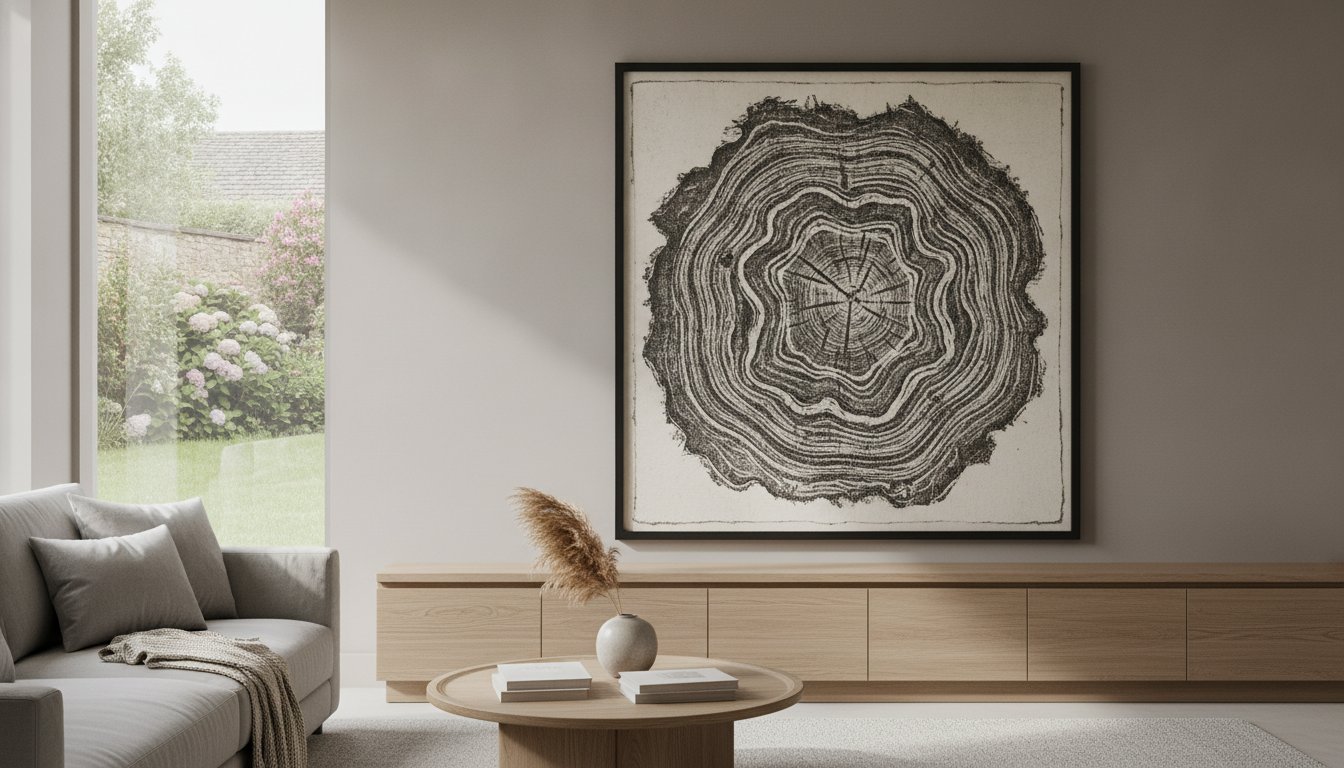
Every tree carries a silent, centuries-old archive within its grain, waiting for a patient hand to reveal it. When you choose wood ring wall art for your home, you aren't just buying a piece of decor; you're inviting a tangible piece of British woodland history into your living space. It's a common frustration to search for art that feels authentic only to find mass-produced prints that lack soul or a clear origin. You want something that tells a story, perhaps of an ancient oak or a fallen ash, sourced with the respect that nature deserves.
We understand that finding the perfect balance between organic texture and modern aesthetics can feel like a challenge. In this guide, we'll explore the methodical journey from the forest floor to your wall, helping you distinguish between generic reproductions and genuine hand-pressed prints. You'll discover how to style these intricate patterns to bring warmth to your home whilst gaining the confidence to identify high-quality, sustainable craftsmanship. We'll look at the history hidden in the rings and the techniques used to capture them forever.
Key Takeaways
- Learn how the organic geometry of timber serves as a bridge between the natural world and your interior through the principles of biophilic design.
- Discover the hidden narrative within a tree's grain, learning to identify the alternating bands of earlywood and latewood that record centuries of environmental history.
- Understand the artisanal value of hand-pressed wood ring wall art, where traditional relief printing creates a tactile texture that mass-produced decor simply cannot replicate.
- Gain practical styling secrets for placing these intricate patterns within your home, from creating a minimalist focal point to organising a nature-inspired gallery wall.
- Explore the sustainable "forest floor to gallery" journey, ensuring your art choice respects the lifecycle of British woodlands by utilising naturally fallen specimens.
What is Wood Ring Wall Art? Defining Nature’s Geometry
At its heart, wood ring wall art is a visual archive of a tree's journey through time. It's the artistic representation of a trunk’s cross-section, revealing the hidden architecture that supported a leafy canopy for decades or even centuries. When we bring these patterns into our homes, we're engaging with biophilic design. This is more than a passing trend; it's a recognition of our innate human pull toward organic shapes. The soft, concentric circles of a tree's growth offer a meditative quality that sharp, manufactured lines can't replicate. It provides a grounding presence that reminds us of the slow, steady pace of the natural world.
Understanding the difference between formats is essential for any collector. You'll often see wood slices, which are physical sections of the trunk, and digital illustrations that mimic the look of grain. However, the most soulful approach involves original artist prints. These are created by hand-pressing ink onto paper directly from the timber. This process captures the "living history" of the specimen, recording every minute ridge and furrow. It's a tactile connection to a specific tree that once stood in a British woodland, now preserved as a narrative of age and resilience.
The Origins of Dendrochronology in Art
The roots of this aesthetic are found in Dendrochronology, the scientific study of tree rings to determine the age of timber and the environmental conditions of the past. Artists have taken this rigid scientific record and infused it with emotion. We've moved away from viewing these rings as mere data points, seeing them instead as a form of natural calligraphy. The "imperfections" in the wood, such as knots where branches once grew or narrow rings from years of drought, are the very features that give the art its soul. These marks are the tree’s autobiography, and they become the focal point of the finished piece.
Common Materials and Formats
Choosing the right piece of wood ring wall art depends on the space you wish to transform. Whilst some prefer the raw, heavy feel of a mounted wood section, others find that the delicate detail of a hand-pulled print on archival paper fits better in a contemporary setting. In the UK, certain species are particularly favoured for their striking patterns:
- Oak: Known for its strength and tight, intricate ring structures that speak of a long, slow life.
- Ash: Offers a beautiful, fluid grain that creates elegant, flowing prints.
- Pine: Often features wider rings and bold contrasts, making it perfect for larger statement pieces.
Standard sizes vary from small, intimate 30cm prints that sit well amongst a gallery wall of botanical sketches, to expansive 90cm works that command attention above a fireplace or one of our handmade tables. The choice of timber and format defines the mood of the room, bringing a piece of the forest floor into your daily life.
The Anatomy of a Tree Ring Print: Reading the Rings
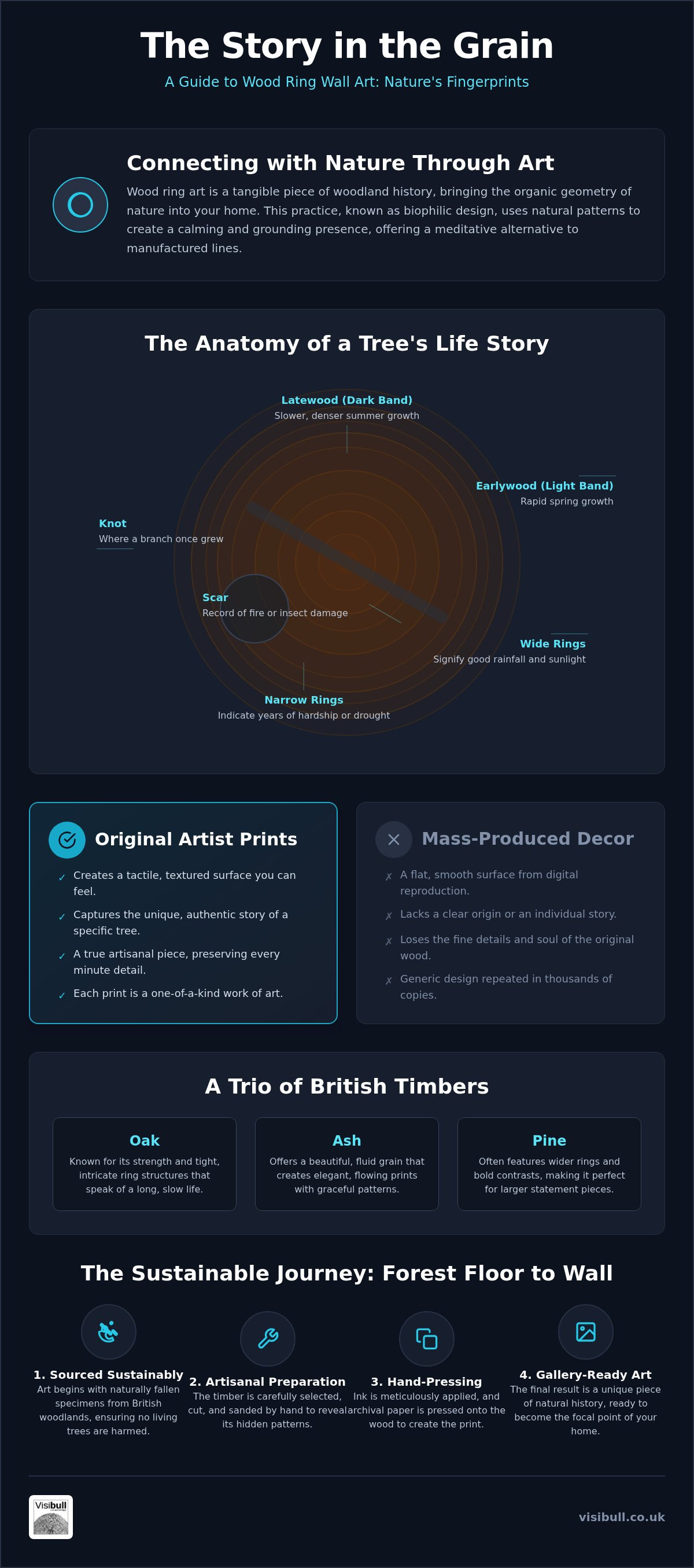
Every year, a tree adds a layer of growth that serves as a silent witness to the world around it. These layers appear as alternating light and dark bands, known as earlywood and latewood. The lighter bands represent the rapid expansion of spring, when water is plentiful and the tree stretches toward the sun. The darker, denser bands of latewood show the slower, sturdier growth of late summer. Together, they create the concentric circles that define wood ring wall art. It's a rhythm of life captured in timber.
These rings do more than tell a tree's age; they act as a biological diary. Wide gaps indicate years of heavy rainfall and abundant sunlight, whilst thin, crowded rings suggest periods of hardship or drought. The scientific dating and study of annual rings allows us to look back at the climate of a specific decade through the lens of a single specimen. This environmental record is what gives each piece of art its unique fingerprint. No two trees experience the same century in quite the same way.
Texture also comes from "reaction wood," which forms when a tree strengthens itself against heavy winds or steep slopes. Scars from ancient fires or insect damage add deep visual interest, creating breaks in the circular patterns. Original prints taken from fallen trees capture these nuances with a precision that digital scans simply cannot replicate. The physical indentation of the paper into the grain picks up every microscopic detail, preserving the soul of the wood.
The Story Within the Grain
Counting the rings from the pith at the centre out to the bark edge reveals the tree's lifespan. Knots show where branches once reached for the sky, and cracks, known as checks, reveal the natural drying process of the timber. Dendrochronology is the scientific study of tree rings used to date the past. These marks aren't flaws; they're the essential chapters of the tree's autobiography, rendered in ink and paper.
Species-Specific Patterns
If you are passionate about storytelling through nature, you can also discover Tusk Photo to explore wildlife photography expeditions that capture the world's most incredible living narratives.
Different timbers react uniquely to the printing process, offering varied aesthetics for your home. Oak has a bold, open grain that drinks up ink, resulting in strong, graphic lines that command attention. In contrast, Birch offers delicate, tight rings that feel almost ethereal and light. When choosing a piece, consider the timber already present in your room. An Oak print pairs beautifully with our handmade tables, creating a cohesive and deeply grounded interior aesthetic.
Original Artist Prints vs. Mass-Produced Wall Decor
The market for wood ring wall art is increasingly divided between soulful, hand-crafted originals and flat, mass-produced digital reproductions. Whilst a canvas print from a large retailer might offer a similar silhouette, it lacks the physical presence and historical weight of a hand-pressed work. An original print is a direct relief of the timber, created by using the wood itself as the printing block. This process ensures that every piece is a unique record, capturing the specific texture and age of a single tree that once stood in a British wood. No two prints are ever identical, even when taken from the same specimen.
Tactile texture is the defining characteristic of an authentic print. During the pressing, the paper is forced into the grain, creating a three-dimensional indentation that you can feel with your fingertips. Mass-market decor is almost always printed on smooth surfaces, losing this vital sensory connection. Beyond the feel, the materials matter. We use archival-quality papers and oil-based inks that won't fade, unlike the cheap dyes often found in factory output. This ensures the work remains a focal point in your home for decades, preserving its depth and clarity.
Sustainability also sets artisanal work apart. Much of the commercial timber used for mass decor comes from industrial felling operations. In contrast, our approach relies on fallen specimens, preserving the integrity of the woodland ecosystem. This ethical sourcing ensures that your art choice contributes to environmental renewal rather than depletion. It represents a commitment to honouring the natural lifecycle of the forest.
The Hand-Pressing Process
Preparing the "printing block" is a methodical ritual. The tree section is first charred lightly with a torch to burn away the softer earlywood growth, then brushed with wire to leave the harder rings standing in relief. This creates a topographical surface that, once inked, reveals the intricate story of the tree. You can read more about how original nature prints are made from fallen trees to understand the patience and labour required for this craft.
Evaluating Authenticity
Spotting a digital reproduction is often a matter of looking for the "bite" of the ink. Real wood ring wall art will show slight variations in ink density, reflecting the natural absorption of the timber. A digital print is too perfect, too uniform. Authentic works are typically signed by the artist and part of a limited edition run, reflecting the rarity of the specimen. By Reading the Rings through a hand-inked lens, you're investing in a piece of climate history that a factory simply cannot replicate.
How to Style Wood Ring Art in British Interiors
A "Scandi-British" aesthetic, which blends Nordic functionalism with our own heritage of craftsmanship, is the perfect backdrop for a large-scale print. Incorporating other nature-inspired designs from Aihki Design, such as a Käpy valaisin, can further enhance this organic theme. Placing a single, commanding piece above a fireplace or a minimalist sideboard creates a grounding focal point that draws the eye without cluttering the space. For those with larger walls, creating a nature-inspired gallery wall is an excellent way to tell a broader story. Try mixing monochrome wood prints with framed botanical sketches and physical timber sections to add depth and variety to your collection.
The monochrome nature of many hand-inked prints makes them incredibly easy to pair with a variety of interior palettes. They sit comfortably alongside neutral linens, chunky wool throws, and soft grey upholstery. To help you master the balance of tones in your home, you can learn more about the historical symbolism of colours like yellow in classic English interiors. Because the rings are inherently circular, they provide a much-needed visual break from the hard lines of modern desks or shelving units. In industrial-style rooms dominated by cold materials like concrete or steel, the presence of timber art introduces an essential layer of organic warmth that makes the space feel inhabited and soulful.
To truly appreciate the craftsmanship of an original piece, you must consider the light. Side-lighting, such as a well-placed floor lamp or a directional spotlight, is particularly effective. It casts subtle shadows across the physical indentations in the paper, making the relief texture "pop" and revealing the microscopic ridges of the grain. Whilst you want to showcase the detail, always protect your investment by avoiding direct, harsh sunlight, which can eventually cause even the best archival inks to fade. For more advice on presentation, you can consult our guide to choosing a framed tree ring print for your home.
If you're ready to bring the quiet strength of the forest into your living space, explore our collection of original artist prints and find the piece that speaks to your home's story.
Sustainable Art: The Journey from Forest Floor to Wall
The story of wood ring wall art begins long before the ink meets the paper. It starts on the forest floor, amongst the leaf litter and the damp earth of British woodlands. For an eco-conscious maker, the choice to use only fallen trees is a fundamental principle of woodland management. Standing deadwood and naturally fallen specimens provide vital habitats, but when timber is carefully salvaged at the end of its standing life, it allows the tree's history to be preserved without disrupting the living ecosystem. This approach is a far cry from the commercial felling practices that drive the mass-market decor industry.
By sourcing materials locally, we significantly reduce the carbon footprint associated with home decor. Instead of shipping timber or finished products across oceans, we work with the species that define our own landscape. This local connection supports the UK’s creative economy and ensures that the artist has a direct relationship with every piece of wood. It's a transparent journey from the forest floor to your gallery wall, where the provenance of the art is as clear as the rings themselves. Choosing such pieces reflects a commitment to sustainable living and an appreciation for the slow growth of our native forests.
Because of this deep connection to time and resilience, wood ring prints have become a favoured choice for heritage gifts. Traditionally, the fifth wedding anniversary is celebrated with wood, representing the strength and deep roots of a relationship. A hand-pressed print of an ancient Oak or a sturdy Ash serves as a poignant symbol of this milestone. It's a piece of British history that carries the weight of centuries, making it a timeless heirloom for future generations; for those who appreciate these natural connections and are looking for other symbolic presents, Spirit of the Earth provides a wonderful guide to choosing spiritual and wellness gifts that share this same intentionality.
This atmospheric connection to the landscape often inspires more than just visual art; for those drawn to the darker, more mysterious narratives hidden in such settings, Graham Mulvein’s World of Horrors at mulvein.bprcm.com offers a deep dive into the shadows of gothic fiction.
At Visibull, our focus remains on timber that has reached the natural conclusion of its lifecycle. We believe that the artist is a facilitator who reveals the beauty already present in the material. This creates a profound connection between the maker, the wood, and the eventual owner of the print. When you purchase from an independent studio, you aren't just buying an object; you're supporting a methodical craft that values the history and texture of the natural world over factory-speed perfection. It is a soulful exchange that honours the life of the tree.
A Legacy Piece for Your Home
This respect for the tree's lifecycle extends to the very beginning of its growth; for those inspired by these native species to start their own planting projects, specialists such as Buds Nursery Cavan offer a wealth of knowledge on how to calculate the perfect density for new hedging and trees.
Hand-pressed art is built to last. By using archival-quality materials, we ensure that these records of our timber heritage remain vibrant and detailed for years to come. These aren't temporary trends but enduring legacy pieces that capture a specific moment in the life of a British tree. They serve as a bridge between the past and the future, grounding your home in the permanence of nature. To deepen your understanding of these works, you can explore the definitive guide to tree ring art prints in the UK, which celebrates our shared silvicultural history.
Bringing the Forest’s Story Into Your Home
Choosing wood ring wall art is a way to celebrate the slow, methodical rhythm of the natural world. By understanding the difference between a flat digital reproduction and an original hand-pressed print, you can select a piece that carries genuine depth and texture. These works don't just fill a space; they act as a bridge to the British woodland, offering a tactile connection to the history of a specific tree. Whether you're marking a milestone or simply looking to soften the hard lines of a modern room, the organic geometry of the rings provides a grounding presence that mass-produced items cannot match.
Our artist-led studio is dedicated to preserving these narratives through sustainable practices. We work exclusively with fallen timber, ensuring that every print is a unique original that respects the lifecycle of the forest. When you're ready to transform your space with a piece of living history, browse the Visibull collection of original hand-pressed tree ring prints. Each work is a testament to the resilience of British timber and the patient craft of the hand-press. Let the quiet strength of the forest floor become a permanent part of your interior.
Frequently Asked Questions
Is wood ring wall art only suitable for rustic or country-style homes?
No, this style of art is remarkably versatile and suits contemporary, minimalist, or industrial interiors just as well as rustic cottages. The organic, concentric circles provide a necessary visual break from the sharp, linear edges of modern furniture and architecture. Similarly, high-quality timber furniture—such as the artisanal pieces found at fvcreations.com—can introduce that same organic warmth to both indoor and outdoor environments. In a Scandi-style flat, a monochrome print adds a layer of natural warmth without cluttering the aesthetic. It’s about the frame; a sleek black border can instantly modernise the piece for an urban setting.
Original prints are created using a traditional relief printing method that treats the tree section as a physical block. The wood is lightly charred to burn away softer growth, then wire-brushed to leave the harder rings standing in relief. After applying professional oil-based ink, archival paper is placed on top and rubbed by hand. This methodical process ensures every microscopic detail of the grain is transferred to the paper, creating a unique, tactile record.
What is the best way to clean and maintain wood wall art?
Maintenance depends on whether you have a physical wood slice or a hand-pressed print. For paper prints, the most important step is keeping them out of direct sunlight to prevent the ink and paper from yellowing over time. Dust the frame and glass regularly with a dry, lint-free cloth. If you own an unframed wood section, avoid using water or chemical sprays; instead, use a soft-bristled brush to gently remove dust from the grain.
Can I buy wood ring art that is sustainably sourced in the UK?
Yes, you can find wood ring wall art that is ethically and sustainably sourced right here in the UK. We focus exclusively on using timber from fallen trees, ensuring that no healthy standing specimens are removed for our work. This approach respects the natural lifecycle of British woodlands and supports local ecosystems. By choosing locally sourced art, you also reduce the carbon footprint associated with international shipping and industrial timber felling operations.
What does the number of rings in a piece of wall art signify?
Each ring represents one year of the tree’s life, but they also record a detailed environmental history. Wide rings suggest years of abundance with plenty of rainfall and sunlight, whilst narrow rings point to periods of drought or intense competition. You might also see scars from ancient forest fires or knots where branches once grew. These markings allow you to read the tree’s biography, turning the art into a silent witness to decades of British weather.
Are these prints made from real trees or are they digital designs?
Authentic artist prints are made directly from the cross-sections of real trees, capturing the physical texture of the timber. Whilst many large retailers sell digital designs that mimic the look of wood, these lack the three-dimensional "bite" of ink on paper. An original hand-pressed work will have slight variations in ink density and a visible indentation where the paper was forced into the grain. This tactile quality is the hallmark of a genuine, nature-led studio piece.
How do I choose the right size tree ring print for my living room?
The right size depends on the scale of your furniture and the wall’s dimensions. A large statement piece, perhaps 70cm to 90cm in diameter, works beautifully above a fireplace or a wide sofa to anchor the room. Smaller prints, around 30cm to 40cm, are better suited for hallways or as part of a curated gallery wall alongside botanical sketches. Always measure your space first and use masking tape to visualise the dimensions before making a final choice.
Why is tree ring art a popular gift for a 5th wedding anniversary?
Wood is the traditional material for a fifth wedding anniversary, symbolising the strength, stability, and deep roots of a maturing relationship. A tree ring print is a particularly thoughtful choice because it represents the passage of time and the beauty of growing together year by year. It’s a heritage gift that carries more emotional weight than mass-produced furniture, offering a timeless record of resilience that mirrors the journey of a long-term partnership.