
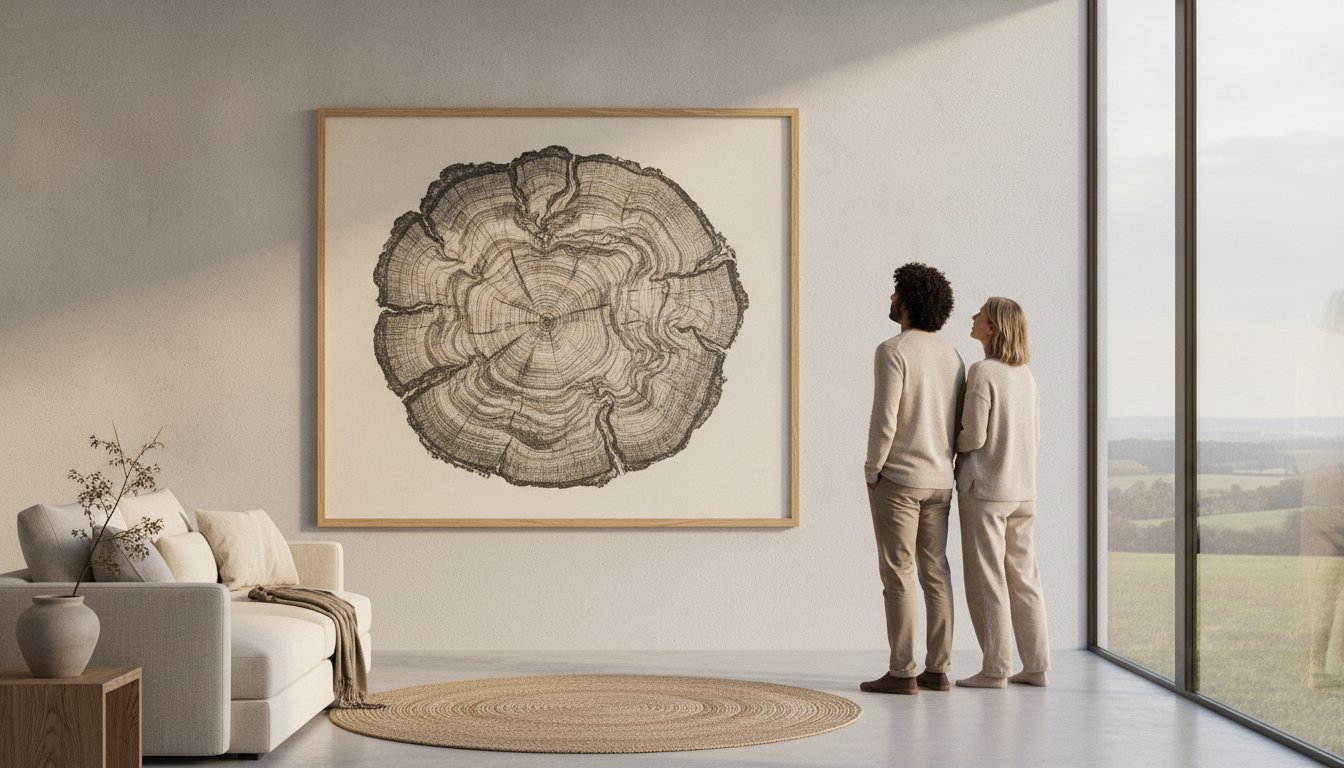
Could the art on your walls be quietly working against the very woodlands you admire? It's a heavy thought for anyone trying to curate a home with a conscience. You've likely felt that familiar prickle of doubt whilst browsing for sustainable wall art UK, wondering if a "green" label is merely a thin veneer over a mass-produced product. We all want our living spaces to be sanctuaries of integrity, filled with objects that tell a story of renewal rather than depletion.
It's understandable to feel overwhelmed by complex supply chains and shifting guidance on environmental claims. You deserve to know the provenance of every grain and ink stroke in your home. This guide will help you see through the noise by debunking five persistent myths about eco-friendly decor. We'll explore how to identify truly ethical craftsmanship that supports independent British artisans and respects the natural history of our fallen trees. By the end, you'll understand how to find meaningful pieces that celebrate the British landscape without compromising your values.
Key Takeaways
- Learn to identify "red flag" phrases used by mass-market retailers and understand what truly defines authentic sustainable wall art UK.
- Discover why the most ethical wood art relies on timber from trees that have fallen naturally, ensuring no living specimens are harmed for your decor.
- Challenge the idea that eco-friendly materials are temporary by comparing the enduring quality of hand-pressed prints to short-lived digital alternatives.
- Understand how tree ring prints serve as unique biophilic records, offering a one-of-a-kind connection to the British woodland's history.
- Gain the confidence to support independent British makers who prioritise the tactile, handmade journey of a material over mass production.
What Truly Defines Sustainable Wall Art in the UK?
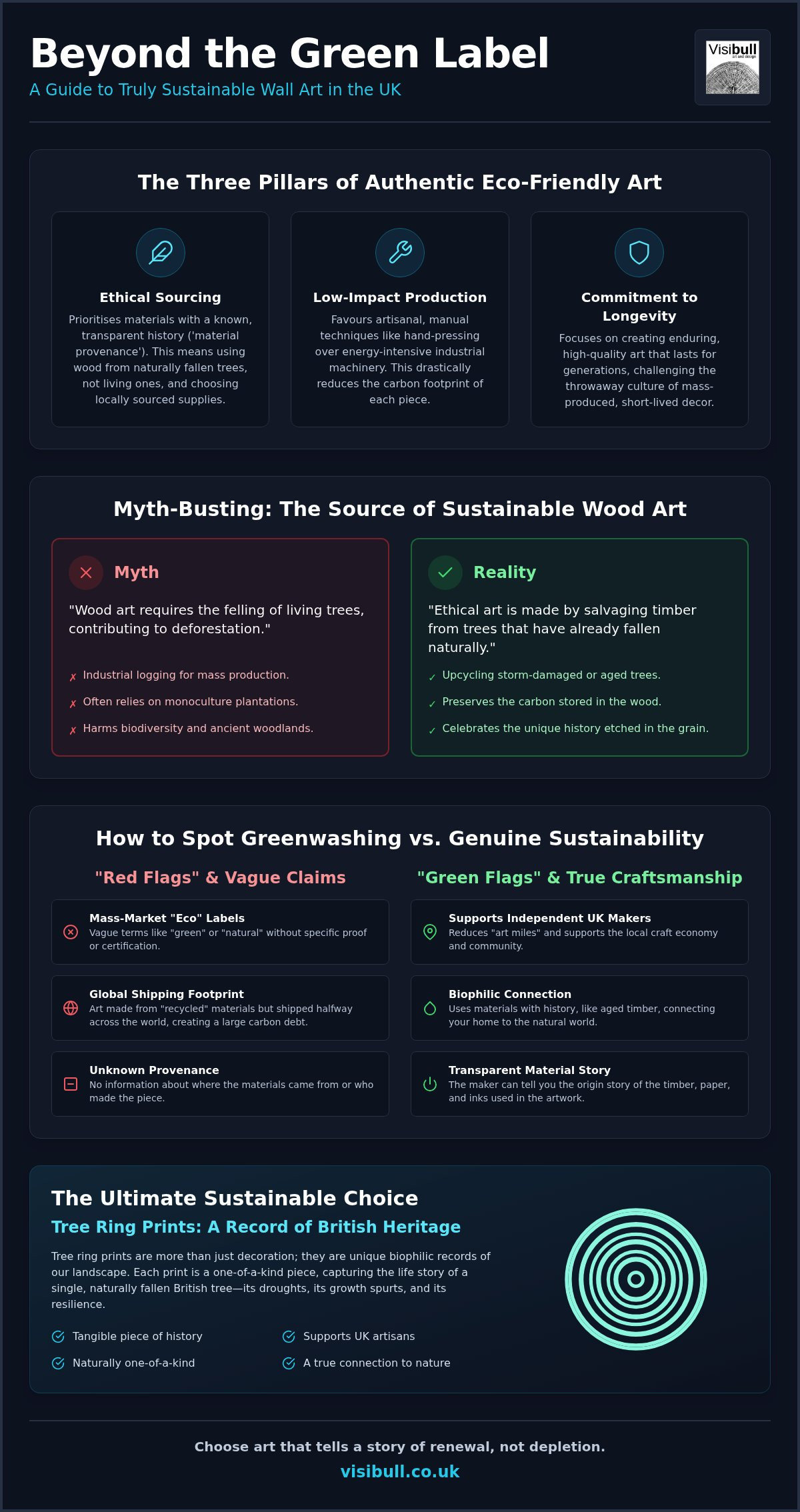
In the UK, the term "eco-friendly" is often tossed about with a lightness that belies the weight of its responsibility. For those seeking sustainable wall art UK, the definition must go deeper than a simple sticker or a cardboard frame. True sustainability is a delicate equilibrium between ethical sourcing, low-impact production, and an unwavering commitment to longevity. It isn't just about what a piece is made of; it's about how it came to be and how long it will endure.
The British market is currently saturated with vague "green" terminology that can leave even the most discerning collector feeling adrift. To find clarity, we must look at "material provenance." This is the practice of tracing a piece of art back to its very roots, understanding the history of the timber or the origin of the paper. Sustainable art is a quiet conversation between the maker’s hand and the fallen history of the forest floor, where every mark respects the life that came before.
Beyond the Recycled Label
Whilst "recycled" is a helpful starting point, it's often just a single thread in a much larger tapestry. A print made from recycled pulp but shipped halfway across the globe carries a heavy carbon debt that no amount of green branding can erase. In contrast, choosing art created within the UK significantly reduces transport emissions and supports the local craft economy. It's a choice that favours the health of our local environment over the convenience of international shipping.
Artisanal methods further lower this impact. By following the principles of sustainability, makers often rely on manual techniques that bypass the energy-hungry machinery of industrial factories. A hand-pressed print doesn't just look different; it feels different. The energy used to create it came from a person, not a power plant, making each piece a low-carbon alternative to mass-market posters.
The Role of Heritage and Materiality
Materials with a past, such as aged timber from a fallen oak or beech, possess an emotional resonance that new, mass-produced materials simply cannot replicate. This connection is the heartbeat of biophilic design. It's the idea that bringing elements of the natural world into our homes improves our well-being and encourages a more mindful way of living. When we surround ourselves with textures that evoke the outdoors, we're reminded of our role as stewards of the earth.
These pieces act as more than just decoration. For instance, tree ring art prints UK serve as biophilic records of our landscape. They capture the specific weather patterns, droughts, and growth spurts of a single tree’s life. By hanging such a piece, you aren't just filling a gap on a wall; you're preserving a tangible piece of British heritage that will remain beautiful for generations.
Myth: Wood Art Requires the Felling of Living Trees
A common hesitation for those investing in sustainable wall art UK is the fear that their purchase might contribute to deforestation. It's a valid worry. We've been taught that wood products require the sharp bite of a chainsaw against a living trunk. However, for the ethical artisan, the forest isn't a resource to be harvested, but a storyteller to be heard. True sustainability in this craft doesn't start with felling; it begins with a walk through the woods after a storm.
The distinction between industrial logging and artisanal salvaging is profound. Industrial processes often rely on monoculture plantations, which, whilst certified, often lack the deep biodiversity and history of ancient woodlands. Salvaging, on the other hand, involves searching for timber that has already reached the end of its standing life. When a tree falls due to age or the unpredictable British weather, it doesn't have to be forgotten or burnt. By upcycling these fallen giants into fine art, we preserve the carbon they've stored and the history they've witnessed.
The Beauty of Fallen Timber
This appreciation for the natural lifecycle often extends to how we tend our own land. Just as an artist salvages wood to preserve its story, home gardeners can foster new growth by selecting productive, sustainable species from providers like Doyle Blackberry, Inc., who offer high-yield, thornless plants that bring the spirit of the woodland harvest into your garden.
This respect for the natural world often goes hand-in-hand with a desire to maintain the health of our own gardens and local wildlife habitats; for homeowners looking to protect their outdoor sanctuaries, Revira offers valuable insights into humane management of garden visitors like badgers.
Storm-damaged or naturally aged trees provide a depth of texture that simply isn't found in commercial timber. These specimens have lived through decades, perhaps centuries, of seasonal shifts. This history is etched into their grain, creating intricate patterns and "character" marks that tell of droughts, harsh winters, and prosperous springs. Identifying the right specimen is a slow, methodical process of seeing the potential in what others might dismiss as forest debris.
When creating original nature prints UK, we look for cross-sections that reveal these hidden narratives. A fallen oak or a toppled beech offers a unique canvas that no living tree could provide without sacrifice. This approach ensures that the art on your wall is a direct descendant of the forest floor, born from a material that has naturally returned its strength to the earth.
Honouring the Lifecycle of the Forest
The artist acts as a humble observer of the natural decay and renewal process. By choosing salvaged wood over plantation-grown alternatives, we respect the natural lifecycle of the woodland. Tree ring prints allow us to preserve the memory of a tree without ending its life prematurely. It's an act of reverence, capturing a biophilic record of the landscape that remains long after the tree itself has begun to nourish the soil.
This ethical path offers a superior alternative to the mass-market. Instead of a sterile, identical product, you receive a piece of history that respects the earth. If you're looking to bring this sense of integrity into your home, you might explore our collection of original artist prints, each one a testament to the beauty of the reclaimed.
Greenwashing in the UK Art Market: Beyond the Label
In the quiet pursuit of sustainable wall art UK, it's easy to be swayed by a soft colour palette or a rustic kraft paper tag. Greenwashing is a subtle art of misdirection where a brand’s marketing efforts to appear eco-friendly far outweigh its actual environmental practices. It’s a decorative veneer that prioritises a sale over the soil. When a product is draped in the language of nature without the substance of ethical sourcing, it leaves the well-intentioned collector feeling misled and the environment no better off.
You’ll often find "red flag" phrases like "natural look" or "eco-inspired" in large-scale retail catalogues. These terms describe an aesthetic choice, not an ethical standard. A digital print on standard paper housed in a plastic frame can still have a "natural look," but its journey from factory to wall is anything but sustainable. Don't be fooled by a high price tag either. The myth that expensive art is inherently more ethical is persistent; however, luxury brands often have supply chains just as opaque as their budget counterparts. Transparency is the only true currency of a sustainable maker.
How to Spot Authentic Sustainability
Authenticity lives in the details. A truly sustainable artisan won't just claim to be ethical; they'll invite you into their workshop through their storytelling. They can tell you exactly which woodland a piece of timber originated from and the specific methods used to prepare it. Look for small-batch production rather than mass-market "eco-lines." When an artist creates only a handful of pieces at a time, they maintain total control over waste and energy consumption. The story behind the work is the most reliable indicator of its ethical footprint.
The Importance of UK-Based Craftsmanship
This commitment to small-batch, local production is a hallmark of quality across many UK industries; you can learn more about Marley Paws and their range of handcrafted toys and accessories designed to enrich the lives of cats and kittens.
This focus on transparency and the story behind the product is a value shared by many independent enterprises globally; for example, The White Bird prioritises fresh, locally sourced ingredients to ensure their menu reflects a similar commitment to quality and provenance.
Beyond individual products, the broader movement towards ethical leadership is being shaped by experts like Jannine Barron, who guides founders in building regenerative business models that move away from extractive practices.
Choosing art made within our borders is a practical act of environmentalism. Local production slashes the carbon footprint associated with international shipping and keeps the UK creative economy thriving. By supporting independent studios over large-scale retailers, you ensure your investment supports traditional skills and mindful making. For instance, wood ring wall art crafted by hand in the UK carries a significantly lower environmental cost than a mass-produced alternative shipped from overseas. It’s a choice that values the raw texture of our own landscape and the quiet integrity of local hands.
The Durability Myth: Is Eco-Friendly Decor Less Permanent?
There’s a persistent whisper that choosing the ethical path means sacrificing strength. Many people assume that because a material is biodegradable or "natural," it must also be fragile. This couldn't be further from the truth. When we talk about sustainable wall art UK, we aren't describing temporary trinkets or fleeting decorations. We're talking about materials like seasoned timber and heavy-weight archival papers that have already survived the elements for decades before they even reached the studio. Quality and conscience are not mutually exclusive; they're deeply intertwined.
Contrast a mass-produced digital poster with a hand-pressed wood print. The former often uses thin, acidic paper and cheap dyes that yellow and fade within a few years. The latter is a labour of patience. By using lightfast, natural inks and acid-free papers, an artisan ensures the work remains vibrant for generations. It’s the difference between a seasonal purchase and a family heirloom. Beyond the physical, there's the concept of "emotional durability." This is the idea that when a piece of art resonates with your soul and carries a genuine story, it never finds its way to a landfill. It stays on the wall as trends flicker and fade, becoming a permanent part of your home’s narrative.
Art That Ages Gracefully
Timber is one of nature’s most resilient gifts. When sourced from fallen trees, the wood has already been "cured" by the passage of time, resulting in a stable and sturdy medium. Combined with high-grade archival papers, these prints possess a quiet, enduring strength. Organic patterns, specifically the concentric circles of tree rings, are inherently timeless. They don't rely on a fleeting "colour of the year" to remain relevant. To keep your art in peak condition, simply hang it away from direct, harsh sunlight and avoid damp corners; these simple steps ensure the natural materials continue to age with grace. Furthermore, a lasting finish for your home decor starts with the quality of your walls; if you're renovating, you can visit Wall & Ink for an expert guide on painting newly plastered walls.
In addition to maintaining the physical beauty of your space, obtaining a professional assessment of your property's value can be a vital step for homeowners; winfieldssurveyors.co.uk offers independent RICS valuations to help you manage your assets with confidence.
The environmental cost of "fast decor" is staggering. We’ve entered an era where redecorating is often treated like fast fashion, with cheap, soulless prints binned every time a new trend emerges. A tree ring print framed with care is a heritage purchase. It’s an investment in the story of the British woodland and a rejection of throwaway culture. This isn't a design fad; it's a long-term commitment to quality and craftsmanship. By choosing pieces with a documented history, you're supporting a slower, more mindful way of living.
If you’re ready to move away from the cycle of temporary decor, explore our original artist prints and find a piece of the forest that will stand the test of time in your own space.
Connecting with Nature: Why Tree Ring Prints are the Ultimate Sustainable Choice
Tree ring prints exist at a rare intersection where environmental science meets the artisanal soul. Whilst many decor choices are driven by fleeting aesthetics, these prints are grounded in dendrochronology, the study of tree time. Every concentric circle is a biographical entry, a record of a year’s rainfall, a particularly harsh frost, or a season of abundant sunlight. This creates a piece of sustainable wall art UK that acts as a living document of our landscape, bridging the gap between the scientific reality of the forest and the emotional warmth of a home.
Every tree possesses a unique fingerprint. No two oaks grow in the exact same pattern, and no two elms weather the same storms in the same way. This inherent uniqueness is the cornerstone of true sustainability. You cannot mass-produce a life story. By inviting these textures into your living space, you’re viewing your walls as a quiet extension of the British woodland. There’s a final myth to dispel here: sustainable art doesn't have to look "recycled" or makeshift. It can be deeply sophisticated, possessing a soulful elegance that mass-market digital prints simply cannot replicate. This same soulful elegance is often found in other traditional arts where heritage and rhythm take centre stage; if you appreciate such authentic expressions, you might check out Páraic Banjo.
The "ink and wood" method is a traditional, low-chemical technique that honours the material. Unlike digital photography, which merely captures a likeness, a hand-pressed print is a physical transfer of history. However, when photography is approached as a fine art, it can similarly immortalise heritage; you can discover One Vision Photography | South Wales Wedding Photographer to see how they capture life's defining moments with lasting depth. We apply a thin layer of ink directly to the prepared cross-section of a fallen tree, then carefully press the paper onto the surface. It’s a methodical, tactile process that requires patience and a steady hand. This direct contact ensures that the resulting art is authentic, capturing every subtle ridge and microscopic detail of the grain.
The sensory experience of such a piece is profound. When you stand before an original print, you aren't looking at pixels; you're looking at the physical imprint of timber that once stood in a British forest. The textures are raw and honest, providing a biophilic connection that calms the mind and grounds the spirit. It’s a celebration of the organic over the artificial, favouring the slow, methodical execution of a hand-pressed print over the staccato rhythm of industrial manufacturing.
This journey often involves finding small, meaningful ways to pause and reflect. Alongside your choice of art, incorporating items like the curated gift boxes and reflective publications from Glimpses Inside can help create a sanctuary that truly supports your well-being.
Embracing a "slow decor" approach means choosing quality over quantity. It’s about allowing your home to evolve gradually, filled with objects that carry weight and meaning. You don't need to fill every wall in a single weekend. Instead, you can start a collection of sustainable art that grows with you, each piece marking a different chapter of your own story or a different species of our native timber heritage. This mindful way of living reduces waste and ensures that every item in your environment is there because it truly belongs.
Building a home that respects the earth is a quiet, rewarding journey. It starts with a single choice to support makers who value the history of their medium as much as the finished result. If you’re ready to bring the honest beauty of the woods into your space, you can explore our collection of original tree ring prints and find a tangible piece of UK history for your wall.
Cultivating a Home that Honours the Earth
Choosing art for your space is a deeply personal act. It's an opportunity to move beyond the shallow allure of "fast decor" and embrace pieces that carry the weight and history of the forest floor. By unpicking the common myths surrounding wood sourcing and durability, you've seen that authentic sustainable wall art UK is defined by transparency, heritage, and a profound respect for the natural lifecycle. You don't have to settle for mass-produced imitations when you can own a biophilic record of the British landscape.
Our work is a quiet celebration of the overlooked. By using archival quality materials and hand-pressed techniques, we ensure that every print is built to last a lifetime. These aren't just decorations; they're stories of naturally fallen timber, brought to life by independent artisans who value the history of every grain. It’s time to fill your walls with art that reflects your values and brings a soulful, grounding energy into your home.
Discover the soulful beauty of original tree ring prints and begin your journey toward a more conscious, nature-inspired interior today.
Frequently Asked Questions
Is sustainable wall art always more expensive than mass-produced art?
Not necessarily, though the upfront cost often reflects the true value of ethical materials and artisanal labour. Mass-market art frequently hides environmental costs behind low prices and exploitative supply chains. Investing in quality means you won't need to replace the piece every few years as trends shift or materials degrade. It's about long-term value, paying for a maker's time and the careful salvaging of timber rather than an assembly line.
Does "eco-friendly" art look different from traditional art?
It often possesses a more tactile, organic aesthetic that celebrates natural imperfections rather than hiding them under a synthetic finish. Whilst digital prints can look sterile and uniform, sustainable pieces often showcase the raw texture of the wood grain or the deckled edge of handmade paper. This soulful quality is what distinguishes it from factory-made decor. It feels more connected to the outdoors, providing a sensory experience that mass-produced items simply lack.
Can I find sustainable wall art that is made in the UK?
Yes, there is a thriving community of artisans creating sustainable wall art UK. By choosing local makers, you significantly reduce the carbon footprint associated with international shipping and support our native creative economy. Look for studios that focus on British timber like oak, ash, or beech. Supporting these creators ensures that your decor respects the history of our own woodlands and avoids the heavy environmental toll of global logistics.
What is the best way to tell if a wood art piece is truly ethical?
Look for transparency regarding the origin of the timber and the specific methods used to source it. A truly ethical maker will be able to tell you if the wood came from a naturally fallen tree or a managed woodland. Avoid brands that use vague terms like "eco-inspired" without explaining their supply chain. Check for evidence of small-batch production and the use of non-toxic, lightfast inks that don't harm the environment.
Are tree ring prints made from living trees?
No, authentic tree ring prints should be created using cross-sections from trees that have already fallen naturally due to age or weather. This process honours the tree's life without ending it prematurely for the sake of art. Storm-damaged timber often provides the most interesting grain patterns anyway. By salvaging these fallen giants, artists give a second life to wood that would otherwise be left to rot or burnt for fuel.
How does buying from independent UK artists help the environment?
Independent artists typically operate on a small scale, which naturally limits waste and energy consumption. They often source materials locally, which slashes transport emissions compared to large retailers who import goods from overseas factories. These makers are also more likely to use plastic-free packaging and traditional, low-impact techniques. Your purchase supports a slower, more mindful production cycle that prioritises the health of the British landscape over mass-market speed.
What materials should I avoid when looking for sustainable decor?
Steer clear of virgin plastics, unsustainable tropical hardwoods, and cheap MDF that contains high levels of formaldehyde. These materials often involve destructive extraction processes or off-gas harmful chemicals in your home. You should also be wary of thin, acidic papers that yellow quickly and require frequent replacement. Instead, prioritise reclaimed wood, archival-grade recycled papers, and natural, water-based inks that have a minimal environmental impact throughout their lifecycle.
Will sustainable art prints fade over time?
High-quality sustainable prints are designed for longevity and won't fade if they are made with archival materials. Using lightfast, natural inks and acid-free paper ensures the details remain sharp and the colours stay true for decades. Whilst any art can be damaged by direct, prolonged sunlight, these pieces are heritage items built to endure. Choosing artisanal quality over mass-produced digital prints is the best way to ensure your investment lasts for generations.