
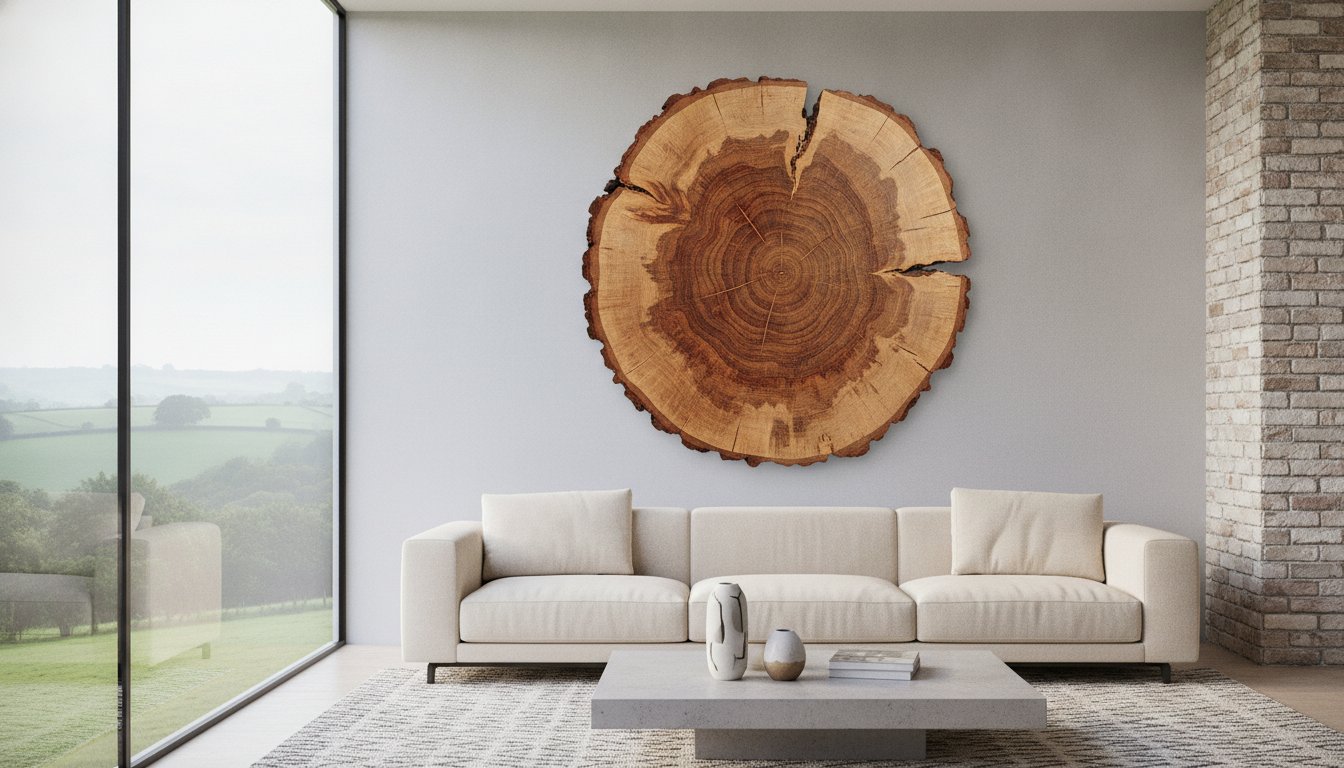
The most soulful object in your home shouldn't be a product of a factory line; it should be a witness to the slow, quiet history of the earth. Many of us feel the hollow chill of mass-produced decor that lacks character, yet finding truly ethical pieces often feels like a challenge. You want your space to feel grounded, but the uncertainty of timber sourcing or the difficulty of styling raw textures can be off-putting. It's a common dilemma when searching for authentic natural wood art UK collectors value for its warmth and personality.
I'll help you discover the distinct beauty of reclaimed and fallen timber art so you can choose a sustainable masterpiece that resonates with your values. We'll explore the differences between salvaged materials and the rhythmic patterns found in trees that have naturally fallen, giving you the confidence to invest in pieces with genuine heritage. You'll gain a deep understanding of artisan techniques and receive practical styling advice to ensure these tactile, organic textures sit comfortably within a modern British home.
Key Takeaways
- Understand the shift from mass-produced decor towards artisanal pieces that celebrate the organic history and unique character of British woodland.
- Learn to distinguish between reclaimed timber salvaged from man-made structures and the soulful, specimen-first approach of art created from naturally fallen trees.
- Discover how to source the best natural wood art UK has to offer, focusing on pieces that tell a story of renewal and craftsmanship.
- Identify the hallmarks of authentic heritage decor to ensure your chosen masterpiece is ethically sourced from independent UK studios committed to sustainable craftsmanship.
Exploring the Rise of Natural Wood Art in the UK
The British home is undergoing a quiet transformation. For decades, interior design was dominated by the clinical perfection of mass-produced furniture, but today, we're seeing a profound shift back toward the tactile and the authentic. This movement isn't just about choosing a different material; it's a conscious embrace of natural wood art UK homeowners are using to ground their living spaces in something real. As we spend more time indoors, the desire for a biophilic connection, a tangible link to the living world, has moved from a luxury to a necessity. Wood is the ultimate medium for this connection, offering a sensory experience that synthetic materials simply cannot replicate.
Timber acts as a silent storyteller. Every piece of wood carries the history of its previous life, from the decades spent weathering storms in a forest to its time as part of a historic structure. When you bring these pieces into your home, you aren't just adding decor; you're inviting a piece of heritage across your threshold. Unlike the disposable nature of modern "fast furniture," these artisanal pieces are designed to endure, growing more beautiful as they age and absorb the life of the house around them.
The Aesthetic Value of Timber Heritage
The visual language of wood is written in its grain, its knots, and its scars. In the UK, high-end designers are increasingly turning away from "perfect" timber in favour of pieces that show their age. These natural features provide a unique visual rhythm for wall decor, breaking up the flat surfaces of minimalist or industrial interiors with warmth and complexity. Texture plays a vital role here; the touch of a hand-planed surface or the deep ridges of bark provides a grounding influence that calms the mind. These "imperfections" are the very things that make a piece of natural wood art UK collectors cherish so deeply, as they represent a life lived rather than a product manufactured.
Sustainability as a Design Priority
Choosing art made from Reclaimed lumber or naturally fallen timber is a powerful statement of environmental intent. By opting for salvaged materials over new-growth timber, we reduce the pressure on our standing forests and prevent valuable resources from ending up in landfill. This approach supports a circular economy amongst the UK art scene, where independent makers breathe new life into materials that others might overlook. It's a methodical, patient way of creating that respects the slow growth of the tree and the effort required to reveal its inner beauty. Wood art serves as a soulful bridge between the wild unyielding nature of the forest and the quiet sanctuary of domesticity.
Defining Reclaimed Wood: From Salvaged Timber to Artisan Decor
Reclaimed wood is timber that has already lived a full life, perhaps as the joists of a Victorian warehouse or the weathered cladding of a coastal pier. When we discuss the natural wood art UK collectors value, we're often talking about materials with a rugged, honest character. This wood isn't shy about its past. It proudly displays nail holes stained with iron oxide, deep saw scars from old steam-powered mills, and flecks of original paint that have softened over the years. These aren't flaws to be sanded away; they're the marks of a journey that adds soul and depth to any room.
The rise of large wood wall art UK designers now favour is largely driven by this desire for tangible history. Using materials like old scaffold boards or pallet timber allows for an industrial rustic style that feels both modern and deeply rooted. These pieces provide a sense of scale and gravity, turning a blank wall into a conversation about heritage and renewal. It's a way to bring a sense of permanence into a renovation, grounding a space with textures that have already stood the test of time.
The History Hidden in Salvaged Wood
Identifying aged timber involves looking for deep patinas that only develop over generations. You might spot the dark staining of historical oxidisation or the unique texture of wood that has been sun-bleached and wind-scoured. Because this timber was originally shaped for buildings or boats, the resulting art often has a geometric or constructed feel. It lends itself perfectly to mosaic wall panels, heavy shelving, or chunky frames that celebrate the straight lines of human craftsmanship whilst honouring the material's age. These structures tell a story of industry and utility, repurposed for beauty.
Quality and Durability of Aged Timber
Beyond the aesthetic, there's a structural advantage to using salvaged wood. Much of it comes from old-growth trees, meaning the grain is tighter and the timber is significantly denser and more stable than modern alternatives. It has already done its moving and warping. To ensure it's suitable for a domestic setting, makers carefully kiln-dry the wood and treat it to meet Sustainable timber practices. This process ensures the piece is free from pests and legacy chemicals, making it a safe, enduring example of the natural wood art UK homes deserve. If you appreciate this blend of history and craftsmanship, exploring our range of homewares can help you find that perfect, tactile connection to the past.
The Beauty of the Specimen: Original Prints from Fallen Trees
Whilst reclaimed wood celebrates the marks of human history, art derived from naturally fallen trees adopts a specimen-first approach. It's about finding beauty in the forest's quiet leftovers. The process is soulful and patient. It begins on the woodland floor, where fallen timber is carefully selected to reveal its hidden inner life. These tree ring art prints UK collectors admire capture a single, unrepeatable moment in time. Unlike the geometric, constructed nature of reclaimed panels, these works celebrate organic, circular patterns that mirror the slow, rhythmic pulse of nature itself.
This method treats the tree as the primary artist. By focusing on the cross-section of a trunk or branch, we can see the literal timeline of a living organism. It's a stark contrast to the industrial feel of salvaged scaffolding or pallet wood. Instead of looking at where the wood has been in a human context, we're looking at what the tree was in its natural state. This creates a piece of natural wood art UK homes can use to introduce a soft, flowing energy that balances the hard lines of modern architecture.
Capturing the Heartbeat of the Forest
The artisanal technique of hand-pressing prints directly from charred or inked wood is a methodical, tactile process. Each of the natural wood art prints UK artists produce preserves the unique growth history of a specific tree, from years of abundance to seasons of hardship. This is the primary difference between a flat digital reproduction and an original hand-pulled print. In an original, you can see the slight variations in ink and the deep character of the grain. It's a direct physical record of the tree's life, transferred to paper with quiet reverence.
Sourcing with Reverence: Fallen vs. Felled
Sourcing with reverence means using only naturally fallen timber. This ethical distinction is vital for those who value the environment. It respects the natural lifecycle of the forest, ensuring that no tree is ever felled for the sake of decor. By working with what the woodland gives up, we create something permanent from the ephemeral. The resulting artwork possesses a remarkable tactile relief, where the raised ridges of the growth rings can be felt beneath your fingertips, offering a sensory connection to the wild. It's a way of honouring the natural wood art UK landscapes provide without disrupting their delicate balance.
Reclaimed Wood vs. Fallen Timber Art: A Comparison for Collectors
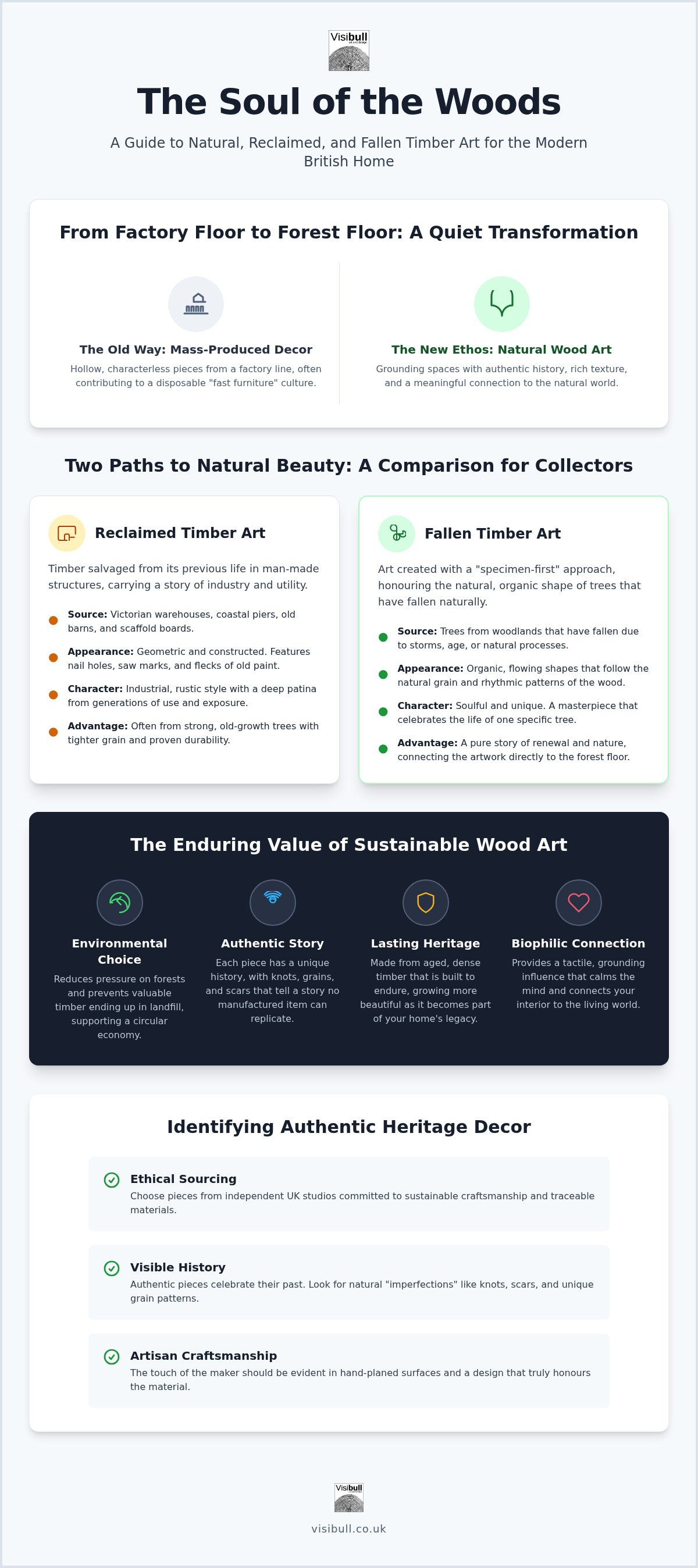
Collectors often stand at a crossroads when selecting natural wood art UK studios produce. Whilst both forms share a deep commitment to sustainability, the path from source to finished object differs significantly. Reclaimed wood art is essentially a work of construction. It takes timber that has already served a human purpose and reconfigures it into something new. Fallen timber art, by contrast, is a work of curation. It seeks to reveal the inherent beauty already present within the tree itself. Understanding these differences helps you choose a piece that doesn't just fill a space but resonates with your personal aesthetic and values.
Labour also dictates the investment and the final "vibe" of the piece. Reclaimed art often involves industrial rustic elements, requiring extensive cleaning, de-nailing, and joining of various planks. It's a labour-intensive process of transformation. Fallen timber art, such as cross-sections or prints, demands a patient, methodical approach to reveal the grain or pull a perfect hand-pressed image. Both styles represent a shift away from the disposability of modern decor, prioritising pieces that carry a sense of permanence and weight.
Visual Characteristics and Texture
The visual impact of these two styles is distinct. Reclaimed wood often features geometric patterns, straight lines, and heavy textures that suit industrial settings. Think of the rugged warmth of old oak beams or the sturdy grain of a salvaged workshop bench. On the other hand, fallen timber art focuses on organic concentric rings and delicate intricacy. A birch print might offer a minimalist, airy feel that contrasts beautifully with the dense, dark tones of an aged walnut table. Mixing these styles is entirely possible; a reclaimed timber surface provides a solid, historical base that allows a delicate, organic wall print to become a focal point without clashing.
The Storytelling Aspect
Every piece of wood art acts as a vessel for history, but the type of story it tells depends on its origin. Reclaimed wood is a testament to human history. It invites questions about the craftsmen who first shaped it and the buildings it once supported. Fallen timber art is a record of natural history. It documents the heartbeat of the forest, showing every season of growth and every period of drought. Both forms offer incredible longevity and heritage value, though fallen timber art often serves as a more intimate conversation piece in a British home. It feels less like a salvaged material and more like a captured moment from the wild. To see how these natural narratives come to life, you can explore our collection of original prints and handmade tables which celebrate both the strength of timber and the delicacy of its grain.
Choosing Sustainable Wood Art: Heritage Pieces for Your Space
Selecting a piece of natural wood art UK collectors find meaningful involves looking beyond the surface. It's about finding a maker who respects the material's journey from the forest floor or the salvaged site to your wall. When you support independent UK studios like Visibull Art and Design, you're investing in a patient, handmade process that values the tree's legacy as much as the final aesthetic. This connection between the maker, the material, and the owner is what transforms an object into a heritage piece.
To ensure you're buying authentic reclaimed wood art UK artisans have crafted with care, look for these markers of quality:
- Traceability: The artist should be able to tell you the story of the timber, whether it's a fallen oak from a specific woodland or joists from a local warehouse.
- Tactility: In a genuine tree ring print, you'll often feel a slight relief on the paper where the ink and wood grain have met.
- Finish: Authentic pieces are usually finished with natural oils or waxes that allow the wood to breathe, rather than thick synthetic varnishes that mask the texture.
If you've already found a wall piece that speaks to you, consider how a bespoke wooden table UK made might anchor the entire room. Commissioning a piece of furniture allows you to carry the same timber species or textural theme throughout your living space, creating a sanctuary that feels grounded and deliberate.
Styling Advice for Natural Textures
Positioning is everything. Place your natural wood art UK where it can catch the shifting daylight; the low sun of a British afternoon will highlight the deep ridges of the grain and the subtle shimmer of the wood's natural oils. To ground the piece, pair it with other honest materials like heavy linen curtains, slate surfaces, or woollen rugs. You can weave these elements together using artisan home decor UK makers provide, such as hand-turned bowls or smaller sculptures, to build a cohesive woodland theme that feels curated rather than cluttered.
Caring for Your Wooden Masterpiece
Wood is a living material that continues to respond to its environment. For original prints and raw wood sculptures, a light dusting with a soft, dry cloth is usually all that's required. Avoid harsh chemical cleaners that strip away the wood's natural character. It's also wise to monitor humidity; solid wood pieces prefer a stable environment away from the direct, drying heat of radiators. As the years pass, your wood art will deepen in colour and gain a unique patina, absorbing the history of your family life. Bringing the forest indoors is a quiet act of reconnection that provides an enduring sense of calm in a fast-paced world.
Bringing the Soul of the Forest into Your Home
Inviting a piece of the woodland into your living space is more than a design choice; it's a way to ground your home in the quiet, enduring rhythms of nature. We've explored how reclaimed timber breathes life into industrial spaces through its human history, whilst fallen tree art captures the raw, circular heartbeat of the forest itself. Whether you're drawn to the rugged scars of salvaged joists or the delicate intricacy of a hand-pressed growth ring, choosing authentic natural wood art UK collectors cherish ensures your decor carries a genuine heritage. Nature remains the ultimate maker.
By prioritising sustainable sourcing and supporting independent craftsmanship, you're helping to foster a circular economy that respects the lifecycle of our trees. Each piece serves as a tactile reminder of the world outside your window, growing more beautiful as it ages amongst your family. Embrace the organic. It's time to move away from the hollow feel of mass-produced items and find beauty in the reclaimed.
Explore our collection of original tree ring prints and bespoke woodcraft to find a piece hand-crafted with a deep reverence for natural materials. Each work is an original specimen of British woodland heritage, sustainably sourced from fallen timber to bring a sense of calm and character to your home.
Frequently Asked Questions
What is the difference between reclaimed wood and driftwood art?
Reclaimed wood is timber salvaged from man-made structures such as old buildings, boats, or barns. Driftwood is wood that has been naturally weathered and smoothed by the sea or rivers. Whilst reclaimed timber often features industrial marks like nail holes or saw scars, driftwood is defined by its soft, sculptural edges. Both options are sustainable, but reclaimed wood offers a geometric heritage, whereas driftwood reflects the raw, unyielding power of the water and the elements.
Is reclaimed wood art hygienic to have in the home?
Yes, it is entirely hygienic when sourced from professional artisans. Reputable makers ensure that salvaged timber is thoroughly cleaned and often kiln-dried to remove any moisture, pests, or bacteria. This process stabilises the wood for indoor use. At Visibull Art and Design, we apply natural finishes that seal the timber whilst preserving its tactile soul. This makes your natural wood art UK investment a safe and healthy feature for any room in your family home.
How do I know if the wood art I am buying is sustainably sourced in the UK?
Transparency is the key to identifying ethically sourced pieces. Authentic sustainable art in the UK is often created from naturally fallen timber rather than felling healthy trees. You should look for studios that can provide the history of their materials, including the tree species and its origin. Reputable artisans will be happy to discuss their sourcing practices, ensuring your purchase supports woodland conservation and the local circular economy of the UK art scene.
Can I hang wooden wall art in a bathroom or kitchen?
Hanging wooden art in these spaces is possible, but it requires careful placement. Wood naturally responds to changes in humidity and temperature. In a bathroom, ensure the ventilation is excellent to prevent the timber from warping over time. In a kitchen, keep your artwork away from direct steam or heat sources like the hob. Choosing a piece finished with protective natural oils will help, but monitoring the environment is essential for the wood's long-term health.
Why are original tree ring prints more expensive than digital nature prints?
Original tree ring prints are hand-pulled specimens, not mass-produced copies. The artisan must carefully prepare the wood cross-section, ink it by hand, and press the paper to capture every minute detail of the grain. This creates a tactile relief that a digital print lacks. You're investing in a unique record of a tree's life and the hours of skilled labour required to translate that history from the forest floor onto the page with reverence.
Do you offer commissions for specific tree species or sizes?
We certainly do. We specialise in hand-crafting bespoke wooden tables and garden sculptures tailored to your specific requirements. Whether you're looking for a particular timber species or a specific size to fit a unique space, we can help bring your vision to life. Since we only work with naturally fallen timber, the process is a collaboration with nature, ensuring that every commissioned piece is a sustainable masterpiece with its own distinct and unique woodland heritage.
How do I style reclaimed wood art in a very modern, minimalist room?
In a minimalist space, wood acts as a soulful counterpoint to sharp lines and flat surfaces. Position your natural wood art UK piece as a central focal point on a neutral wall to highlight its organic complexity. The warmth of the timber prevents a modern room from feeling too clinical or cold. By pairing the wood with other natural materials like stone or linen, you create a balanced, biophilic interior that feels both contemporary and grounded.
What should I look for when buying wood art for a 5th wedding anniversary gift?
For a 5th wedding anniversary, look for a piece that symbolises enduring strength and growth. An original tree ring print is a perfect choice, as it physically documents the years of a tree's life, mirroring the journey of a marriage. Focus on the quality of the craftsmanship and the story of the timber. A handmade gift from a UK studio carries a sense of permanence and heritage that mass-produced items simply cannot match for such a milestone.