
A wooden sculpture isn't a static object; it's a living, breathing piece of the forest that continues to evolve long after the artisan's chisel has been set aside. You've likely felt that familiar pang of worry as the first winter frost settles or a harsh summer sun beats down, fearing your cherished timber art might split, rot, or lose its vibrant, earthy glow to the relentless British elements. It's a common concern, but protecting your investment doesn't have to mean smothering its character in thick, plastic-like varnishes.
This guide will teach you how to preserve wooden garden sculpture using professional, eco-friendly techniques that honour the material's natural history whilst ensuring it ages with grace rather than decay. We'll walk you through a simple, effective maintenance schedule and help you confidently select the right oils and sealants for the UK climate. You'll learn how to manage moisture exchange and navigate the latest environmental standards, ensuring your sculpture remains a soulful, resilient centrepiece in your garden for many years to come.
Key Takeaways
- Understand why sculptures are often carved from unseasoned wood and how to manage the natural moisture exchange to prevent structural damage.
- Discover how to preserve wooden garden sculpture using eco-friendly water-based emulsions that protect the timber whilst honouring its organic texture.
- Learn how strategic placement and proper airflow can safeguard your art from the primary causes of splitting and localised rot.
- Master a seasonal maintenance schedule that keeps your timber art healthy through the shifting conditions of the British weather.
- Appreciate how the choice of slow-grown, sustainably sourced fallen timber provides a natural advantage in resisting decay.
Understanding the Nature of Outdoor Timber Art
Wood is a vessel for the history of the landscape it once inhabited. When an artisan carves a sculpture, they aren't working with a static material; they're collaborating with an organic system that continues to react to its environment. Most bespoke garden sculptures are created from "green wood", which refers to timber that has been recently felled and retains a high moisture content. Understanding this biology is the first step in learning how to preserve wooden garden sculpture effectively. The structural integrity of your art relies on two natural polymers: cellulose fibres, which provide flexibility, and lignin, the organic glue that binds those fibres together and gives the wood its rigidity.
In the UK, our humidity fluctuates wildly between the damp mists of autumn and the occasional dry heat of summer. This causes the timber to constantly expand and contract. You might notice small cracks, known as "checking", appearing along the grain. This is a natural behaviour of the material as it finds its peace with the surrounding air; it's rarely a sign of a defect. Rather than fighting these movements, successful preservation involves managing the rate at which the wood breathes.
Green Wood vs. Seasoned Timber
Chainsaw sculptures almost exclusively rely on green wood because the high moisture content makes the timber softer and less likely to shatter under the weight of heavy tools. Seasoning a large-scale log for outdoor use is a monumental task; a thick oak trunk can take over a decade to dry naturally. Within these logs, you'll find the heartwood and the sapwood. The heartwood is the dense, durable core of the tree, often rich in natural tannins that resist decay. The sapwood is the outer, living layer, which is more porous and prone to moisture absorption. A skilled maker will often prioritise the heartwood for the most detailed carvings, knowing it possesses a natural resilience that the younger sapwood lacks.
The Science of Weathering
When timber is left to the elements, it undergoes a process called silvering. This is caused by UV radiation breaking down the lignin in the surface fibres, eventually bleaching the wood to a distinguished grey patina. Whilst many appreciate this aesthetic weathering, it's vital to distinguish it from structural decay. Aesthetic changes are surface-level, but structural rot begins when moisture becomes trapped in the grain for extended periods. You should keep a watchful eye for early signs of soft rot, which often feels spongy to the touch, or the appearance of fungal fruiting bodies. These are signals that the wood's natural defences are being overwhelmed by the damp British climate.
Preservative Solutions: Comparing Oils, Waxes, and Sealants
Choosing the right finish is perhaps the most critical decision in your journey of learning how to preserve wooden garden sculpture. It's a delicate balance between sealing the grain against moisture and allowing the timber to breathe. Many owners are tempted by film-forming varnishes or thick lacquers, but these are often the worst choice for outdoor art. Because wood naturally expands, these rigid coatings eventually crack. Once moisture seeps through those tiny fractures, it becomes trapped against the wood, leading to rapid rot and unsightly peeling that's incredibly difficult to rectify.
Instead, modern preservation leans toward water-based emulsions and penetrating treatments. These solutions align with a global shift toward stricter environmental standards, such as the 2026 regulations targeting hazardous air pollutants in wood processing. Choosing a water-based siloxane waterproofer or a low-VOC emulsion ensures you're protecting your art without introducing unnecessary toxins into your garden. Many professional-grade sealants now incorporate fungicide additives specifically designed to prevent "blue stain", a common fungal discolouration that can mar the appearance of pale timbers like oak or pine in damp British conditions.
Natural Oils: Tung, Linseed, and Danish
For those seeking a soulful, matte finish, pure natural oils are often the artisan's first choice. Tung oil is widely considered the gold standard; it penetrates deeply and polymerises into a tough, water-resistant layer that still feels like raw wood. Conversely, raw linseed oil should be used with caution in the UK. Whilst it's beautifully natural, it stays "wet" for a long time and can actually provide a food source for mould in the shaded, damp corners of a typical British garden. A blended Danish oil or a high-quality bespoke garden sculpture treatment offers a safer middle ground, enhancing the timber's original warmth without the risk of fungal growth.
Modern Synthetic Sealants and Decking Oils
If you prefer a more robust "set and forget" approach, modern synthetic oils like Osmo offer significant advantages over standard high-street brands. While basic decking oils from shops like Cuprinol or Ronseal provide essential protection, professional-grade finishes often contain superior UV-inhibitors. These act like a sunscreen for your art, slowing down the silvering process and keeping the wood's vibrant original colour alive for longer. When selecting a product, consider a lightly tinted oil. A "clear" finish often lacks the pigment needed to block UV rays effectively, whereas a tint that matches your specific wood species, such as oak or cedar, will preserve that sun-drenched glow far more effectively than a generic stain. Understanding these chemical nuances is the most reliable way to master how to preserve wooden garden sculpture for the long term.
Placement and Environment: Protecting Your Sculpture
The location you choose for your timber art is just as vital as the oils you apply. Whilst it's tempting to place a sculpture in the centre of a sun-drenched lawn, direct exposure is often the primary catalyst for severe splitting. When one side of a piece is baked by the afternoon sun whilst the other remains cool, the resulting internal tension forces the wood to pull apart. Finding the right home for your work is a fundamental part of learning how to preserve wooden garden sculpture, ensuring it remains a stable, soulful presence in your landscape for decades.
Beyond the sun, you must consider the invisible micro-climates created by surrounding foliage. Dense bushes or overhanging branches can trap moisture against the wood, preventing the surface from drying after a downpour. This stagnant, humid air creates a breeding ground for localised rot. Airflow is your sculpture's best friend; a gentle breeze allows the timber to shed excess moisture naturally, maintaining the delicate balance between the material and the atmosphere. Without this ventilation, even the best-treated wood will eventually succumb to the damp.
Strategic Siting in the Garden
A position in dappled shade is almost always superior to full sun or deep, dark corners. This filtered light mimics the forest canopy, protecting the wood from UV damage whilst allowing enough warmth to prevent dampness. You should also be wary of "wind tunnels" between buildings or through narrow garden gaps. Excessive wind can strip moisture from the timber too rapidly, leading to the same checking and cracking issues caused by heat. Aim for a sheltered spot where the sculpture can be appreciated without being battered by the extremes of the British weather.
Foundations and Drainage
Ground contact is the single biggest threat to any wooden object. Soil acts like a sponge, and the end-grain at the base of a sculpture acts like a bundle of straws, drawing moisture and microorganisms deep into the heartwood. To combat this, you should always lift the timber off the earth. Many collectors use stainless steel stand-offs or hidden "feet" to create a small gap that breaks the capillary action of rising damp. Placing your sculpture on a free-draining bed of slate or decorative gravel further prevents water from pooling around the base.
For pieces with flat top surfaces, consider the traditional technique of lead capping or copper strips. These metals not only protect the vulnerable end-grain from direct rain but also release natural biocides during wet weather, which helps to discourage fungal growth. By elevating the piece and ensuring rapid drainage, you're effectively cutting off the primary pathway for decay. This simple structural foresight is a cornerstone of how to preserve wooden garden sculpture against the persistent damp of a UK winter.

The Annual Care Routine: A Step-by-Step Guide
Caring for timber art is a rhythmic process that follows the pulse of the British seasons. Rather than a burdensome task, it's an opportunity to reconnect with the texture and story of your piece. A successful maintenance calendar usually centres on a thorough check-up in late spring, once the persistent damp of winter has retreated and the wood has had a chance to breathe. This timing ensures that you aren't sealing moisture into the grain, which is the most common mistake made when people first learn how to preserve wooden garden sculpture.
Cleaning and Preparation
Begin by removing any buildup of algae, lichen, or garden debris that has accumulated in the darker months. You should avoid aggressive chemical bleaches or high-pressure power-washers; the latter can tear the delicate surface fibres and ruin fine carved details. Instead, use a soft-bristled brush and a non-aggressive, oxygen-based cleaner. These solutions break down organic growth without harming the surrounding soil or the wood's natural lignin. Once cleaned, the sculpture must be left until it's bone dry. Depending on the UK's unpredictable weather, this might take several days of clear skies, but patience here is vital for a lasting finish.
Application Techniques for Complex Shapes
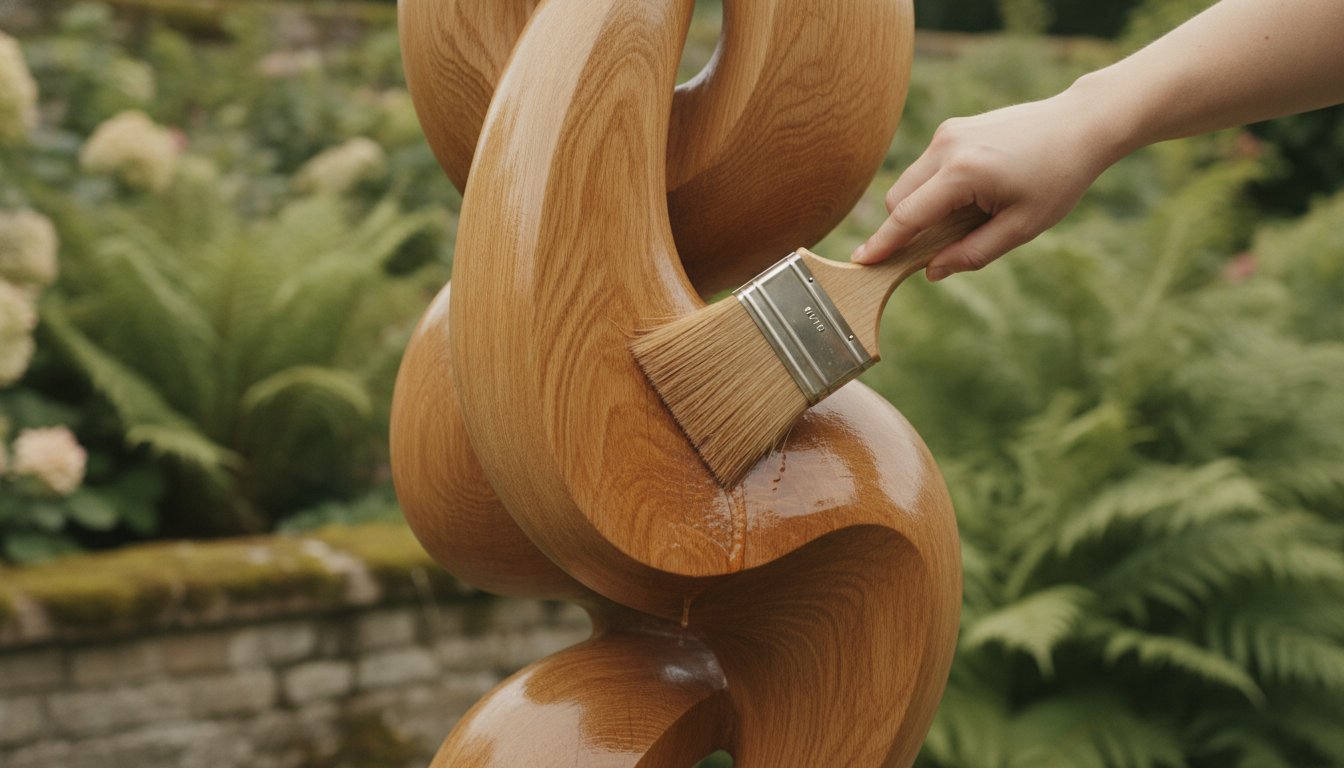
When applying your chosen preservative, use a natural bristle brush to reach into deep crevices, undercuts, and the textured grain of the garden sculptures you've chosen for your space. For the best results, employ a "wet-on-wet" technique. This involves applying a second coat whilst the first is still tacky, allowing the timber to drink as much oil as it can hold. After about twenty minutes, wipe away any excess with a lint-free cloth. Leaving a "gloopy" or sticky layer on the surface will only attract dust and insects, resulting in a dull finish that obscures the wood's natural beauty.
You don't always need to sand the wood back to a raw state. If the previous year's finish is still intact but looking slightly dry, a simple "top up" coat is often enough to restore its lustre. However, keep an eye on natural checks and cracks. Small splits are part of the wood's character, but if a crack is large enough to pool rainwater, you might consider filling it with a breathable wood wax to prevent internal rot. Learning how to preserve wooden garden sculpture is about observing these small changes and responding with a gentle, artisanal touch.
Choosing Sustainable Heritage: The Artisan Advantage
The success of any preservation effort is rooted in the integrity of the timber itself. If the wood lacks natural density or has been harvested too quickly, even the most meticulous care routine will struggle to combat the British weather. The journey of learning how to preserve wooden garden sculpture begins long before the first coat of oil is applied; it starts in the heart of the woodland, where the choice between slow-grown heritage timber and mass-produced wood determines the art's future. By choosing a piece crafted with an understanding of forestry, you're investing in a material that possesses a natural, cellular resistance to the elements.
The Value of Fallen Timber
At Visibull Art and Design, the creative process often begins with the discovery of a fallen tree. Sourcing with this level of integrity ensures that the wood has already begun its transition into a stable state. Unlike trees that are felled whilst in their prime, "stress-free" fallen timber has often spent years finding a natural equilibrium with the earth. This stability makes the wood less prone to the violent warping or deep splitting that can plague younger, commercially harvested logs. You can explore the depth of this philosophy in our feature on Bespoke Garden Sculpture UK: A Case Study in Sustainable Timber Art.
Investing in Outdoor Art
Bespoke garden sculptures offer a longevity that mass-market alternatives simply cannot match. High-street items are often made from fast-grown softwoods, which lack the complex lignin structures found in ancient, slow-grown hardwoods like oak or sweet chestnut. These denser fibres are naturally better at managing moisture, making your task of learning how to preserve wooden garden sculpture much more rewarding. When you care for a handmade piece, you aren't just maintaining an object; you're honouring the legacy of woodcraft that has defined the British garden for centuries.
Ultimately, we must embrace the "Wabi-sabi" of wood, finding a profound beauty in the aged, preserved surface. A sculpture that has weathered a decade of seasons carries a story in its grain that a new piece cannot replicate. Regular maintenance ensures that this aging process is graceful. By following a guide to natural wood garden sculptures UK, you protect the emotional connection between the maker's hand, the fallen tree, and your own outdoor sanctuary. This stewardship transforms a simple garden ornament into a resilient piece of heritage art that breathes alongside your garden.
Nurturing the Spirit of Your Timber Art
Your journey with a wooden sculpture doesn't end the day it's placed in your garden; it's a partnership that deepens with every passing season. By mastering how to preserve wooden garden sculpture, you aren't just fighting decay but allowing the timber to age with character. Successful care relies on three central pillars: selecting breathable, eco-friendly oils that honour the wood's texture, ensuring proper drainage to avoid ground rot, and maintaining a gentle annual cleaning rhythm. These simple acts of stewardship protect the structural integrity of the piece whilst celebrating the natural silvering that comes with time.
We believe every fallen tree has a unique story to tell. Our work is hand-crafted from fallen British timber, featuring artist-led designs that celebrate our natural heritage. We include expert guidance on lifelong timber care with every commission to ensure your art remains a resilient centrepiece. Explore our collection of bespoke, sustainably sourced garden sculptures and find a piece that connects your home to the quiet history of the forest. With a little patient attention, your sculpture will stand as a soulful testament to nature's enduring beauty.
Frequently Asked Questions
How often should I oil my wooden garden sculpture in the UK?
You should generally apply a fresh coat of oil once a year, ideally during late spring after the timber has dried out from the winter damp. In the UK climate, this annual rhythm ensures the wood remains supple without trapping moisture. If the sculpture is in a particularly exposed spot, you might consider a light top up in autumn to provide an extra layer of protection before the frost and rain arrive.
Is it normal for my wooden sculpture to develop large cracks?
Yes, it's perfectly normal for timber to develop checks or cracks as it breathes and adjusts to its environment. These movements are a natural behaviour of the wood, not a defect in the craftsmanship. Most small cracks will open and close with the changing humidity. You only need to intervene with a breathable wood wax if a crack is large enough to pool water, which could lead to internal decay.
Can I use ordinary varnish on an outdoor wood carving?
You should avoid using ordinary film-forming varnishes on outdoor sculptures. These rigid coatings don't move with the wood's natural expansion and contraction, eventually leading to hairline fractures. Once water seeps behind the varnish, it becomes trapped against the grain, causing the wood to rot far faster than if it were left untreated. Penetrating oils are a much safer choice for maintaining the long-term health of your timber art.
What is the best wood for a garden sculpture to ensure it lasts?
Slow-grown British hardwoods like oak, sweet chestnut, or cedar are the most resilient choices for outdoor art. These species possess a high density and natural tannins that act as a built-in preservative. When learning how to preserve wooden garden sculpture, starting with heartwood from a sustainably sourced fallen tree provides a significant advantage. These timbers age with grace and offer far greater structural durability than fast-grown softwoods or mass-produced alternatives.
How do I stop my wooden sculpture from turning grey?
To prevent the natural silvering caused by UV rays, you must use a preservative that contains UV-inhibitors or a light pigment. Clear oils often lack the necessary protection to block the sun's radiation, which breaks down the lignin on the surface. Applying a tinted oil that matches the original wood species every year is the most effective way to maintain that warm, vibrant glow whilst protecting the fibres from the bleaching effect of the sun.
Is it better to keep a wooden sculpture in the sun or the shade?
A position in dappled shade is the ideal environment for most wooden sculptures. Full sun can dry the timber too rapidly, causing severe splitting, whilst deep, dark shade often traps moisture and encourages the growth of algae or rot. A spot with filtered light and good airflow allows the wood to dry naturally after rain without being baked by the midday sun, creating a stable micro-climate that supports the material's longevity.
Can I move my outdoor sculpture indoors during the winter?
It's usually better to leave your sculpture outdoors rather than moving it into a centrally heated home for the winter. The sudden shift to dry, warm indoor air can cause the timber to shrink too quickly, leading to dramatic and permanent cracking. If you must move it, a cool outbuilding or unheated conservatory is a safer choice. This allows the wood to remain at a temperature and humidity level closer to its natural environment.
What should I do if I see mushrooms or fungi growing on the wood?
If you spot fungal growth, you should clean the area immediately using a non-aggressive, oxygen-based cleaner and a soft brush. Mushrooms are a sign that the wood is staying damp for too long, often due to poor airflow or ground contact. Once the sculpture is dry, inspect the wood for soft spots. If the timber feels spongy, you may need to apply a specialist wood hardener before learning how to preserve wooden garden sculpture with a fresh oil.