
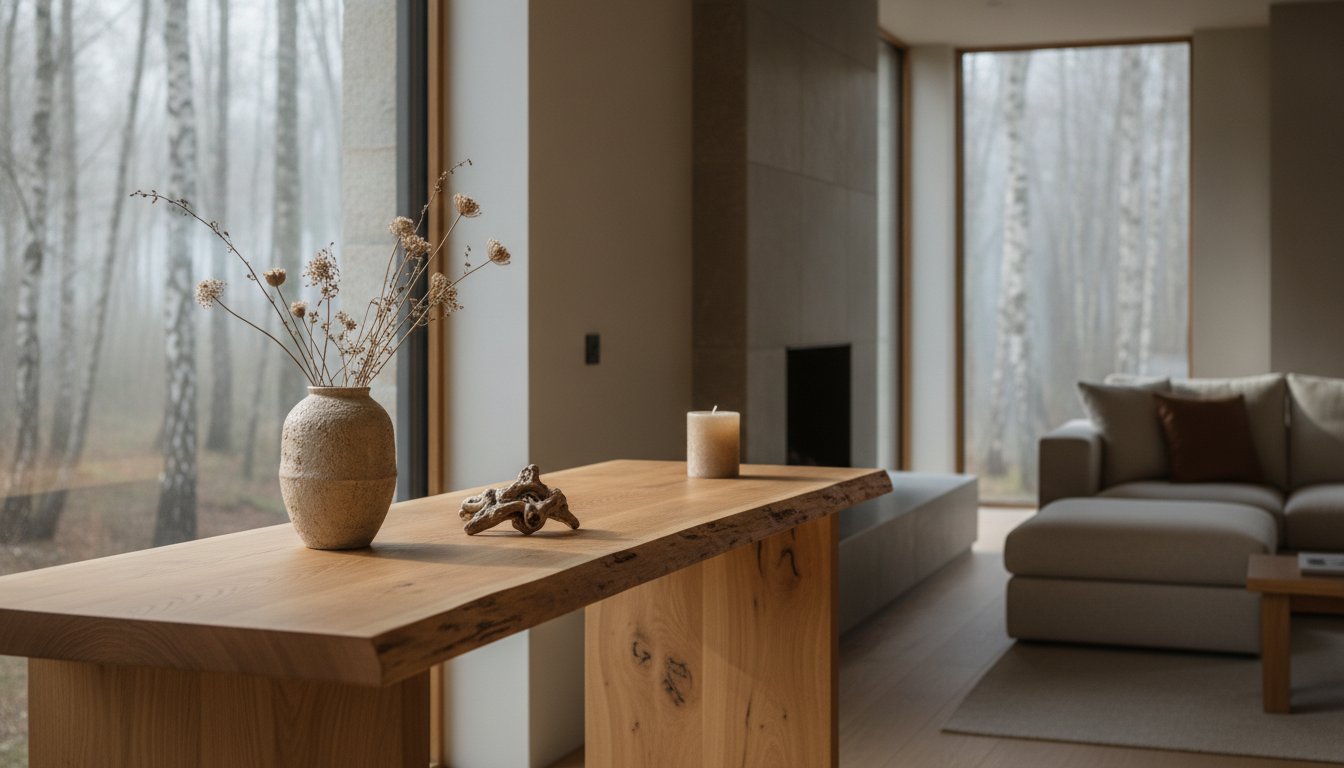
What if the objects in your home didn't just fill a space, but carried the quiet, centuries-old heartbeat of a British woodland? It's easy to feel overwhelmed by the flood of mass-produced "eco" labels on the high street, especially as 2026 ecodesign regulations push every brand to claim green credentials. You likely crave a sanctuary that feels calm and connected to the earth, yet finding authentic nature inspired homewares UK that possess a genuine soul can feel like an endless search through a forest of greenwashing.
We understand that a home should be a collection of stories, not just a series of purchases. In this guide, you'll discover how to curate a living space that celebrates the raw beauty of timber and the intricate patterns of the natural world through sustainably sourced, artisan-crafted decor. We'll show you how to distinguish true craftsmanship from factory-made imitations, providing specific ideas for styling organic textures and original art that brings the outdoors in. From the tactile grain of a handmade table to the delicate lines of a hand-pressed print, we're exploring the path to a more mindful, beautifully rooted home.
Key Takeaways
- Discover the unique characteristics of native British timber and how to select materials that bring a sense of age and texture to your living space.
- Learn to apply the "Rule of Three" when mixing organic textures to create a balanced, nature-focused interior that feels calm and intentional.
- Use our buyer’s checklist to source authentic nature inspired homewares UK, ensuring your decor supports independent artisans and genuine environmental renewal.
- Understand the lifecycle of materials and why choosing pieces crafted from fallen timber is a powerful way to honour woodland heritage without harming living forests.
- Gain specific insights into how hand-pressed prints and bespoke woodcraft can transform a house into a soulful sanctuary that tells a story.
What are Nature Inspired Homewares and Why Do They Matter?
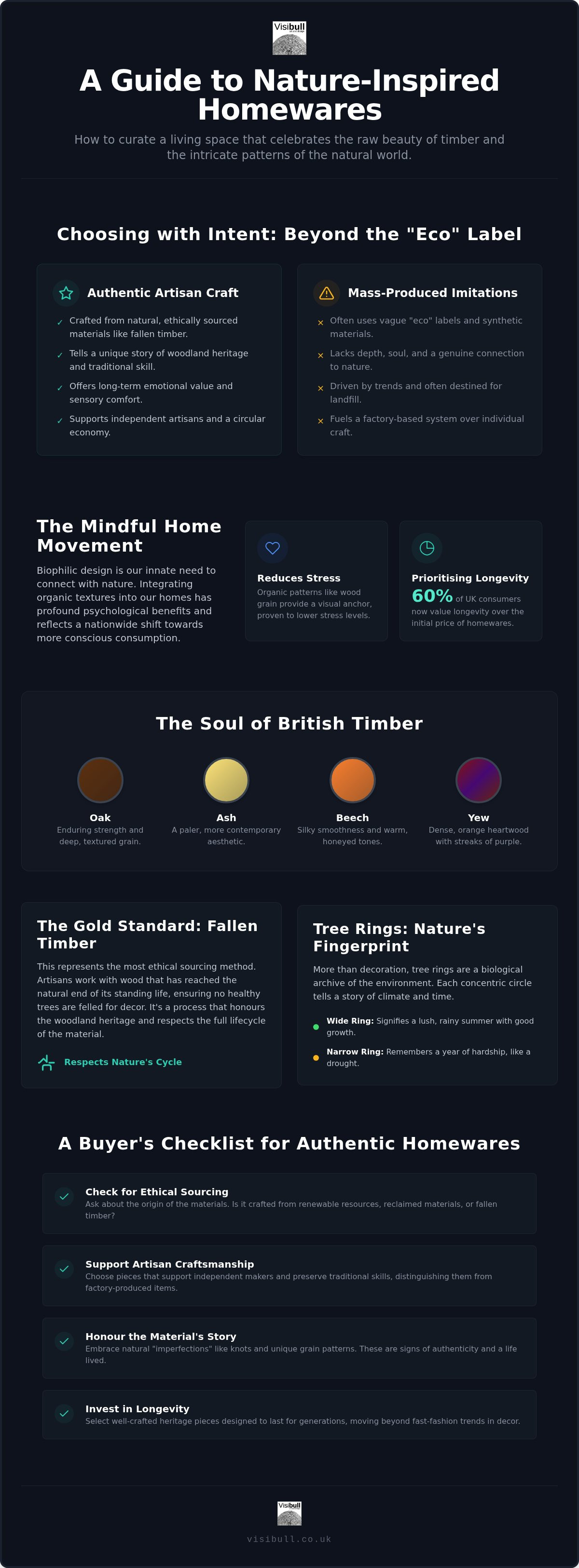
Nature-inspired homewares are often misunderstood as merely a collection of botanical prints or floral patterns. In truth, authentic nature inspired homewares UK collectors seek out decor that utilises raw materials, organic textures, and the inherent geometry of the earth. It is an approach to interior design that brings the physical reality of the British woodland into our daily lives, moving beyond the superficial to embrace the tactile history of timber, stone, and clay. This connection is rooted in biophilia, which describes our innate human need to stay close to the natural world. By integrating biophilic design principles into our living spaces, we create environments that don't just look beautiful but actually support our wellbeing. These pieces act as a bridge between our modern indoor lives and the restorative power of the outdoors.
The Psychological Benefits of Natural Textures
Surrounding ourselves with organic patterns, such as the rhythmic flow of wood grain or the concentric circles of tree rings, has a documented ability to reduce stress levels. These textures provide a visual and tactile anchor in a fast-paced digital age. A calm home is built on materials that feel honest under the hand: the cool touch of stone, the warmth of hand-crafted wood, or the coarse grain of linen. Choosing these elements is more than a passing trend; it is a fundamental shift in how we inhabit our rooms. As we move through 2026, many households are making a conscious lifestyle choice to reject high-street imitations in favour of pieces that offer long-term emotional value and sensory comfort.
The Rise of Eco-Conscious Home Decor in the UK
There is a growing shift towards mindful consumption and "slow decor" across the country. Recent data suggests that whilst 78% of UK adults have purchased homewares in the past year, over 60% of consumers now prioritise product longevity over initial price. Whilst high-street shops often offer mass-produced botanical imitations that lack depth, independent artisans provide heritage pieces that tell a specific story of the landscape. Supporting local makers contributes to a circular economy where the origin of a product is as important as its final form. This movement helps distinguish authentic nature inspired homewares UK from items destined for landfill. By investing in artisan-crafted garden sculptures or handmade tables, you are choosing to preserve a craft rather than fuel a factory. Sustainable homewares are items that respect the lifecycle of the raw material.
The Materials of the British Woodland: A Resource for Homeowners
Every piece of timber tells a story that began decades, or even centuries, before it entered your home. When choosing nature inspired homewares UK, understanding the specific characteristics of our native species allows you to connect more deeply with the objects you own. Oak remains the backbone of the British forest, prized for its enduring strength and deep, textured grain. Ash offers a paler, more contemporary aesthetic, whilst Beech provides a silky smoothness and warm, honeyed tones. Yew is perhaps the most soulful of all; its dense, orange heartwood often carries streaks of purple, reflecting its status as an ancient guardian of the woods. These materials aren't just surfaces. They are the physical remains of a landscape we all share.
For the conscious homeowner, fallen timber represents the gold standard of ethical sourcing. It allows an artisan to work with wood that has reached the natural end of its standing life, ensuring no healthy trees are felled for the sake of decor. This respect for the lifecycle of the material is a core value championed by the Heritage Crafts Association, which protects the traditional skills needed to transform weathered logs into heirloom pieces. By embracing the "imperfect"—the knots, the drying cracks, and the irregular ring patterns—you are choosing a piece of art that hasn't been sanitised by a factory, but rather shaped by the elements themselves.
Tree Rings: Nature’s Original Fingerprint
Tree rings are more than just decorative patterns; they are a biological archive. Through the science of dendrochronology, we can read the history of the environment in every concentric circle. A wide ring speaks of a lush, rainy summer, whilst a narrow one remembers a year of hardship or drought. This is why natural wood art prints UK have become such a significant part of the modern sustainable home. Unlike digital prints that merely replicate the look of nature, original relief prints are taken directly from the timber cross-section. Every microscopic detail of the tree's unique fingerprint is pressed onto the paper, creating a direct, physical link to the forest floor.
Sustainable Sourcing: From Forest Floor to Living Room
The journey from the forest floor to your living room is a slow, methodical process. In 2025, wood accounted for 39.45% of the United Kingdom home decor market, yet much of this is mass-processed and stripped of its character. An artisan's eye is trained to see the potential in a fallen trunk that others might overlook. They identify specimens with high character—those with unusual grain swirls or "spalting" caused by natural fungi. The maker's role is to act as a humble observer, preserving the soul of the wood through careful seasoning and hand-finishing. If you want to bring this sense of heritage into your own space, you might consider how the bespoke creations at Visibull Art and Design bridge the gap between raw nature and refined interior style.
Styling Your Space with Organic Textures and Wood Wall Art
Creating a sanctuary that feels both modern and deeply rooted in the earth requires a delicate balance. It is not about filling every corner with botanical motifs, but rather about selecting a few significant pieces that ground the room. A successful framework for nature inspired homewares UK enthusiasts often relies on the "Rule of Three". By grouping three distinct organic textures together, such as the hard grain of wood, the soft pile of wool, and the cool, matte surface of clay, you create a tactile landscape that feels complete. This interplay of materials prevents a room from feeling sterile or overly staged. It invites a sensory connection that mass-produced plastic decor simply cannot replicate.
Scale is equally vital when inviting the forest indoors. A single, commanding piece of large wood wall art UK can act as a quiet focal point, drawing the eye and setting the tone for the entire space. To truly honour these materials, consider your lighting. Avoid harsh, flat overhead lights. Instead, use side-lighting or low-level lamps to cast gentle shadows across the surface of the wood. This grazing light catches the ridges of the grain and the depth of the cracks, highlighting the physical history of the timber and making the art feel alive as the day fades.
Minimalist vs. Rustic: Finding Your Nature-Inspired Style
Your personal aesthetic determines how these elements are layered. In a minimalist setting, a single tree ring art print provides enough geometric interest to anchor a room without cluttering the visual field. The monochromatic rings offer a sophisticated, almost architectural quality. Conversely, a rustic approach thrives on abundance. You might layer thick woven rugs with raw-edged furniture to create a cosy, woodland-inspired "cabin" feel. In both styles, keeping a neutral colour palette allows the natural hues of the wood—the silvered greys of weathered oak or the deep ambers of yew—to remain the true stars of the show.
Bringing the Outdoors In: Small Woodland Accessories
Even in smaller homes, the impact of artisan home decor UK is profound. You don't need a sprawling estate to celebrate the forest. A "nature shelf" curated with found objects like dried seed pods or smooth river stones, alongside handmade art, creates a personal altar to the seasons. This connection to the outdoors doesn't have to stop at your furniture. Nature-inspired apparel, such as organic cotton clothing featuring botanical designs, bridges the gap between your outdoor lifestyle and indoor comfort. It's about a holistic way of living where the materials you wear and the objects you touch all share the same ethical, earth-centred origin.
How to Source Truly Sustainable Homewares in the UK
Sourcing authentic nature inspired homewares UK requires more than just an appreciation for the aesthetic; it demands an understanding of the supply chain. Whilst high-street retailers have become adept at using "green" language, the reality of their production often involves global shipping and industrial-scale manufacturing. Choosing to buy from independent UK studios is a direct way to reduce your carbon footprint. By keeping the journey from workshop to home as short as possible, you ensure that the environmental cost of your decor remains low. Supporting these makers also preserves the heritage of British craft, ensuring that traditional woodworking and printmaking skills continue to thrive amongst a sea of mass-produced alternatives.
The Artisan Checklist: What to Ask Before You Buy
Before committing to a new piece for your home, it's helpful to look past the label. A truly sustainable item should be able to answer several key questions about its origin. Use this checklist to verify the integrity of your next purchase:
- What is the material source? Seek out fallen timber or wood with clear FSC certification. If the seller can't tell you where the tree grew, it likely isn't truly local.
- Is it an original or a copy? Look for signs of the maker's hand. Original artist prints taken directly from timber have a depth and texture that digital reproductions simply cannot match.
- Where was it crafted? Prioritise items made within the UK. This supports local talent and avoids the heavy emissions associated with international freight.
Investment Pieces: Why Handmade Tables and Art Last Generations
Sustainability is often a matter of longevity. When you compare the lifecycle of a handmade wooden desk UK to a typical flat-pack alternative, the value becomes clear. A mass-produced desk might last five years before the composite materials begin to fail, whereas a solid wood piece is built to last fifty or more. The "cost per year" of an artisan piece is significantly lower over its lifetime. Beyond the financial aspect, there is an emotional weight to owning an object with a documented history. You aren't just buying furniture; you are becoming the custodian of a piece of the forest. Caring for these items is a simple act of respect; a regular application of natural wax or oil keeps the grain supple and protected for the next generation. If you're ready to start your own collection of heritage pieces, you can browse our collection of artisan homewares to find a story that resonates with your space.
Discovering Artisan Craftsmanship at Visibull Art and Design
Visibull Art and Design operates as a quiet workshop where the forest is allowed to speak for itself. As an independent UK creative studio, we have moved away from the cold, commercial feel of high-street decor to embrace an intimate storytelling approach. Our collection of nature inspired homewares UK is born from a deep reverence for the British woodland and the organic beauty of timber. We don't view fallen trees as waste or mere fuel. Instead, we see them as complex archives of history, waiting for their unique stories to be revealed through patient, hand-crafted techniques. It is an artistic authority tempered by the humility of a maker who remains awestruck by the raw materials provided by the earth.
From Forest Floor to Gallery: Our Sustainable Process
The journey of every piece begins with a patient and observant search amongst local woodlands. We focus exclusively on fallen timber, believing that this is the ultimate ethical choice for sustainable homewares. This methodical process avoids the felling of healthy trees, allowing us to work with wood that has reached the natural end of its standing life. Once a specimen is brought into the studio, the work becomes a slow, soulful execution of craft. We create original artist prints by applying ink directly to the sanded cross-sections of the wood. Every ring, knot, and microscopic texture is hand-pressed onto paper, capturing a physical record of the tree's lifecycle. This traditional technique ensures that no two prints are ever identical, celebrating the history and texture of the medium over mass-market perfection.
Bespoke Commissions for Your Home and Garden
Our dedication to the lifecycle of timber extends into the creation of functional, heritage objects. We specialise in hand-crafted bespoke wooden tables that are designed to be lifetime investments, standing in stark contrast to the disposable nature of modern flat-pack furniture. These pieces are composed to highlight the journey from a natural state to a finished object, prioritising the tactile qualities and unique grain patterns of the wood. For those looking to transform their outdoor spaces, we also create natural wood garden sculptures UK that act as organic focal points, weathering gracefully alongside the living landscape. We invite you to explore our collection or start a conversation about a unique commission. Whether it is a hand-pressed print or a bespoke table, our goal is to help you bring the soul of the woodland into your home through honest, transparent craftsmanship.
Rooting Your Home in the British Woodland
A home that feels calm and connected to the earth isn't built overnight. It's a slow curation of objects that carry the weight of the forest floor and the history of the elements. You now have the tools to look past mass-produced labels and identify the tactile, honest quality of genuine artisan work. By choosing materials like fallen timber and original relief prints, you're not just decorating a room; you're preserving a piece of British heritage. Each knot and grain pattern serves as a reminder of our innate connection to the wild.
Integrating nature inspired homewares UK into your daily life creates a sanctuary that prioritises the lifecycle of the material as much as the final aesthetic. Whether you are balancing textures with the Rule of Three or commissioning a bespoke table that will last generations, your choices contribute to a more mindful, circular economy. We invite you to explore our collection of original nature-inspired homewares to find a piece that resonates with your own story. Through original prints from fallen trees and bespoke UK craftsmanship, we can help you bring the quiet heartbeat of the forest into your living space. Let your home reflect the enduring beauty of the natural world.
Frequently Asked Questions
What makes homewares "nature-inspired" rather than just botanical?
Authentic nature-inspired homewares focus on the raw materials and physical geometry of the earth, whereas botanical decor often relies on superficial surface patterns. This distinction is vital when sourcing nature inspired homewares UK. Whilst a botanical print might feature a leaf drawing, a nature-inspired piece utilises the actual textures of timber, stone, or clay. It's about the physical presence of the woodland, celebrating the lifecycle of materials through tactile, artisan-crafted objects.
How can I tell if wood homewares are sustainably sourced in the UK?
Sustainable woodcraft is defined by transparency. You can identify ethical pieces by checking if the timber is sourced from fallen trees or carries FSC certification. Fallen timber is the gold standard for nature inspired homewares UK because it utilises wood that has reached its natural end without felling healthy forests. Artisans who can document the origin and history of each specimen offer a level of integrity that mass-market brands rarely provide.
Are original tree ring prints different from standard forest posters?
Original tree ring prints are tactile relief prints taken directly from the sanded cross-section of a fallen tree. Unlike standard posters, which are mass-produced digital reproductions, these prints capture the microscopic detail of the grain and the tree's specific growth history. This methodical process creates a physical connection to a specific specimen. Every print is a unique piece of heritage art that carries the actual fingerprint of the British woodland.
Can I commission a bespoke wooden table from fallen trees?
Yes, you can commission bespoke handmade tables specifically crafted from naturally fallen timber. These pieces are designed as lifetime investments, tailored to the unique dimensions and character of your living space. Working with an independent studio allows you to participate in the journey of the wood, from the forest floor to a finished object. This approach honours the tree's decades of growth whilst providing a functional, soulful centrepiece for your home.
What is the best way to style wood wall art in a modern home?
Balance is essential in a contemporary setting. Use the "Rule of Three" by pairing your wood art with different organic textures like wool or clay to avoid a sterile atmosphere. Large-scale pieces work best as quiet focal points on a neutral wall. Position your lighting to the side rather than overhead; this catches the ridges of the grain and highlights the physical depth of the timber, making the artwork feel alive.
How do I care for handmade wooden homewares to make them last?
Natural wood is a living material that responds to its environment. Avoid placing pieces near direct heat sources or in damp areas. To maintain the supple feel of the grain, apply a thin layer of natural wax or oil every few months. This simple act of care preserves the protective barrier and enhances the wood's patina. Proper maintenance ensures your artisan homewares remain beautiful and durable for many generations to come.
Why is it better to buy from independent UK artists than high-street shops?
Buying from independent UK artists supports a circular economy and reduces transport emissions compared to global high-street supply chains. Independent studios offer transparency about their methods and materials, ensuring your decor is ethically produced. You're investing in a piece with a documented origin story rather than a mass-produced imitation designed for short-term trends. It's a choice that prioritises soulful craft and environmental responsibility over commercial volume and convenience.
What are the best sustainable gift ideas for nature lovers in 2026?
For nature lovers, consider gifts that celebrate woodland heritage and longevity. Original tree ring prints or hand-crafted garden sculptures make meaningful, long-lasting choices. Eco-friendly clothing featuring natural artist designs is another thoughtful option for those who enjoy an outdoor lifestyle. Look for items made from organic materials or reclaimed timber, as these reflect a genuine commitment to environmental renewal and the preservation of traditional craft skills across the United Kingdom.