
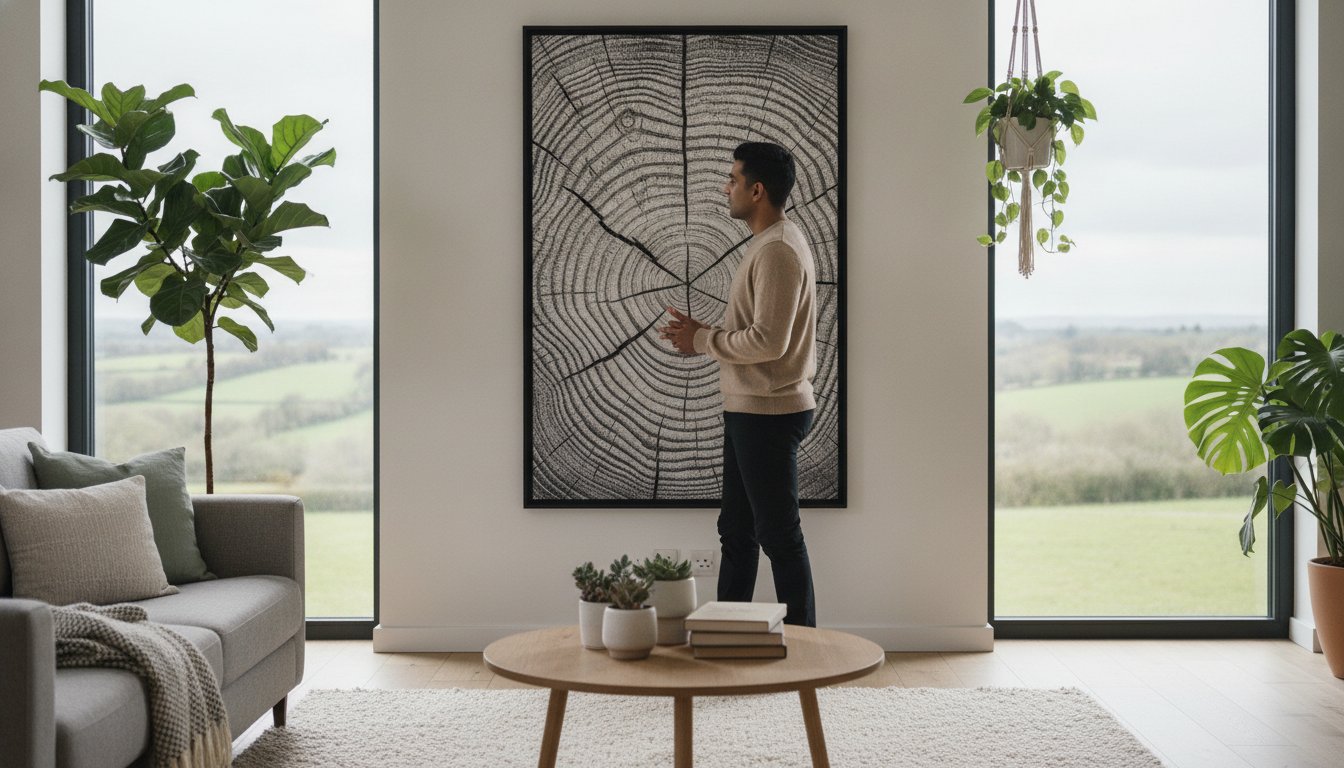
What if the art on your walls didn't just look like nature, but was actually a physical record of a tree's life in the British countryside? Most of us want a home that feels like a sanctuary, yet we often end up with generic, soulless decor that feels disconnected from the earth. It's frustrating to sift through endless low-quality digital prints when you're searching for authentic nature art for home UK spaces that carries a real story and respects our environment.
We understand that finding truly sustainable pieces can feel overwhelming, especially when you want to support independent UK artists who value the lifecycle of their materials. This guide will show you how to transform your living space using biophilic design and sustainably sourced art that celebrates the heritage of our native timber. You'll learn how to choose pieces that don't just fill a gap on the wall, but act as a soulful connection to the forest floor.
We'll explore the journey from fallen tree to finished print, helping you find a unique focal point that brings the restorative rhythm of the woods into your favourite room.
Key Takeaways
- Learn how biophilic design uses natural patterns to foster a restorative connection to the outdoors and lower stress within your living space.
- Discover why authentic, hand-pressed nature art for home UK offers a soulful alternative to mass-produced digital decor by honouring the history of fallen timber.
- Understand how to select the right British tree species and ring scale to create a meaningful focal point that reflects the unique character of your home.
- Master the art of styling woodland prints, from creating impactful gallery walls to using lighting that highlights the raw, tactile texture of the grain.
- Explore the ethical journey of "forest floor to gallery" and how supporting independent UK artisans ensures your decor is truly sustainable.
Understanding the Biophilic Appeal of Nature Art for Home UK
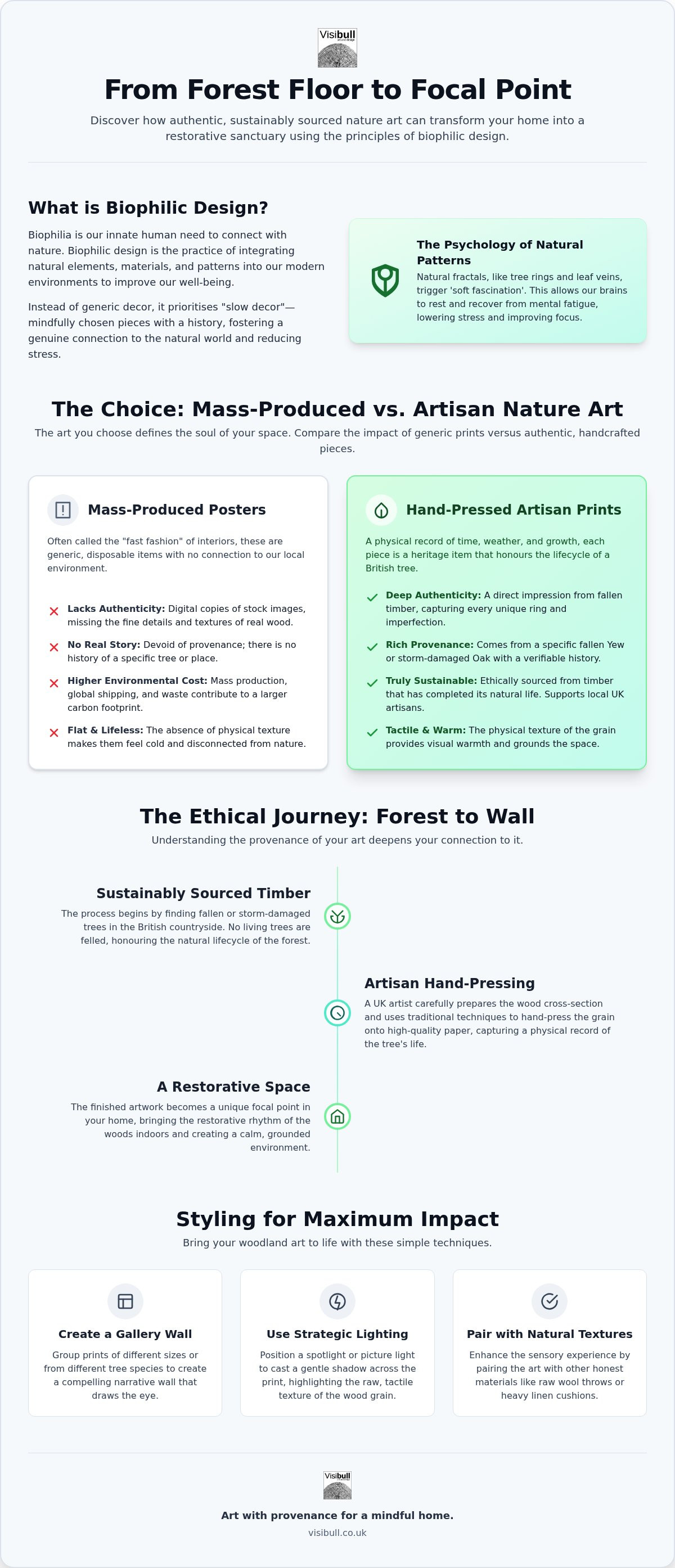
The concept of biophilia isn't just a fleeting design trend; it's a deep-seated biological necessity. Understanding the Biophilic Appeal begins with acknowledging that we possess an innate, ancient desire to be near the living world. In our busy lives, we're seeing a significant shift away from the fast-paced consumption of mass-produced goods toward "slow decor." This movement prioritises mindful living and the selection of pieces that carry a sense of history and permanence. Choosing authentic nature art for home UK is the most accessible way to bridge the gap between our urban spaces and the ancient woodlands we evolved amongst. It is about more than just aesthetics. It is about the physical record of life captured in the grain of a tree that grew for decades before finding its way to your wall.
The Psychology of Natural Patterns in Living Spaces
Biophilia is the practice of integrating nature into the built environment to improve health and well-being. This integration works through "soft fascination," a state where our minds are gently occupied by natural fractals, the repeating patterns found in tree rings or leaf veins. Unlike the harsh, repetitive geometric lines of modern architecture, these organic shapes allow our brains to rest and recover from the fatigue of digital screens. Seeing the intricate, non-linear growth of a timber cross-section reduces stress. It mirrors the chaotic yet harmonious logic of the forest floor, offering a quiet focal point that aids focus and mental clarity.
Why Texture Matters in Modern British Interiors
In a world dominated by smooth glass and cold plastic, the tactile presence of wood grain offers a much-needed sense of visual warmth. The physical ridges and valleys of an original artist print, taken directly from the heart of a fallen tree, provide a depth that digital downloads simply cannot replicate. This texture grounds a room. It makes the space feel lived-in and layered. To maximise this restorative effect, try pairing your nature art for home UK with other honest materials like raw wool throws or heavy linen cushions. These elements work together to create a sensory-rich environment that feels both grounded and deeply connected to the natural world. This layering of natural textures creates a sanctuary that appeals to our senses and provides a calm retreat from the outside world.
Mass-Produced vs. Artisan: Finding Authenticity in Woodland Prints
When you choose nature art for home UK, you're often faced with a choice between a glossy, mass-produced poster and something that feels truly alive. Digital illustrations are often clean and perfect, but they lack the breath of the woodland. There's a profound difference between a pixels-on-paper representation and a hand-pressed tree ring print. One is a copy of a copy; the other is a physical record of time, weather, and growth. This authenticity is a core pillar of biophilic design, where the goal is to foster a genuine connection to the organic world, not just a visual imitation of it. Art with provenance changes the energy of a room, turning a blank wall into a conversation about the natural history of our landscape.
The Problem with Generic Botanical Posters
Mass-market prints are the "fast fashion" of the interior world. They're often printed in bulk using globalised stock images that have no link to our local environment. These posters frequently lose the fine, intricate details of the timber’s history, such as the narrow rings from a drought year or the wide, healthy growth of a wet spring. Because they're produced on a massive scale, they often carry a heavy environmental cost in shipping and waste. Choosing locally crafted pieces reduces this footprint and ensures your art has a story that belongs to the British countryside rather than a nameless warehouse.
The Value of Provenance and Fallen Timber
Provenance is the heartbeat of a piece of art. It’s the knowledge that your print came from a specific fallen Yew or a storm-damaged Oak. Using timber that has already finished its life cycle is an act of reverence; it means no trees were felled simply to decorate a wall. These pieces aren't temporary decorations to be swapped out when trends change. They're heritage items that honour the lifecycle of the forest. The tiny imperfections, the scars in the bark, and the irregular grain aren't flaws. They're signatures of a life lived outdoors. If you're looking for work that carries this weight of history, you might explore the original artist prints created from trees found in our own woodlands. This approach ensures your home remains connected to the earth in a way that is both ethical and deeply personal.
Selecting the Right Species and Style for Your Space
Choosing the right nature art for home UK involves more than just measuring a gap on the wall. It requires an appreciation for the specific life story told by the timber. Every tree species possesses a unique "voice" and visual rhythm that can drastically alter the atmosphere of a room. Academic research on the benefits of biophilic design suggests that our psychological response to organic patterns is most restorative when the material feels authentic and recognisable. By selecting a species that resonates with your personal style, you aren't just decorating; you're anchoring your home in the heritage of the British landscape.
Exploring the Character of British Timber
The species of tree determines the density and detail of the rings, which in turn dictates the visual scale of the art. An Oak cross-section carries a dense, intricate history, often showing centuries of slow, steady growth that feels grounded and traditional. In contrast, species like Ash or Birch offer a lighter, more contemporary feel with wider, bolder rings that suit airy spaces. The environment where the tree grew also leaves its mark. You might see "scars" from a particularly harsh winter, a lean caused by prevailing winds, or even fire damage. These aren't flaws; they're the narrative of the tree's survival, providing a depth that digital prints can't mimic.
Matching Wood Ring Art to Your Decor
When styling nature art for home UK, consider how the tones of the print interact with your existing architecture. Dark, moody prints from species like Yew or Walnut provide a sophisticated focal point in rustic cottages or traditional Victorian homes with high ceilings. These denser patterns hold their own against heavy fabrics and period features. For those living in modern UK flats or Scandi-inspired spaces, minimalist tree ring designs with clean lines and plenty of white space create a sense of calm without cluttering the room.
Matching the scale of the print to your furniture is essential for balance. A large-scale print can serve as a "statement piece" above a sofa, whilst a collection of smaller species prints works beautifully as a curated gallery wall in a hallway. To help anchor a room and provide a sense of permanence, many homeowners choose natural wood art prints UK that highlight the raw, unrefined beauty of the timber. Whether you prefer the stark contrast of black-and-white ink or the subtle warmth of raw timber tones, the key is to let the natural grain dictate the room's energy.
Styling and Placing Nature-Inspired Wall Art for Maximum Impact
Finding the right spot for nature art for home UK is about more than just aesthetics; it's about creating a quiet corner for reflection. Unlike mass-produced decor that demands constant attention, woodland prints invite a slower, more deliberate gaze. Positioning your art where the soft, seasonal light of a British afternoon can catch the raised ink of the rings will reveal details you might otherwise miss. Avoid harsh, direct spotlights that cause glare. Instead, let the natural shadows of the room play across the texture of the print, mimicking the dappled light of the forest floor.
Negative space is your greatest ally when styling these pieces. A common mistake is to surround a meaningful print with too much clutter, which stifles its ability to "breathe." By leaving ample room around the frame, you allow the organic patterns to expand visually. Whilst living rooms are the traditional choice, consider unexpected placements. A hallway can be transformed from a mere thoroughfare into a calming transition, whilst a home office benefits from the grounding presence of a tree's lifecycle during a busy workday.
Creating a Focal Point with Large-Scale Prints
A single large wood wall art UK piece can define the entire character of a room. There is a profound emotional impact in seeing the full diameter of an ancient Oak or Yew represented at scale. It humbles the space and serves as a constant reminder of the slow passage of time. When hanging these larger works, aim for eye level. This encourages visitors to step closer and trace the history written in the rings, from the wide years of plenty to the narrow lines of survival. One large, authentic piece often carries more weight and soul than a dozen generic posters.
Pairing Wood Art with Other Natural Materials
To create a truly biophilic environment, coordinate your wall art with other honest materials. Positioning a tree ring print above a handmade wooden desk creates a workspace that feels connected and purposeful. Don't feel restricted to matching wood species exactly. A "collected" look, where different timber tones and textures sit alongside each other, feels more authentic than a showroom set. This layering of wood, wool, and stone helps bridge the gap between your indoor sanctuary and the garden views beyond your window, making the transition to the outdoors feel seamless.
Ready to bring the heritage of the British woodland into your own living space? Explore our full collection of original artist prints to find a piece that speaks to your home's story.
Supporting Sustainable UK Craftsmanship with Visibull
At Visibull Art and Design, we don't just see timber as a raw material; we see it as a silent witness to our landscape's history. Our philosophy is rooted in the deep-seated belief that the finest nature art for home UK should be a celebration of a tree's entire lifecycle. It's a journey that begins in the quiet, mossy corners of our woodlands and ends as a soulful focal point in your living space. By choosing art that is born from the earth rather than a factory, you're embracing a more intimate, storytelling approach to your surroundings. This isn't about the fast-paced consumption of modern trends. It's about finding beauty in the overlooked and the reclaimed.
From Forest Floor to Gallery: Our Ethical Process
We call our process "forest floor to gallery." Every print begins with the careful salvage of fallen timber, perhaps a storm-damaged Oak or a Yew that has finally reached the end of its long life. We never fell healthy trees for our work; instead, we wait for the natural cycle of renewal to provide the medium. Once a cross-section is prepared, we use traditional hand-pressing techniques to lift the unique story of the rings onto paper. We use water-based inks and sustainably sourced papers, ensuring that the final object remains as gentle on the environment as the tree was during its decades of growth. This methodical, slow execution ensures that every ridge and scar is captured with professional clarity and artistic reverence.
Why Independent Art is a Lasting Investment
Supporting a UK independent artist means investing in something that won't end up in a landfill when the next season's styles arrive. Artisan pieces carry a weight of integrity that mass-produced posters simply cannot replicate. Because each print is taken from a specific, unique piece of timber, no two are ever truly identical. They are heritage pieces, often becoming family heirlooms that pass down the story of a specific British woodland to the next generation. We encourage you to move away from disposable, soulless decor. Instead, choose art that tells the true story of the forest. It's a way to bring the restorative rhythm of the outdoors into your home whilst supporting a craft that values the earth as much as the final result. Finding that perfect piece of nature art for home UK is an act of connection, a way to ground your living space in the ancient, steady pulse of the natural world.
Bringing the Rhythm of the Forest into Your Living Space
We've explored how biophilic design transforms a room into a restorative sanctuary and why the physical authenticity of hand-pressed timber rings far outweighs the fleeting convenience of mass-market posters. By selecting species that resonate with your home's character and placing them where they have room to breathe, you create a lasting connection to the British woodland. Finding the right nature art for home UK is about more than just filling a blank wall; it's about honouring the lifecycle of the forest floor within your own four walls.
Every piece we create is an artisan-made heritage object, hand-pressed from a unique fallen tree to ensure your decor is both beautiful and ecologically responsible. These are not just images; they are tactile records of time and growth, sustainably sourced and crafted in our UK studio to tell a story that digital art simply cannot replicate. Explore our original tree ring prints and bring the forest home today. It's a simple, soulful step toward grounding your living space in the steady, honest beauty of the natural world.
Frequently Asked Questions
What exactly is biophilic nature art for the home?
Biophilic art is designed to foster a deep, innate connection between humans and the natural world. It prioritises organic patterns, such as the intricate rings found in timber, to reduce stress and improve mental well-being. Unlike generic decor, this type of nature art for home UK uses the physical record of a tree's growth to ground an indoor space. It makes a room feel more tranquil and aligned with the restorative rhythms of the outdoors.
How do I know if my nature art is sustainably sourced in the UK?
Truly sustainable art will have a clear provenance and a story that begins on the forest floor. At Visibull, we only use fallen trees that have reached the end of their lifecycle naturally. We never fell healthy timber for our prints. Look for artisans who use eco-friendly inks and papers, and who are transparent about their salvage process, ensuring the artwork respects the heritage of the British landscape without causing environmental harm.
Can nature art really improve my mental well-being?
Engaging with natural fractals and organic shapes has been shown to lower heart rates and reduce anxiety through a concept called "soft fascination." These complex patterns allow the brain to rest from digital fatigue. By placing nature-inspired pieces in your home, you create a quiet focal point that aids focus and mental clarity. This helps to turn a busy living space into a genuine sanctuary for reflection, calm, and psychological recovery.
What is the difference between a tree ring print and a standard wood print?
A standard wood print is often a digital illustration or a photograph of timber. In contrast, an original tree ring print is a physical impression taken directly from a cross-section of a fallen tree. This hand-pressed method captures the tactile ridges and scars of the wood grain in incredible detail. Each piece is a unique record of that specific tree's life, offering a depth and story that mass-produced digital downloads cannot replicate.
Is wood wall art suitable for every room in the house?
Wood wall art is highly versatile and can anchor almost any space, from living rooms to home offices. Hallways and entryways are excellent choices for creating a calming transition from the outside world. Whilst these prints are durable, it's best to avoid areas with extreme humidity or direct water splashes, such as small, poorly ventilated bathrooms. In most rooms, they provide a grounding presence that bridges the gap between your interior and the garden.
How do I care for and clean handmade wood art prints?
Caring for your prints is a simple, gentle process. Because they are made with high-quality inks on sustainably sourced paper, you should avoid using liquid cleaners or damp cloths. Instead, use a soft, dry microfibre cloth or a clean brush to lightly remove any dust from the frame and glass. Keep the artwork away from direct, harsh sunlight to prevent the natural tones from fading over time, ensuring the print remains a heritage piece.
Why should I choose an independent UK artist over a high-street store?
Choosing an independent UK artist ensures you are investing in a piece with genuine soul and integrity. High-street stores often sell mass-produced items with no connection to the local landscape. When you support a studio like Visibull, you receive a hand-crafted object with a verified story of salvage and renewal. These pieces are heritage investments that support the local creative community and celebrate the unique character of our native British woodlands and timber.
What are the best tree species for nature-inspired home decor?
The best species depends on the atmosphere you wish to create. Oak offers a dense, traditional history with intricate rings that suit rustic or period homes. For a lighter, more contemporary feel, species like Ash or Birch provide wider, bolder patterns that work well in minimalist spaces. Yew is prized for its rich, complex character and deep history, making it a favourite for those seeking a dramatic and soulful focal point for their nature art for home UK.