
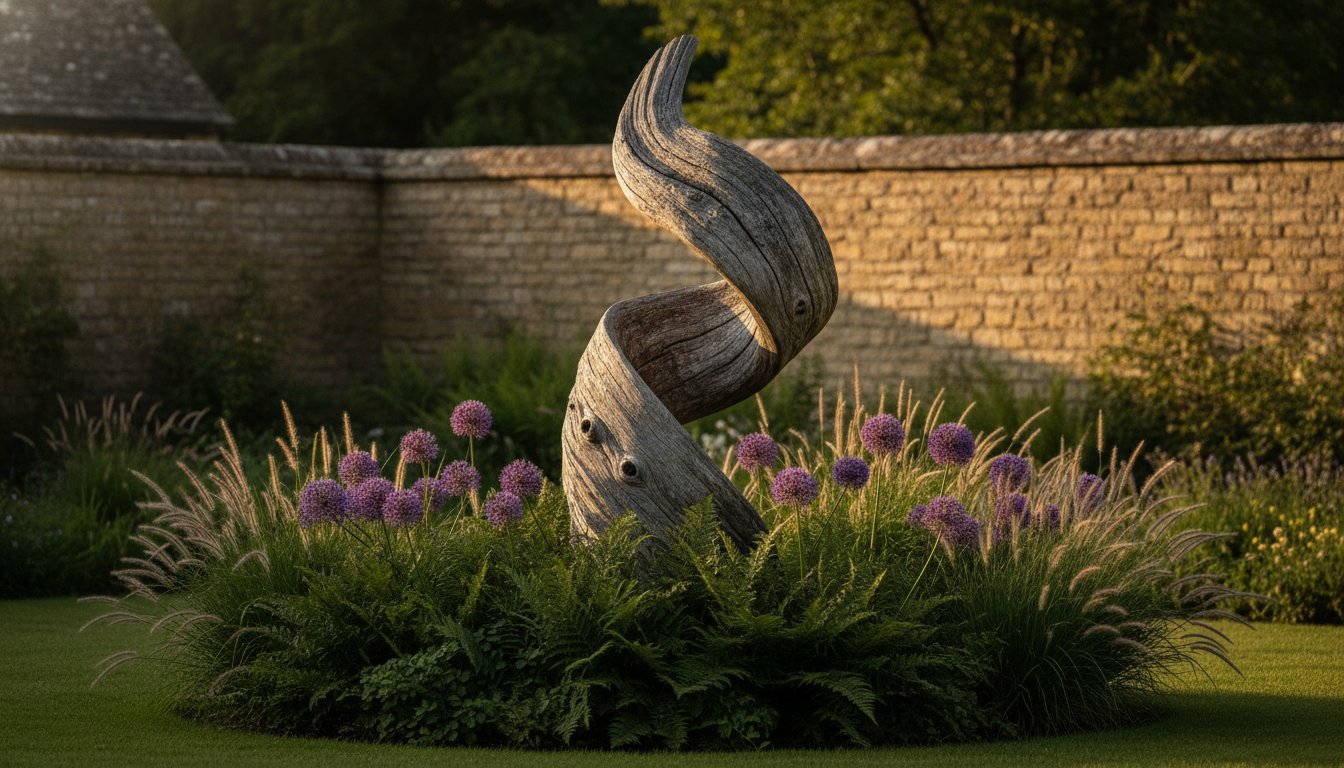
What if the most striking feature in your garden wasn't a bloom at all, but the silent, weathered history of a fallen British oak? Many of us strive to create a peaceful outdoor retreat, yet we often find our spaces cluttered with mass-produced ornaments that lack soul or a genuine connection to the land. You might worry that choosing natural wood garden sculptures UK will lead to heartbreak as the timber faces the unpredictable British weather, or perhaps you're unsure how to nestle art amongst your living perennials without it feeling forced or out of place.
We believe a garden should be a soulful continuation of the natural world, not an intrusion upon it. You'll learn how to select, style, and care for handcrafted wooden sculptures that celebrate the raw beauty of British timber and transform your garden into a curated sanctuary. We'll explore the profound difference between artisan-made and factory-produced pieces, look at how different woods age beautifully over time, and provide practical tips for positioning your art to create a truly evocative outdoor gallery. By understanding the lifecycle of the material, you can choose a piece that grows in character alongside your plants.
Key Takeaways
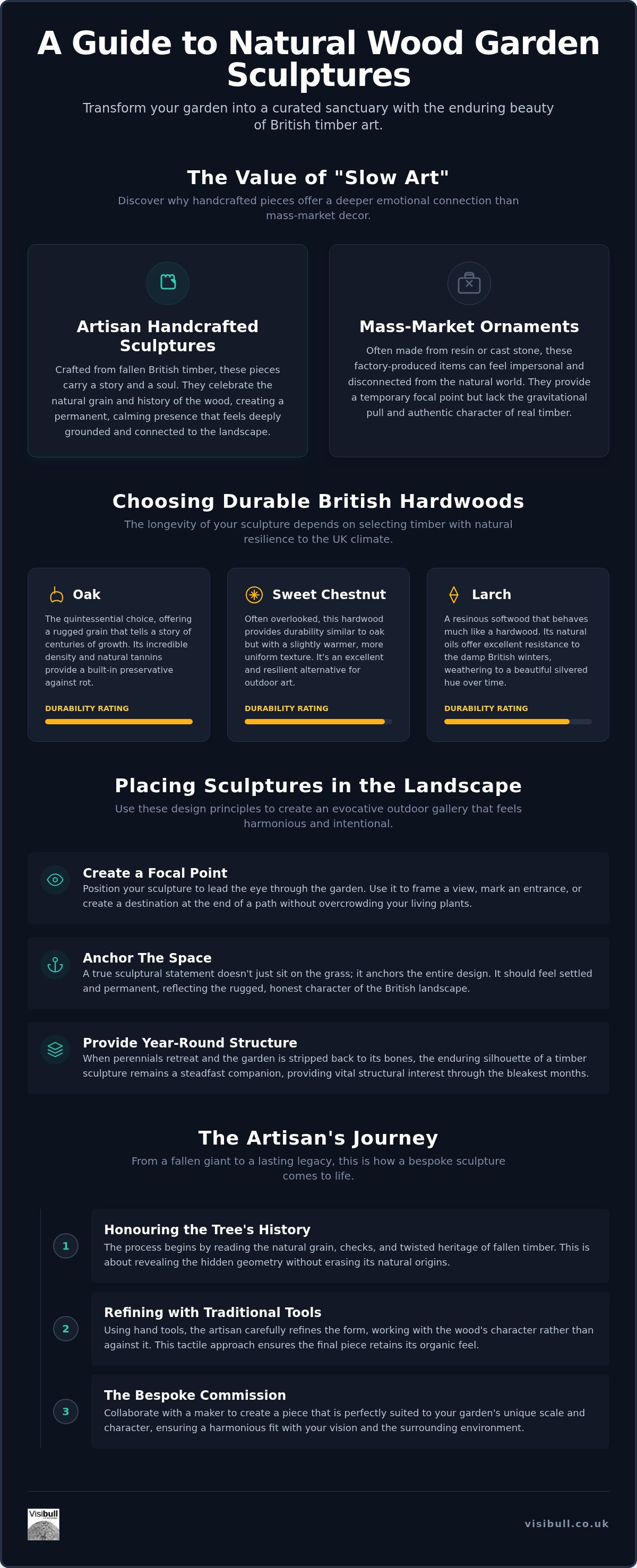
- Discover why durable British hardwoods like Oak and Sweet Chestnut are the preferred choice for ensuring your art ages gracefully in the UK climate.
- Learn how to position natural wood garden sculptures UK to create evocative focal points that lead the eye without overcrowding your living plants.
- Understand the value of "slow art" and why handcrafted pieces made from fallen timber offer a deeper emotional connection than mass-market decor.
- Explore the artisan techniques used to honour a tree’s history, from reading the natural grain to refining forms with traditional hand tools.
- Gain a clear understanding of the bespoke commission process, helping you collaborate with a maker to create a piece that fits your garden's unique scale.
Why Natural Wood Garden Sculptures are Redefining British Outdoor Design
There's a quiet revolution taking place across British back gardens. For years, outdoor spaces were often treated as secondary galleries for mass-produced resin ornaments and cast-stone replicas. Today, we're seeing a profound shift toward "slow art" and the use of natural wood garden sculptures UK. This movement isn't just about aesthetics; it's a rejection of the disposable and a return to materials that possess a heartbeat. Whilst a plastic heron might provide a momentary focal point, it lacks the gravitational pull of a piece of ancient oak that has spent decades absorbing the history of a local woodland. These sculptures bring a sense of permanence and calm, offering organic textures that feel settled the moment they're placed.
The difference between a simple ornament and a sculptural statement lies in the dialogue the piece has with its surroundings. A statement piece doesn't just sit on the grass; it anchors the space. It reflects the rugged, honest character of the British landscape, from the silvered hues of weathered larch to the deep, dependable grains of heartwood oak. By choosing art that shares a DNA with the trees standing just beyond the garden fence, you create a soulful sanctuary that feels coherent and deeply grounded.
The Aesthetic of the "Found Object"
We find beauty in the unrefined. In a world of factory-perfect edges, the raw, tactile quality of timber offers a necessary relief. The art of wood carving allows us to reveal the hidden geometry within a trunk without erasing its natural origins. These forms complement a variety of styles, providing a soft counterpoint to the sharp lines of a minimalist patio or blending seamlessly into the chaotic charm of a wildflower meadow. Crucially, wooden sculptures provide vital structural interest during the bleakest months. When the perennials have retreated and the garden is stripped back to its bones, the enduring silhouette of a timber sculpture remains a steadfast companion through the frost.
Sustainable Art: A Connection to the Land
Choosing art made from fallen timber is a conscious act of environmental stewardship. It's about finding value in what others might overlook or discard, turning a fallen giant into a lasting legacy. This narrative power is what gives handcrafted wood its weight; you aren't just buying an object, you're preserving a story of the forest. This philosophy of living in harmony with our surroundings often extends beyond the garden gate. Many who appreciate the slow growth of a tree also value a wider eco friendly nature inspired clothing UK lifestyle, where every purchase is a vote for renewal and ethical craftsmanship. It's a holistic approach to design where the clothes we wear and the art we live amongst both celebrate the enduring beauty of the natural world.
Selecting the Right Timber: Material Durability and Heritage
The success of natural wood garden sculptures UK depends entirely on the character and resilience of the timber chosen. In our temperate climate, not all woods are created equal. We primarily look to British hardwoods like Oak and Sweet Chestnut for their incredible density and natural tannins, which act as a built-in preservative against rot. Oak is the quintessential choice, offering a rugged grain that tells a story of centuries of growth. Sweet Chestnut, often overlooked, provides similar durability with a slightly warmer, more uniform texture. For those seeking a different silhouette, Larch stands out as a resinous softwood that behaves much like a hardwood, offering excellent resistance to the damp British winters.
Longevity is also dictated by the grain pattern and how the wood was sourced. Whilst commercially felled timber is often prized for its straightness, fallen timber possesses a unique, twisted heritage that factory-grown wood simply cannot match. You might notice small cracks, known as "checks," appearing as the sculpture settles into your garden. These are not flaws. They are the wood breathing and adjusting to its new environment, adding a layer of authentic character that deepens over time. When considering the permanence of your piece, it is helpful to reference guidelines like the Public Art Supplementary Planning Document, which emphasises the importance of selecting materials that can withstand the rigours of the outdoor environment whilst maintaining their aesthetic integrity.
The Weathering Process: Embracing the Silver Patina
Nature is the final artist in the creative process. As soon as a sculpture is placed amongst your plants, UV light and rain begin to transform its surface. This weathering process gradually strips away the initial honeyed tones of the raw wood, replacing them with a sophisticated silver-grey patina. This "greyed" look is highly prized in British garden design because it allows the sculpture to recede into the landscape, feeling like an ancient, natural fixture rather than a new addition. To manage this transition, you can organise your garden layout to ensure the piece receives a balance of sun and shade, preventing uneven bleaching and ensuring a consistent hue across the entire form.
Sourcing with Integrity
The journey of a sculpture begins long before it reaches the studio; it starts on the forest floor. Each species carries a different "soul" or energy. An ancient oak feels steadfast and heavy, whilst a piece of birch might feel light and ethereal. By working with timber that has naturally fallen due to age or storms, we ensure that no healthy trees are sacrificed for the sake of art. Choosing fallen timber is the most ethical choice for garden art because it honours the natural lifecycle of the tree and prevents the environmental cost associated with commercial felling. If you are looking to bring this sense of history into your home as well as your garden, you might find inspiration in our collection of handcrafted wood art and homewares.
Design Principles for Placing Sculptures in the Natural Landscape
Finding the right home for natural wood garden sculptures UK is an exercise in quiet observation. It's about understanding how a piece of timber interacts with the living landscape over the course of a day. A well-placed sculpture acts as a visual anchor, leading the eye through the garden and inviting exploration. You might use a taller piece to create a destination at the end of a winding path, or nestle a smaller form amongst low-growing ferns to reward those who look closer. The key is to provide enough "breathing space" around the art; if a sculpture is crowded by too many competing textures, it loses its voice and contributes to a sense of clutter rather than calm.
Balance is equally vital when styling your outdoor space. A substantial wooden sculpture can provide a necessary counterweight to larger elements like a timber summerhouse or a mature oak tree. Without this visual weight, smaller plantings can sometimes feel untethered. It's also worth considering the "view from the window." In Britain, we spend a significant portion of the year observing our gardens from the warmth of the indoors. Positioning your sculpture where it can be seen from a favourite armchair ensures it provides a soulful focal point even on the greyest February afternoon. This tradition of using wood to elevate our surroundings is deep-seated in our history. Whilst our contemporary pieces celebrate raw, organic forms, they share a spiritual lineage with the intricate mastery of Grinling Gibbons, Britain's most celebrated wood carver, whose work proved that timber could command as much presence as any stone monument.
Interacting with Light and Shadow
The beauty of natural timber is its tactile, three-dimensional surface. To truly appreciate the grain, position your art to catch the low, golden sun of a British morning or evening. These raking light conditions highlight every ridge and fissure in the wood, creating a shifting display of highlights and deep shadows. As the sun moves, the sculpture’s shadow will stretch across the lawn or patio, effectively extending its visual footprint and connecting it to the wider ground. For the evening hours, consider using soft, warm uplighting. This doesn't just make the piece visible; it emphasises the texture and gives the wood a gentle, inner glow that feels far more natural than harsh, direct floodlighting.
Seasonal Vistas: Art Amongst the Foliage
One of the greatest strengths of natural wood garden sculptures UK is their ability to anchor a garden whilst deciduous plants are dormant. When the summer perennials have faded and the borders are bare, the steadfast silhouette of a timber sculpture provides much-needed structure. You might choose a backdrop of dark evergreens like Yew or Holly to make the silvered patina of aged wood pop, or place it where spring bulbs will eventually emerge around its base. There is a particular, quiet magic in seeing a wooden form dusted with a heavy morning frost or a light layer of snow, as the white crystals catch in the natural cracks of the grain and celebrate the raw elements of the earth.
The Artisan Process: Honouring the History of the Tree
The creation of natural wood garden sculptures UK is a slow, rhythmic dialogue between the maker and the material. It begins with the methodical selection of timber, where we look for pieces that already whisper a certain form. We don't see a log as a blank canvas, but as a vessel containing a story written over decades. By reading the natural rings and the flow of the grain, we can identify where the tree faced a harsh winter or a sudden growth spurt. This dendrochronology, the scientific mapping of a tree's life, is preserved in every cut we make, ensuring the finished sculpture remains a testament to the forest it once called home.
Whilst many commercial carvings rely heavily on the aggressive, high-speed bite of a chainsaw, our process moves beyond these industrial beginnings. When crafting natural wood garden sculptures UK, we use traditional hand tools, such as chisels, gouges, and planes, to refine the form. This human touch creates a non-uniform, tactile texture that factory-pressed resin or mass-produced plastic simply cannot mimic. Each stroke of the blade follows the wood’s unique resistance, resulting in a surface that feels alive to the touch. An artisan listens to the wood’s grain and tension before the first cut, allowing the material to dictate the final silhouette rather than forcing a predetermined shape upon it.
From Rings to Sculpture
The growth patterns of the tree are the primary source of inspiration for our work. These concentric circles, which mark the passing of time, often dictate the curves and hollows of a finished piece. This deep appreciation for the tree’s internal geometry is a thread that runs through all our creative output, linking our physical sculptures back to our tree ring art prints UK. Whether it is a three-dimensional form in your garden or a hand-pressed print on your wall, the goal is the same: to celebrate the intricate, hidden beauty of British timber heritage.
Supporting Independent UK Studios
Choosing to buy directly from an independent maker is a vote for the preservation of traditional British woodworking skills. In an era of disposable decor, investing in a piece from a local studio ensures that your garden art is crafted with integrity and ethical responsibility. Buying local means your investment supports the "how" and "why" of creation as much as the final result.
- Authenticity: You receive a one-of-a-kind object with a documented provenance.
- Sustainability: Local sourcing reduces the carbon footprint associated with imported materials.
- Craftsmanship: Your support keeps heritage techniques alive in a modern context.
When you commission a piece, you aren't just purchasing a product; you're participating in a cycle of renewal that respects the land. If you're ready to begin your own journey with organic art, we invite you to explore our latest bespoke garden sculptures and find a piece that speaks to your space.
Commissioning a Bespoke Garden Sculpture: A Step-by-Step Guide
Bringing a unique piece of art into your home is a deeply personal journey that begins with a simple vision. When you decide to commission natural wood garden sculptures UK, the first step is defining the emotional "feel" you want to evoke. Do you seek a towering, steadfast sentinel to anchor a large lawn, or a smaller, tactile form to nestle amongst the ferns? Consider the scale of your space and the specific heritage of the timber; perhaps the rugged history of ancient oak resonates with you, or the warmer, lighter tones of sweet chestnut. This initial stage is about more than just dimensions; it's about finding a form that speaks to the existing soul of your garden.
The collaborative design phase is where your ideas begin to take root. We work through sketches and conceptual ideas, but the most vital part of this process is the timber selection. We invite you to be part of the story as we choose the specific fallen trunk or cross-section that will become your sculpture. Because we honour the natural rings and grain of the wood, the material often dictates the final direction of the art. This isn't a factory process where every piece is identical; it's a slow, methodical execution where the tree's history is allowed to lead the way.
Hand-crafting a heritage piece requires patience. Unlike mass-produced decor, natural wood garden sculptures UK involve a production phase that can often take between 20 to 40 weeks. This time allows for the careful seasoning of the wood and the meticulous use of traditional hand tools to refine the form. The result is a one-of-a-kind investment that carries a non-uniform texture and a sense of permanence that resin simply cannot replicate. You aren't just buying an ornament; you're commissioning a piece of British history that will age with grace for decades.
Preparing Your Space for Installation
A stable foundation ensures your sculpture remains safe and settled. Depending on the size, you might choose a stone plinth, a compacted gravel bed, or even a hidden concrete pad to prevent direct, constant contact with damp soil. Whilst wood is incredibly resilient, providing a well-drained base helps manage moisture levels. When positioning large-scale works, we recommend planning the route through the garden in advance; timber is heavy and steadfast, so getting the placement right the first time is essential for both safety and visual impact.
Caring for Your Sculpture Over the Decades
Timber is a living material that continues to breathe long after it leaves the studio. Establishing a simple annual care routine is often enough to keep it in peak condition. You might choose to apply natural oils once a year to maintain the wood’s deep, original hues, or you may prefer to let nature take its course. Many collectors find that the most rewarding path is to step back and allow the British weather to gift the wood its sought-after silver patina. If you feel a connection to this slow, organic approach to art, why not enquire about a bespoke garden sculpture today and start the conversation?
Cultivate a Soulful Sanctuary in Your Garden
Integrating natural wood garden sculptures UK into your landscape is more than a design choice; it's an act of environmental storytelling. By selecting durable hardwoods like oak or larch and allowing them to age naturally into a silver patina, you create a space that feels deeply connected to the British woodland. These pieces serve as steadfast anchors through every season, offering a textural depth and a sense of permanence that factory-made ornaments simply cannot replicate. You've seen how the right placement and a respect for the artisan process can transform a simple lawn into a curated outdoor gallery.
Every piece we create is uniquely hand-crafted from sustainably sourced fallen timber, ensuring that the history of the tree is honoured in every curve. Our original designs celebrate the heritage of British woodland, and we offer bespoke commissions tailored to your specific garden landscape. It's time to move away from the characterless and embrace art that has a heartbeat. Discover our collection of handcrafted garden sculptures and begin your journey toward a more organic, inspired outdoor life. We look forward to helping you find a piece that truly belongs in your garden.
Frequently Asked Questions
How long will a wooden garden sculpture last in the UK climate?
A sculpture made from durable British hardwoods like oak or sweet chestnut can last for several decades in the UK climate. Whilst the surface will weather to a silver-grey patina within a few years, the structural integrity of the heartwood remains steadfast. Naturally resinous woods are particularly resilient against our damp winters. With proper placement on a stable, well-drained base, your investment will age gracefully alongside your garden for twenty years or more.
Do I need to treat my natural wood sculpture every year?
You don't need to apply chemical treatments every year if you embrace the natural weathering process. Many collectors prefer to let nature take its course, allowing the timber to silver over time. However, if you wish to maintain the deep, original honeyed tones of the raw grain, applying a natural breathable oil annually is a gentle way to nourish the wood. This simple routine helps repel moisture whilst celebrating the material's organic history.
What is the best type of wood for an outdoor sculpture in a British garden?
Oak is widely considered the best choice for natural wood garden sculptures UK due to its high tannin content and immense density. Sweet chestnut is another excellent heritage option, offering similar rot-resistance with a warmer texture. For those looking for a slightly different aesthetic, larch is a resilient softwood that performs exceptionally well in our temperate climate. These species are preferred because they have evolved to thrive in the specific conditions of the British landscape.
Will the wood crack or split over time?
Yes, small cracks known as "checks" are a natural and expected part of the wood's lifecycle. As the timber breathes and adjusts to shifting humidity and temperature, it may develop these characterful lines. These splits rarely affect the structural strength of the piece; instead, they add a layer of authentic, non-uniform texture that resin cannot mimic. We view these changes as the wood continuing its story, settling into its permanent home amongst your plants.
How do I prevent a wooden sculpture from rotting at the base?
Preventing ground-contact rot is essential for the longevity of your sculpture. We recommend positioning the piece on a well-drained base, such as a stone plinth, a bed of compacted gravel, or even a hidden stainless steel stand. These methods ensure that water doesn't pool around the bottom of the timber. Elevating the sculpture just a few centimetres allows air to circulate, keeping the base dry and protecting the wood from the constant damp of the soil.
Can I commission a sculpture from a tree that has fallen in my own garden?
We frequently undertake bespoke commissions using timber that has a personal connection to our clients. If a tree has naturally fallen in your garden, it can often be transformed into a soulful sculptural statement. The process involves assessing the wood's condition and seasoning it correctly before the artisan work begins. This is a beautiful way to honour a tree’s history and keep its presence in your garden as a unique piece of handcrafted art.
How do I choose the right size sculpture for a small courtyard?
In a small courtyard, verticality is often more effective than sheer mass. Choosing a slender, upright sculpture can lead the eye upwards, making the space feel larger without overcrowding the ground area. It's important to provide enough "breathing space" so the art doesn't feel cluttered. A single, well-proportioned piece of natural wood garden sculptures UK acts as a calm focal point, providing structural interest that remains consistent even when seasonal pots are dormant.
Is natural wood art safe for gardens with children and pets?
Natural wood is a safe and tactile addition to family gardens. Unlike some mass-produced items that may contain harmful resins or lead-based paints, our sculptures are crafted from raw, sustainably sourced timber. We ensure that forms are refined with hand tools to remove sharp splinters whilst maintaining the organic texture. Because we avoid aggressive chemical preservatives, the art is perfectly safe for curious pets and children who want to touch and experience the history of the tree.