
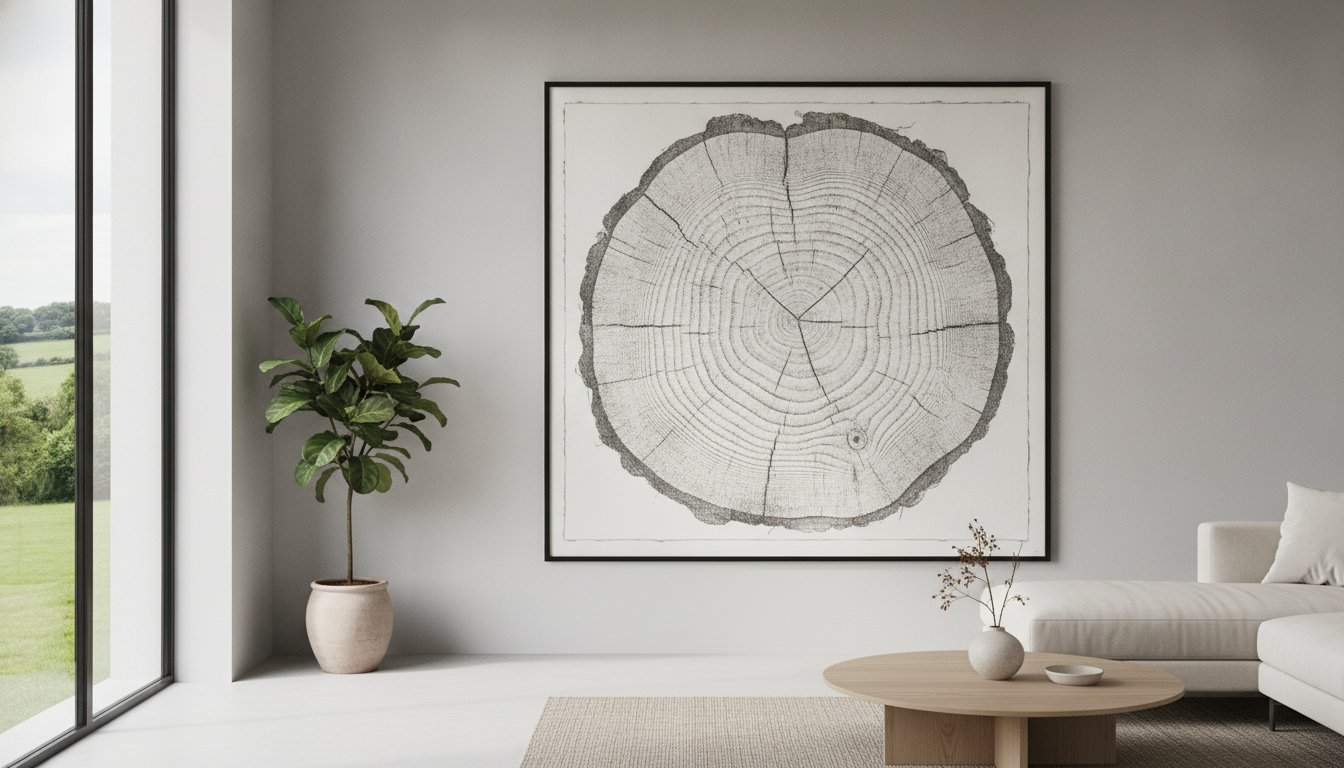
The most profound history books aren't written in ink on paper; they're found in the silent, concentric rings of a fallen oak or ash tree. For those seeking authentic natural wood art prints UK artists are now offering a way to bring this ancient narrative into the modern home. You've likely felt the frustration of staring at generic, mass-produced wall art that lacks soul or a story to tell. It's natural to want your living space to reflect a deeper connection to the earth, especially whilst being mindful of your environmental footprint.
I understand that desire for art that feels alive and carries a genuine sense of heritage. In this article, you'll discover the soulful beauty of original wood art prints created directly from the cross-sections of fallen British timber. We'll explore how these hand-pressed pieces capture the unique history of specific trees, why supporting independent UK makers matters for sustainable decor, and how to choose a piece that resonates with your own appreciation for the natural world.
Key Takeaways
- Learn the vital distinction between mass-produced imagery and authentic relief printing where the tree's own cross-section serves as the artist's plate.
- Discover how natural wood art prints UK makers produce are ethically sourced from fallen timber, allowing you to celebrate woodland heritage without harming living forests.
- Understand how different species, from the dense character of oak to the fluid lines of larch, create distinct visual moods in your home.
- Explore the benefits of biophilic design and how tactile, nature-focused art can create a calming centre amongst the rush of modern life.
- Gain practical insights into choosing the right scale and framing styles to ensure your handcrafted piece becomes a lasting focal point.
What are Natural Wood Art Prints? Defining the Craft
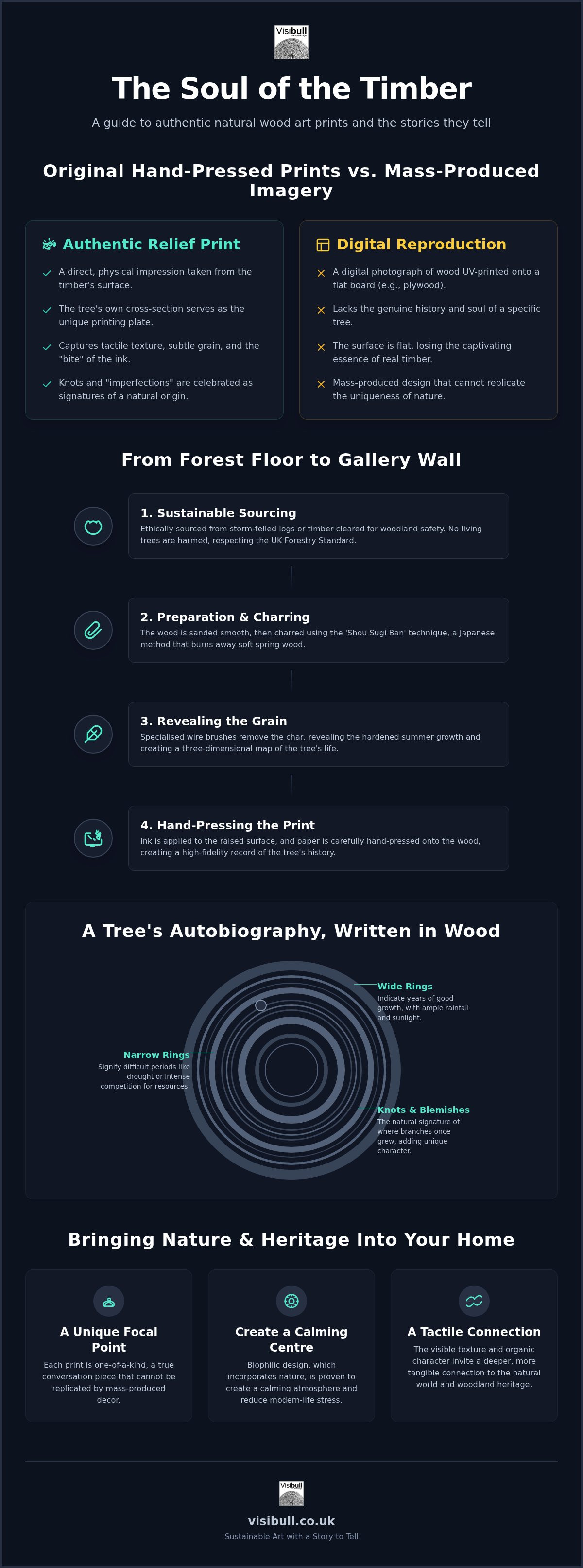
When you search for natural wood art prints UK, you'll often find digital images that have been UV-printed onto plywood boards. Whilst these items might offer a rustic look, they're fundamentally different from the artisanal craft of tree-ring printing. An original print isn't just a picture of wood; it's a direct, physical impression taken from the timber's surface. This process treats the tree's cross-section as a living plate, where every ridge and groove tells a story of a specific season, a drought, or a particularly harsh winter.
The technique is a form of relief printing. It begins with the careful preparation of a fallen specimen. By using heat to char the surface and wire brushes to clear away the softer spring wood, the maker reveals the hardened summer growth. This creates a tactile, three-dimensional map of the tree's life. When ink is applied to this surface and paper is hand-pressed against it, the resulting image is a high-fidelity record of that tree's unique history. The artist acts as a translator, ensuring the delicate balance of pressure and ink density captures the soul of the timber without obscuring its raw, organic character.
The Distinction Between Digital and Original Prints
Digital reproductions often lose the very essence that makes timber so captivating. They lack the "bite" of the ink and the subtle variations in texture that occur when paper meets grain. In an original hand-pressed print, you can see the way the ink pools in deeper fissures and how the paper fibres have been embossed by the wood. We celebrate these supposed imperfections. A slight wobble in a ring or a small knot isn't a mistake; it's a signature of a natural origin that mass-produced decor can't hope to replicate. These prints offer a tactile quality that brings a sense of the outdoors into your home.
A Brief History of Tree Ring Printmaking
The foundations of this work are rooted in the ancient Woodcut printing technique, a method used for centuries to share knowledge and art. Whilst traditional woodcuts require an artist to carve a design into a block, tree-ring art allows the wood to be its own illustrator. This approach shares a philosophy with the Japanese tradition of Gyotaku, where fishermen took ink rubbings of their catch to record their size and species. In the UK, this craft has evolved into a way of preserving woodland heritage. It turns fallen timber into sustainable homewares that honour the slow, methodical growth of our native forests, ensuring a tree's story continues long after it has left the forest floor.
From Forest Floor to Gallery: The Sustainable Lifecycle
The journey of an original print begins not with an axe, but with a quiet observation on the forest floor. Unlike industrial logging, where timber is harvested for volume and speed, the creation of natural wood art prints UK collectors value relies on the patient discovery of trees that have already completed their natural life cycle. Storm-felled logs or those cleared for woodland safety are our primary sources. This approach respects the UK Forestry Standard, ensuring that the art we create supports the long-term health and biodiversity of British woodlands rather than depleting them. It's a process of reclamation that honours the tree's legacy.
Sourcing Fallen Timber Sustainably
Finding the right specimen requires an eye for hidden history. We look for logs with stories etched deeply into their rings; perhaps a narrow cluster of lines from a decade of drought or a wide, generous curve from a particularly wet spring. Sustainable sourcing is the foundation of ethical art prints. By following nature's own timeline, we avoid the environmental cost of commercial felling and industrial processing. It's a slower, more deliberate way of working that requires immense patience, but it ensures that every piece of art carries a clear conscience and a direct link to the earth.
The Preparation: Sanding, Charring, and Cleaning
Once a suitable log is found, the methodical work of preparation begins in the workshop. It isn't as simple as slicing and inking. The surface must be sanded to a glass-like finish to ensure the print captures every minute detail. We then apply the Shou Sugi Ban technique, a traditional Japanese method that involves lightly charring the wood with a torch. The fire consumes the softer spring growth more quickly than the dense summer rings, creating a physical relief surface. We then carefully clean the wood with specialised wire brushes to remove the char, leaving behind a three-dimensional map of the tree's life.
This delicate balance preserves the age-related cracks and textures that define a tree's character. We don't try to hide the "shake" or the knots; we highlight them as essential parts of the narrative. The result is a tactile surface ready to hold ink with absolute precision. This artisanal process ensures that when you choose from our collection of original artist prints, you're receiving a piece that was crafted with deep respect for the material's origin. Every ring is a testament to a century of growth, preserved forever on paper through a marriage of fire, friction, and ink.
Choosing Your Specimen: Species and Visual Character
Selecting a piece of art is often an emotional decision, but when it comes to natural wood art prints UK enthusiasts find that the choice of species dictates the entire mood of a room. Each tree carries a distinct visual signature etched into its grain through decades of survival. Hardwoods, such as oak and elm, tend to project a sense of grounded permanence. Their ring structures are often bold and well-defined, offering a visual weight that commands attention. In contrast, softwoods like larch or pine frequently display a rhythmic fluidity, with rings that seem to ripple across the paper like water. Understanding these nuances allows you to choose a specimen that doesn't just fill a space, but speaks to your own aesthetic sensibilities.
The density of the rings provides a fascinating glimpse into the tree's biography. When you see rings packed tightly together, you're looking at a tree that grew slowly, perhaps in the shade of a larger neighbour or during a century of challenging climate. These dense patterns create a sophisticated, intricate texture that celebrates the endurance of the natural world. This focus on the material's raw honesty is a key theme in Wood in Contemporary Art, where the organic narrative of the timber is placed at the forefront of the creative process. By choosing a print based on its species, you're selecting a specific chapter of British woodland history to display on your wall.
The Grandeur of Oak and Ash
Oak remains the undisputed symbol of the British landscape, known for its rugged strength and wide-reaching, powerful ring structures. An oak print often features dramatic knots and deep, expressive grain that makes it a perfect centrepiece for traditional or rustic interiors. Ash, on the other hand, offers a more refined elegance. Its patterns are flowing and graceful, often suiting the clean lines of minimalist or Scandinavian-inspired decor. Because of their impressive scale and striking clarity, these species are often the favourite choice for large wood wall art UK homeowners use to transform a blank wall into a narrative focal point.
The Intricacy of Orchard Woods
Whilst large forest giants offer drama, the smaller timbers from orchards provide a different kind of charm. Apple and cherry trees produce incredibly tight, complex ring patterns that are often full of surprising twists and turns. These species don't grow with the straight-laced uniformity of a plantation pine; they meander, creating intimate and detailed prints. Orchard woods bring a sense of domestic heritage into the home, reminding us of the cycles of blossom and harvest. These smaller-scale prints are ideal for curated gallery walls or more intimate spaces like a study or bedroom, where the viewer can get close enough to appreciate every tiny detail of the tree's long and fruitful life.
Why Natural Wood Prints Suit Modern British Interiors
Modern British homes often struggle with the visual noise of digital clutter. We surround ourselves with plastic and glass, yet our biological need for the organic remains unchanged. This is where natural wood art prints UK artisans create find their purpose. They act as a quiet, calming centre in a room. By capturing the methodical, slow growth of a tree, these prints offer a counterpoint to the staccato pace of modern life. They don't shout. Instead, they whisper a story of seasons passed, of wind and rain, and of the patient endurance of the British woodland.
Beyond the aesthetic appeal, choosing a hand-pressed print is an act of support for the UK artisan economy. When you move away from mass-produced gallery walls and toward independent studio work, you're investing in a craft that values quality over quantity. These prints are versatile; the monochrome nature of black ink on a neutral background ensures they sit comfortably in a sleek London apartment or a traditional stone cottage. They bridge the gap between old and new, providing a timeless texture that complements both mid-century modern furniture and rustic, reclaimed surfaces.
Biophilic Design and Wellbeing
The rise of biophilic design in the UK isn't just a fleeting interior trend; it's a response to our need for nature-based wellbeing. Research suggests that incorporating organic patterns and natural materials into our living areas can reduce stress and improve focus. A tree-ring print provides a tactile connection to the outdoors whilst you're indoors, offering a focal point that feels deeply familiar. To create a cohesive sanctuary, try styling these prints alongside other artisan home decor UK makers provide, such as hand-thrown ceramics or woven textiles. This layering of textures reinforces the sense of a grounded, nature-inspired home.
A Focus on Longevity and Heritage
We're seeing a significant shift away from "fast homewares" toward pieces with a genuine legacy. People are increasingly looking for modern heirlooms; items that won't be discarded when the next season's catalogue arrives. Natural wood prints are the epitome of this "slow decorating" philosophy. Because every print is taken from a specific fallen tree, it carries a unique heritage that cannot be replicated. They serve as exceptional conversation starters, allowing you to share the story of the timber's origin with guests. In an era of disposable decor, these prints stand as a testament to the beauty of things that take time to grow. If you're ready to bring a piece of this history into your space, you can explore our original artist prints to find a specimen that resonates with your home's story.
Finding the Perfect Piece for Your Space
Choosing the right artwork is a deeply personal endeavour that requires a balance between the character of the timber and the architecture of your home. When selecting natural wood art prints UK collectors often start by considering the physical scale of their walls. A large, singular statement piece taken from an ancient oak can anchor a room; it provides a sense of permanence and strength that draws the eye. Conversely, a curated set of smaller prints from different species allows you to tell a broader story of the British landscape. This modular approach works beautifully in hallways or above desks, where the viewer can pause to compare the varying rhythms of the rings.
The choice of framing is equally vital in preserving the heritage of the piece. Natural wood frames can offer a cohesive, organic look that echoes the material of the print itself. Minimalist mounts, however, often provide the necessary breathing space for the intricate details of the grain to stand out without distraction. Before you commit, it's essential to check the artist's sourcing and preparation process. Understanding the specific history of the fallen tree adds a layer of meaning that mass-produced items lack. You can begin building your own collection by exploring our comprehensive guide to tree ring art prints UK styles and techniques.
Evaluating Print Quality
A high-quality hand-pressed print should feel tactile and alive. Look for the subtle embossing where the wood has pressed into the paper; this is the hallmark of a genuine relief print. We use heavy-weight archival paper and lightfast inks to ensure that the delicate details of the rings don't fade over time. Every original print should be clearly signed and often includes an edition number or information about the specific tree it was taken from. These details signify the artist's hand and the unique nature of the work, distinguishing it from a digital scan.
Ordering from a UK Independent Studio
There is a unique joy in ordering directly from a small, independent studio. It allows for a level of transparency and communication that large retailers can't match. You aren't just a customer; you're a patron of a traditional craft. Because our work is handmade and relies on the slow, methodical process of hand-pressing, lead times can vary. This patience is part of the "slow decor" philosophy, ensuring that each piece is given the time it needs to be perfected. If you're ready to find a piece that connects your home to the story of the forest, we invite you to explore the original artist prints at Visibull Art and Design.
Bringing the Forest Home
Every tree ring is a silent record of time, waiting to be shared. By choosing authentic natural wood art prints UK artists have hand-pressed, you aren't just buying decor; you're preserving a piece of British woodland history. We've explored how these original artist prints differ from mass-produced digital scans, highlighting the tactile depth that only true relief printing can provide. You now understand the importance of sourcing from fallen timber, ensuring your home reflects a deep respect for nature's own timeline rather than industrial felling.
These pieces serve as a calming centre in any modern interior, bridging the gap between our digital lives and the raw beauty of the earth. Whether you're drawn to the bold strength of oak or the intricate patterns of orchard woods, each print celebrates a unique heritage. If you're ready to find art that carries a soulful story, we invite you to discover the story of the forest with Visibull original prints. Our collection focuses on original hand-pressed work, sustainably sourced from fallen UK timber to create art that truly celebrates woodland heritage. Let your walls reflect the enduring spirit of the forest.
Frequently Asked Questions
Are these prints made from actual trees or are they digital designs?
Every piece we produce is an original artist print created directly from the cross-section of a real log. We don't sell digital art downloads; instead, we focus on the physical relief printing technique. This process involves inking the prepared wood surface and hand-pressing it onto paper. It ensures that each piece is a unique physical record of a tree's life, capturing the intricate textures and variations that a digital design cannot replicate.
Where do you source the wood for your natural art prints in the UK?
We source all our timber sustainably from fallen trees across the United Kingdom. We never fell healthy trees for our art; instead, we work with nature's timeline by reclaiming logs that have come down during storms or through essential woodland management. This ethical approach to sourcing natural wood art prints UK collectors appreciate ensures that our work celebrates the heritage of British forests whilst maintaining a minimal environmental footprint for your home decor.
Can I see the rings of different tree species in the prints?
Yes, the specific species of the tree is the primary factor in the visual pattern of every print. Hardwoods like oak produce bold, architectural rings and deep knots, whilst softwoods like larch offer more fluid, rhythmic lines. By looking at a collection of our work, you can clearly distinguish the dense, slow growth of an ancient forest giant from the tighter, more complex structure found in smaller orchard trees like cherry or apple.
Is the paper used for the prints sustainable?
We prioritise sustainability in every material we choose, including our paper. We use high-quality archival paper that is acid-free to ensure the longevity of the artwork. This paper is selected not only for its ability to hold the fine detail of the ink but also for its environmental credentials. By pairing sustainably sourced UK timber with responsibly produced paper, we ensure that every piece of art aligns with our commitment to ethical, artisanal craftsmanship.
How should I care for my natural wood art print to prevent fading?
To preserve the depth of the ink and the clarity of the rings, you should display your print away from direct sunlight. Whilst we use lightfast inks designed for durability, prolonged exposure to harsh UV rays can cause subtle changes over many years. Framing your piece with UV-protective glass is an excellent way to provide an extra layer of security, ensuring that the intricate details of the tree's history remain vibrant for decades.
Do you offer custom commissions from a specific fallen tree?
We do welcome enquiries regarding custom commissions, particularly if you have a specific fallen tree on your property that holds sentimental value. As an independent studio, we enjoy the process of translating a personal piece of woodland heritage into a lasting work of art. Whether it is a series of prints or a bespoke handmade table, we can discuss the feasibility of using your own timber to create a truly one-of-a-kind heirloom.
What is the best way to frame a tree ring print?
The best framing choice often depends on your interior style, but we generally recommend using a minimalist mount to give the artwork breathing space. A simple, natural wood frame can complement the organic subject matter, whilst a sleek black frame provides a modern, high-contrast look. Ensure the frame is deep enough to accommodate the heavy-weight paper without pressing the ink directly against the glass, which helps maintain the tactile quality of the hand-pressed print.
How do these prints differ from standard mass-produced wall art?
Unlike mass-produced decor, these are original, hand-pressed natural wood art prints UK homeowners can value for their authenticity. Standard wall art often relies on digital scans printed onto boards, which lacks the tactile embossing and subtle ink variations found in relief printing. Our process captures the physical "bite" of the grain into the paper, ensuring that no two prints are ever identical. Each piece carries the genuine soul and history of a specific British tree.