
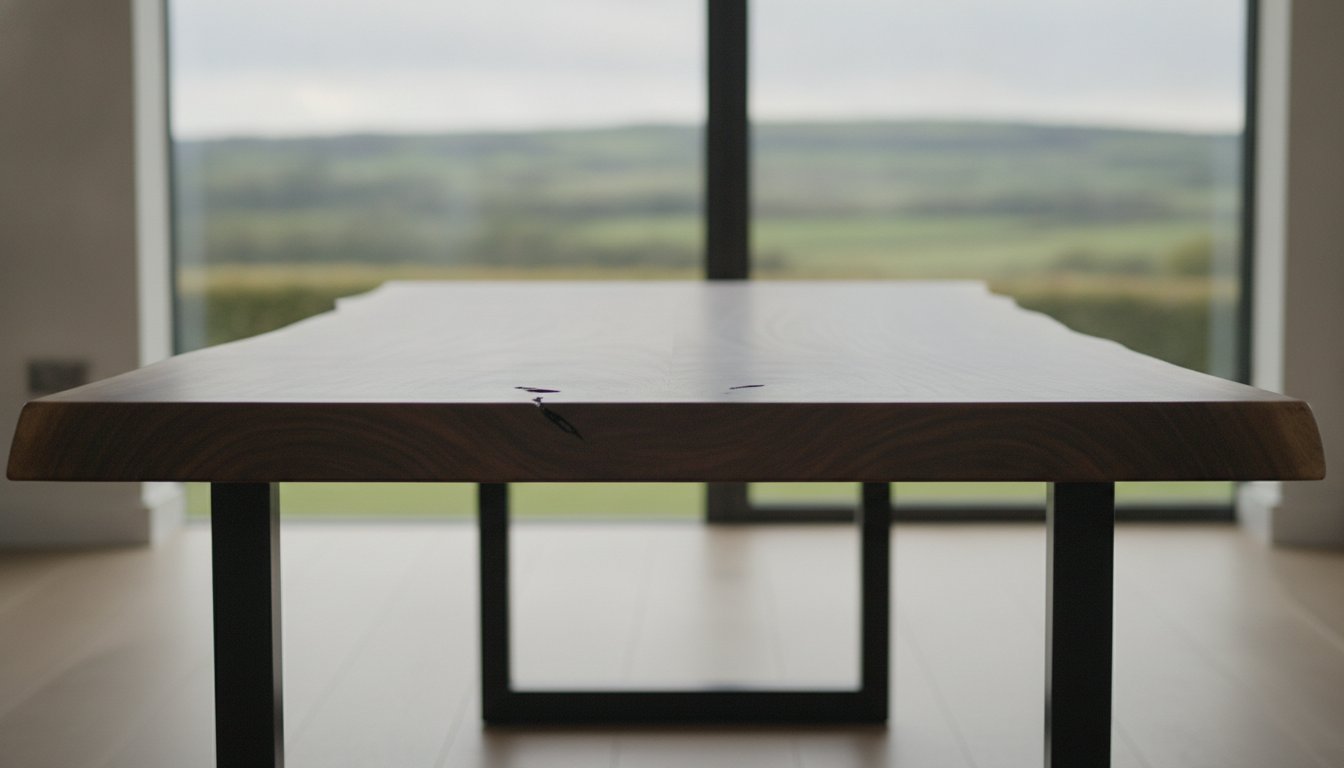
A piece of furniture shouldn't just occupy a room; it should tell the story of the earth it grew from and the hands that shaped its path. You might be searching for a live edge table UK to bring that raw, organic energy into your home, yet it's easy to feel hesitant. Between the fear of "greenwashed" imports shipped from halfway across the globe and the confusion over how to maintain such a tactile, living material, the search can feel daunting. You want a centrepiece that feels sophisticated, not out of place, in a modern interior.
We understand the desire for a deeper connection to the objects you own, much like the intimate detail found in a hand-pressed tree-ring print. This guide promises to help you uncover the nuances of British timber, ensuring you find a one-of-a-kind creation that supports independent makers and genuine woodland heritage. We'll walk through the lifecycle of fallen timber, the practicalities of wood types like English oak or walnut, and how to choose a bespoke design that balances the wildness of the forest with the refined needs of your home. By the end, you'll know exactly how to commission a piece that isn't just a table, but a preserved moment of British history.
Key Takeaways
- Understand why the "waney edge" preserves a tree's natural periphery, creating a connection to the organic history often found in our tree-ring prints.
- Learn how to identify a high-quality live edge table UK by looking for properly seasoned timber sourced from fallen specimens rather than mass-produced imports.
- Discover how to match the distinct character of hardwoods like oak or ash to your home's existing colour palette and tactile requirements.
- Explore the art of balancing raw, organic textures within modern spaces by choosing the right frame and leg style for your interior.
- Find out why it's more rewarding to commission a bespoke piece than to buy off-the-shelf, as you'll get to personally select the slab that speaks to you.
What is a Live Edge Table and Why Does Provenance Matter?
A live edge table UK is more than a surface; it's a preserved silhouette of a tree's final years. Unlike mass-produced furniture that strips away character to fit a standard mould, this style keeps the natural periphery found just beneath the bark. You'll often hear this referred to as a "waney edge," a term that describes the boards cut from the outer parts of a log that still retain their original, undulating shape. When you choose a piece that respects these organic lines, you're inviting the erratic, beautiful geometry of the British woodland into your home.
Understanding what is a live edge table requires looking past the utility of the object to the history of the timber itself. In 2026, provenance has become the gold standard for sustainability. With the introduction of stricter UK Forest Risk Commodity Regulations, the origin of your timber matters more than ever. A slab shipped from overseas often carries a heavy carbon cost and a murky history of felling. In contrast, a locally crafted piece from a UK studio offers transparency. It feels different because it is different; you aren't just buying wood, you're becoming a steward of a local story.
The Anatomy of a Live Edge Slab
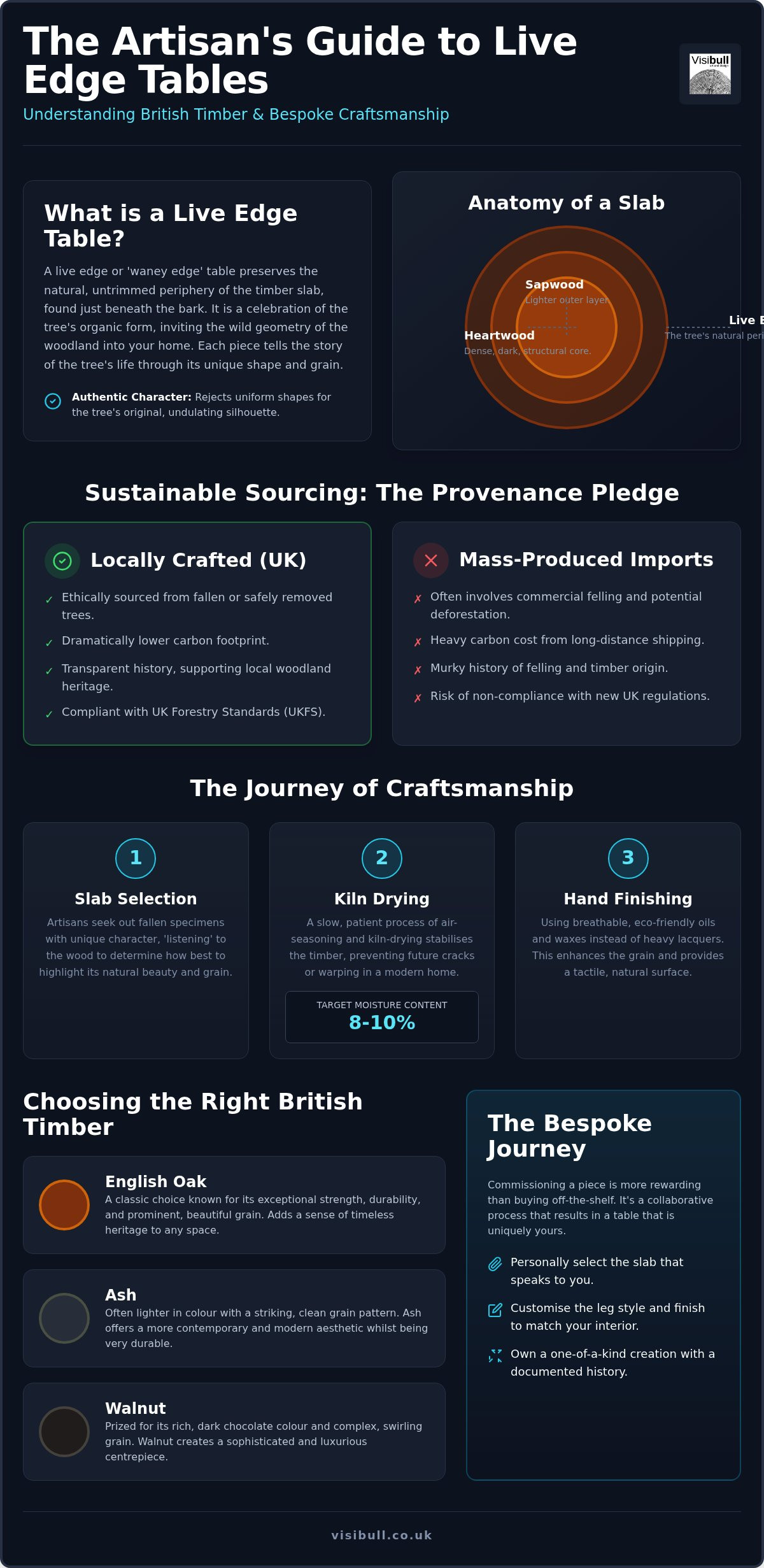
Every slab tells a story through the relationship between its sapwood and heartwood. The sapwood is the younger, lighter outer layer where the tree's nutrients once flowed, whilst the heartwood is the dense, darker core that provided its strength. In a live edge table UK, these two tones often meet in a striking contrast at the board's edge. We don't see knots, burls, or small splits as flaws. These are the tree's signatures, marks of its survival against the elements. The tactile journey of hand-finishing these edges ensures that every ridge and hollow is smooth to the touch but remains visually raw.
Sustainable Sourcing: From Fallen Trees to Furniture
Our focus remains firmly on the ethical use of fallen timber. Rather than engaging in commercial felling, we look for specimens that have come down naturally or were removed for safety. This approach ensures that your furniture doesn't contribute to deforestation but instead celebrates the renewal of the material. Sourcing locally drastically reduces the carbon footprint, keeping the lifecycle of the wood within our own shores. There is a profound connection between the sturdy surface of a dining table and the intricate tree ring art prints UK found in our studio. Both mediums seek to document the same history, allowing you to trace the years of growth right there in your living space.
The Journey of Craftsmanship: How Bespoke Tables are Made
The creation of a live edge table UK is a slow, methodical process that honours the decades the tree spent growing. It begins with the selection of the slab. We don't look for the uniform or the predictable; we seek out fallen specimens that have character etched into their grain through years of enduring the British elements. This stage is where the artisan acts as a humble observer, "listening" to the wood to decide how best to highlight its natural flow. Whilst industrial machining can produce quantity, it often strips away the soul of the timber. We prefer hand-tool techniques that allow us to follow the organic curves of the edge, preserving the tactile history of the tree. We align our sourcing with the UK Forestry Standard (UKFS) to ensure every piece of timber is managed with a deep respect for our woodland heritage.
Kiln Drying and Moisture Content
Preparing a slab for the workshop takes immense patience. Freshly cut wood is full of moisture, and bringing it directly into a centrally heated home would cause it to crack or warp as it dries too quickly. We use a combination of air-seasoning and careful kiln-drying to bring the moisture content down to a stable level, usually around 8 to 10 per cent. Kiln drying is non-negotiable for longevity because it stabilises the wood’s internal cellular structure, preventing the splits and bows that occur when raw timber meets a modern, heated interior. This deliberate preparation ensures your table remains as sturdy and beautiful in a decade as it is on the day it arrives.
Finishing with Nature in Mind
Once the structure is sound, the focus shifts to the surface. We avoid heavy, plastic-like lacquers that create a cold barrier between you and the wood. Instead, we use breathable, eco-friendly oils and waxes that sink deep into the grain. These finishes highlight the rich colours of hardwoods like oak or elm whilst allowing the timber to remain a living, breathing part of your home. Each surface is hand-pressed and sanded through multiple grits until it's exceptionally soft to the touch. This artisanal approach creates a sensory experience that mass-production simply can't replicate. If you're curious about the specific textures we achieve, you can explore our range of handmade tables to see how these finishes bring out the timber's inner glow.
Choosing the Right Timber: Oak, Ash, and Beyond
The species you select for your live edge table UK dictates the atmosphere of your room. It's a decision that involves more than just aesthetics; it's about durability and the tactile presence the wood brings to your daily life. Every tree carries a distinct personality in its grain. For a deeper look at the species native to our shores, this guide to British timbers provides a wonderful foundation for understanding the diversity of our woodlands and the heritage behind each slab.
British Oak: The Timeless Choice
Oak remains the undisputed favourite for those seeking heritage-quality furniture that lasts generations. Its dense structure makes it incredibly resilient against the clatter of family meals and the general wear of a busy household. You can identify British Oak by its warm, golden hues and the prominent, often swirling grain patterns that define its surface. It bridges the gap between traditional and contemporary decor effortlessly. Whether paired with industrial metal legs or a classic timber frame, Oak brings a sense of permanence and grounded beauty to any interior palette, making it a reliable centrepiece for any home.
Ash and Elm: Light and Flowing Textures
If you prefer a lighter, more minimalist aesthetic, Ash is a superb alternative. It offers a pale, almost creamy tone that brightens a room whilst possessing incredible natural strength. Its grain is often straighter and more consistent than Oak, making it a popular choice for modern, airy spaces. Elm, on the other hand, is prized for its rarity and its wild, interlocking grain that creates a mesmerising visual depth. These species are particularly well-suited for smaller, more focused pieces of furniture. For example, the clean lines of Ash or the dramatic patterns of Elm can beautifully complement a handmade wooden desk UK, providing a serene yet inspiring surface for a home office.
For those seeking something truly unique, specimens like Spalted Beech offer an artistic flair that is hard to replicate. Spalting, a natural process that creates dark, jagged lines through the wood, turns a simple slab into a living canvas. These rare pieces aren't just tables; they are singular expressions of nature's unpredictability. When choosing your timber, consider how the grain's movement will interact with your light and space. You want the piece to feel like a natural extension of your home, a quiet witness to the life that happens around it.
Styling and Caring for Your Live Edge Table
A live edge table UK isn't just a piece of furniture; it's a grounding force for the entire room. We believe in the "centre of the home" philosophy, where the dining table acts as the primary gathering point for stories, meals, and connection. To make the most impact, position your table where natural light can dance across the grain, revealing the depth of the timber's history. Choosing the right leg style is crucial for defining the table's character. Industrial steel frames offer a striking, cold contrast to the warmth of the wood, whilst traditional timber legs create a seamless, harmonious look that feels deeply rooted in nature. Think about how the base interacts with your flooring; a dark steel can anchor a light-coloured room, whilst timber on timber offers a softer, more traditional aesthetic.
Interior Design: Softening Modern Lines
Many modern homes, particularly new-builds, can feel overly structured and "boxy" with their sharp angles and flat surfaces. An organic, waney edge provides the perfect antidote, breaking up these rigid lines with its fluid, unpredictable silhouette. Consider your lighting carefully; a low-hanging pendant can cast soft shadows that highlight the tactile ridges of the wood's periphery. The visual rhythm of a live edge table UK often mirrors the textures of natural wood garden sculptures UK placed in the garden beyond the window, creating a cohesive narrative of British craftsmanship throughout your property.
Maintenance and Long-term Care
Taking care of a living material requires a gentle touch rather than a chemical one. For daily cleaning, a damp lint-free cloth is usually all you need to wipe away the traces of the day. Avoid harsh detergents that strip away the natural oils we've worked so hard to apply. It's also vital to consider the environment where your table sits. Wood is sensitive to its surroundings; placing it directly next to a roaring radiator or in a draughty conservatory can lead to unwanted movement. Managing the humidity in your home helps the timber stay stable and happy for decades.
Over time, you might notice the surface start to feel a little dry. This is simply the wood asking for a bit of nourishment. Re-oiling your table every year or two restores its soulful glow and maintains that protective barrier. It’s a rewarding, meditative process that reaffirms your connection to the piece. If you're ready to find a centrepiece that grows more beautiful with every passing year, we invite you to explore our collection of bespoke homewares and furniture.
The Bespoke Journey: Commissioning Your Unique Piece
Choosing a live edge table UK through a commission is fundamentally different from purchasing a mass-produced item from a warehouse floor. It is a transition from being a consumer to becoming a storyteller. Whilst off-the-shelf options might offer speed, they lack the intimate dialogue between the maker, the wood, and the eventual owner. A bespoke journey allows you to tailor every dimension to the specific light and flow of your room, ensuring the finished piece feels like it was always meant to be there. At Visibull Art and Design, we act as the bridge between the wild, raw energy of the forest and the refined requirements of a modern home, helping you navigate the delicate balance between nature and art.
Selecting Your Specimen
The journey begins in the quiet atmosphere of the studio, where you can view our raw slabs in their natural state. We invite you to look closely at the grain, identifying the "story" etched into the rings. You might see a decade of slow growth during a cold period or the wide, generous rings of a particularly rainy season. This deep connection to the tree’s history is the same philosophy that guides our tree ring art prints UK; both seek to honour the passage of time through the medium of timber. There is a quiet, profound magic in pointing to a specific specimen and knowing that this exact tree will become the heirloom that anchors your family’s morning coffee and evening celebrations for decades to come.
Finalising the Design
Once the slab is chosen, we move into the finer details of the design. This stage is where your personal aesthetic truly takes shape. You might prefer an aggressive, wild edge that celebrates every knot and ridge of the original tree, or perhaps a more subtle, refined "waney" edge that offers a softer silhouette. We'll discuss the finish that best suits your lifestyle, from deep, matte oils that highlight a dark grain to lighter waxes that keep the wood feeling raw and airy. The choice of base is the final anchor, where we can pair the timber with hand-crafted wood frames or industrial steel to match your interior’s unique character.
Every decision we make together is a step towards preserving a piece of British woodland history. We don't rush this process because the wood itself didn't rush to grow. It is a slow, rewarding collaboration that results in a piece of furniture with a soul. If you're ready to move away from the temporary and invest in a piece that carries a genuine narrative, we invite you to start your bespoke journey by contacting the Visibull Art and Design studio today.
Bringing the Woodland Home
Choosing a live edge table UK is more than a simple design choice; it's an act of stewardship for our natural heritage. We've seen how the journey from a fallen specimen to a carefully kiln-dried slab ensures that your furniture remains stable whilst retaining its wild, organic soul. By selecting British hardwoods and engaging in a bespoke commission, you're investing in a one-of-a-kind functional sculpture that tells a story spanning decades of growth and resilience.
Every piece hand-crafted in our studio is a celebration of the reclaimed, born from a deep reverence for the timber's history. You'll receive expert guidance throughout the entire design process, ensuring your finished table perfectly balances raw nature with the refined needs of your interior. It's a collaborative path that turns a raw piece of wood into a meaningful family heirloom that will stand the test of time.
Explore our bespoke handmade tables and start your commission
We look forward to helping you find the perfect specimen and creating a centrepiece that brings the quiet, restorative energy of the British forest into the heart of your home.
Frequently Asked Questions
Are live edge tables durable enough for everyday family use?
Yes, live edge tables crafted from British hardwoods are exceptionally durable and suited to the rigours of family life. Dense timbers like oak possess a natural strength that resists the knocks and spills of daily meals. Because the surface is finished with high-quality natural oils, it doesn't chip like paint or laminate. Minor scratches often blend into the organic grain or can be easily touched up with a little extra oil.
How do I prevent my live edge table from cracking or warping?
Stability begins with the seasoning process, where we ensure the moisture content is brought down to approximately 8 to 10 per cent before crafting. To maintain this at home, keep your table away from direct heat sources like radiators or wood-burning stoves. Rapid temperature changes can cause the timber to move. Using a humidifier during dry winter months also helps the wood stay balanced and stable within its environment.
What is the difference between a live edge and a waney edge table?
There is very little technical difference; both terms describe a table that retains the natural periphery of the tree. "Live edge" is a more modern, international term, whilst "waney edge" is the traditional British woodworking description for boards that haven't been squared off. Both styles celebrate the erratic, undulating silhouette of the timber, ensuring that every live edge table UK we produce remains a unique reflection of the original specimen's growth.
Can I choose the specific piece of wood for my bespoke table?
We encourage you to be part of the selection process. During a bespoke commission, you can view our current stock of raw slabs to find a grain pattern or edge shape that speaks to you. Some clients look for dramatic knots and characterful splits, whilst others prefer a calmer, straighter flow. Choosing your specific specimen ensures the final piece carries a personal story that resonates with your home’s unique character.
Is the timber for your tables sustainably sourced in the UK?
Every piece of timber we use is sourced within the UK, often utilising fallen trees that have come down naturally or were removed for safety. We avoid mass-imported slabs to minimise our carbon footprint and ensure full transparency of provenance. This local approach supports British woodland management and ensures your furniture is an ethical choice. It connects your home directly to the lifecycle of our native forests and traditional craftsmanship.
How do I clean and maintain a natural wood table with a live edge?
Maintenance is straightforward and rewarding. For daily cleaning, use a soft, damp cloth to wipe the surface, avoiding harsh chemical sprays that can degrade the natural finish. If the wood begins to look dull or feels dry to the touch, simply apply a fresh coat of eco-friendly furniture oil. This simple act nourishes the grain and restores the soulful glow of the timber, keeping the surface protected and beautiful for generations.
What leg options are available for bespoke wooden tables?
We offer a range of base styles to suit different interior aesthetics. Industrial steel legs provide a bold, contemporary contrast to the organic wood, whilst handmade timber frames offer a more traditional, cohesive look. You might choose a minimalist frame for a modern feel or a sturdy trestle base for a farmhouse atmosphere. Each option is designed to provide maximum stability whilst allowing the live edge slab to remain the primary focal point.
Do live edge tables work in a modern, minimalist home?
They are a perfect addition to minimalist spaces. The fluid, organic lines of a live edge table UK act as a visual anchor, softening the rigid geometry often found in modern architecture. By pairing a raw timber top with clean, simple leg designs, you create a sophisticated balance between nature and industrial precision. It prevents a minimalist room from feeling cold, adding warmth and a tactile sense of history to the space.