
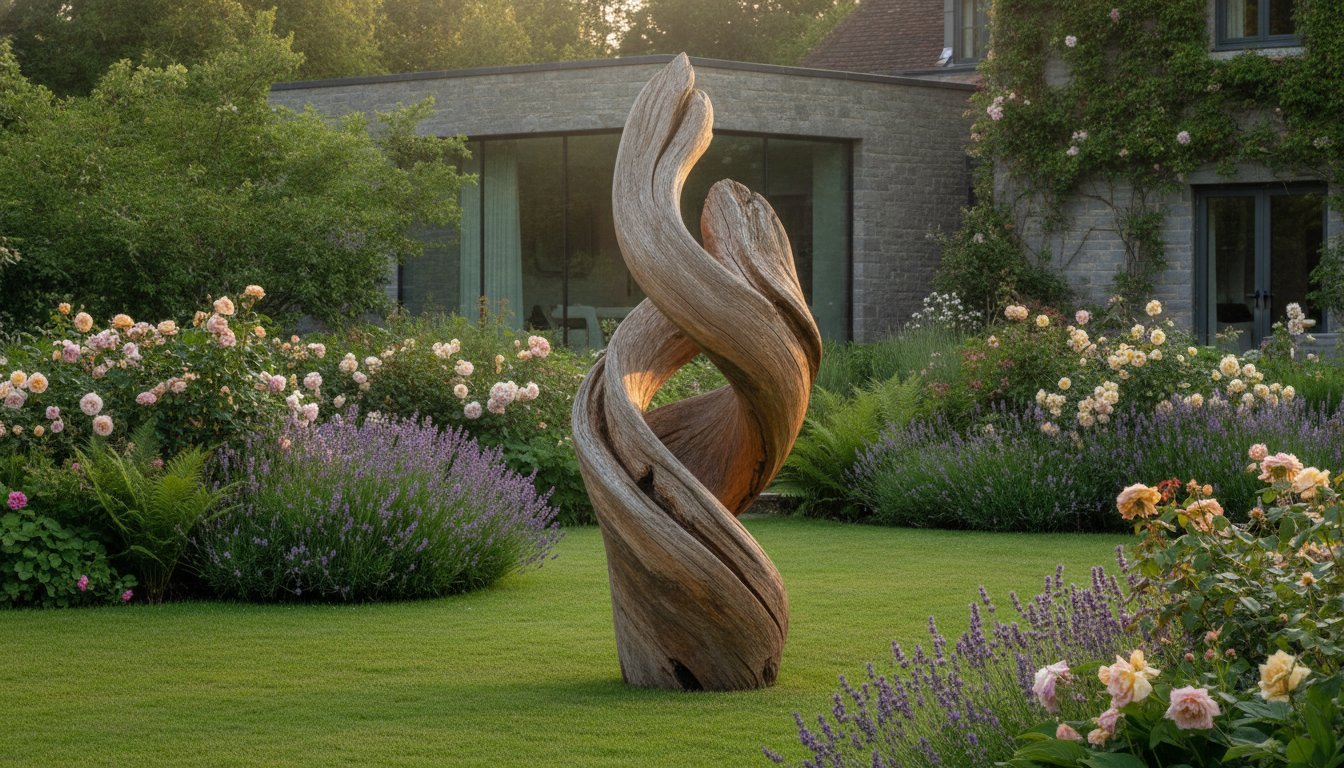
A garden is merely a collection of plants until it finds its heartbeat; a focal point that breathes life into the greenery and connects the quiet earth to the shifting sky. You likely crave an outdoor space that feels like a soulful sanctuary, yet it's common to feel hesitant when choosing between fleeting, mass-produced ornaments and genuine artisanal work. The worry that a significant investment might succumb to the damp British climate or prove difficult to secure safely is a valid concern for any thoughtful guardian of the land. By choosing large wooden garden sculptures UK makers have crafted from ethically sourced, fallen timber, you can bridge the gap between raw nature and refined art.
This reference guide explores how these monumental installations can transform your garden into a curated gallery whilst honouring the lifecycle of our native woodlands. You'll discover the secrets to selecting durable timber species that age with grace, the technical nuances of anchoring heavy forms, and how the 2026 UK forest risk regulations ensure your piece supports a sustainable future. We'll provide the clarity you need to invest in a legacy piece that grows more beautiful with every passing season.
Key Takeaways
- Learn how to use scale to redefine your garden's boundaries and create a meaningful focal point that grounds your outdoor space.
- Discover the environmental benefits of choosing large wooden garden sculptures UK artisans have hand-crafted from fallen timber rather than mass-produced alternatives.
- Understand how to position your sculpture as a living installation by considering sightlines from your home and the natural flow of your landscape.
- Gain confidence in the durability of timber by learning how to embrace natural weathering and the organic "checking" process as your art ages.
- Explore the journey of commissioning a bespoke piece of UK heritage that reflects your personal story and connects your garden to the history of local woodlands.
The Impact of Scale: Why Large Wooden Garden Sculptures UK Homeowners Choose Matter
A garden often feels like a collection of separate elements: a border here, a seating area there. When you introduce large wooden garden sculptures UK gardens gain a central narrative that tethers the fleeting beauty of seasonal blooms to a more permanent, structural presence. These pieces act as a gravitational pull. They turn a simple patch of grass into a deliberate place. Unlike cold stone or industrial metal, timber carries a quiet, living warmth. It feels familiar because it belongs to the same biological world as the hedges and flowerbeds surrounding it.
Scale is a powerful tool for any outdoor designer. A large sculpture doesn't just sit in the space; it interacts with the horizon. It can make a sprawling lawn feel more intimate or, conversely, create a sense of depth in a smaller courtyard by drawing the gaze toward a specific point of interest. This interaction alters how we perceive boundaries. By placing a substantial wooden form at the end of a path, the garden feels like a curated gallery rather than just a plot of land. It provides a sense of enclosure and purpose that smaller ornaments simply cannot achieve.
Creating a Sanctuary with handcrafted garden art UK
Using wood as a medium helps bridge the gap between the structured lines of your home and the untamed beauty of the wilder garden. There's a long, storied history of wood carving that reminds us how humans have always sought to shape nature into something meaningful. Handcrafted pieces, especially those born from fallen timber, feel at home amongst the trees. They aren't intruders; they're echoes of the forest floor. This connection is vital when creating a sanctuary. It ensures that the art feels like it grew from the soil rather than being dropped onto it from a factory line.
The Psychology of Natural Textures in Outdoor Design
There's a specific calm that comes from touching raw grain or tracing the ridges of weathered bark. In a world of plastic and polished surfaces, the tactile nature of a large-scale wooden installation is deeply grounding. The visual rhythm of tree rings and grain patterns provides a soft focus for the mind, which helps reduce the mental fatigue of modern life. Organic shapes feel harmonious to our senses. Whilst harsh geometric structures often create a jarring contrast with the fluid growth of plants, the curves of a wooden sculpture mimic the very environment they inhabit.
Sourcing Sustainable Timber: The Journey of Fallen Tree Art
The creation of large wooden garden sculptures UK residents admire begins far before a chisel touches the surface. It starts on the forest floor. Fallen tree art represents an ethical shift away from commercial felling, choosing instead to work with timber that has been surrendered by the wind or through natural decay. This approach treats wood as a storyteller rather than a raw commodity. Every knot, lightning scar, or irregular grain pattern is a record of a century spent in the British elements. A sustainable garden sculpture is a piece crafted from timber that has reached the end of its standing life naturally.
By working with reclaimed woodland timber, we preserve the heritage of our landscape. These pieces carry a weight of history that mass-produced ornaments lack. To ensure these stories last for decades, we look to the same principles of material care found in the V&A Conservation department, where the focus is on respecting the inherent nature of the medium whilst protecting its future. Such dedication is vital for large wooden garden sculptures UK collectors choose to install as permanent fixtures in their outdoor sanctuaries.
Best UK Wood Species for Large Outdoor Sculptures
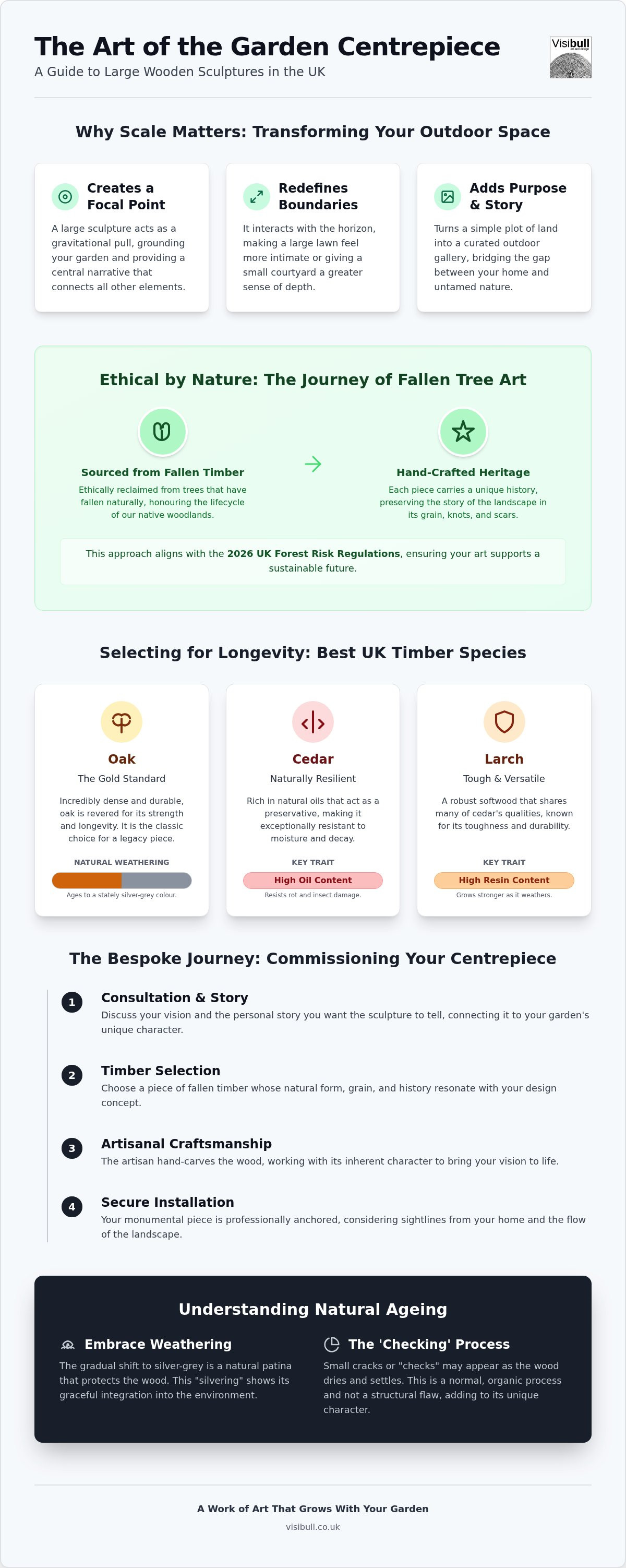
Not all timber is suited for the rigours of an outdoor gallery. Selecting the right species is the first step in ensuring your investment survives the damp winters and dry summers of the UK. Certain woods possess inherent qualities that make them ideal for large-scale work:
- Oak: Often called the gold standard, oak is incredibly dense and durable. It weathers to a beautiful, stately silver-grey over time, a process known as silvering.
- Cedar and Larch: These species are rich in natural oils and resins. This makes them exceptionally resistant to decay and fungal attacks, even in the wettest corners of Britain.
- Sweet Chestnut: An underrated durable timber for artisan craft, sweet chestnut is naturally resistant to rot and possesses a striking, twisted grain that adds immense character to large-scale works.
From Forest Floor to Garden Gallery: The Artisan Process
The journey from a raw log to a finished installation is one of immense patience. Large sections of timber require years of careful seasoning to stabilise before they can be carved. During this time, the artisan observes the wood, looking for the "art" hidden within the grain. It's a dialogue between the maker and the material. You can learn more about this natural wood garden sculptures UK heritage and how it informs every bespoke piece. If you are looking to ground your own space with a piece of woodland history, our studio's garden sculptures are born from this very philosophy of respect and renewal.
Garden Art Installations UK: Designing Your Outdoor Space
Placing large wooden garden sculptures UK homeowners adore requires more than just a spare corner of lawn. It's about creating a deliberate installation. This means considering how the piece interacts with the architecture of your home and the existing landscape. A sculpture needs "breathing space" to hold its presence. If it's crowded by overhanging branches or busy borders, its voice is muffled. Give it room. Let the air circulate around the timber. This physical space allows the viewer to appreciate the form from multiple angles, turning a stroll through the garden into a journey of discovery.
Think about your daily rhythms. Where do you spend your time? A well-placed sculpture should be visible from the kitchen window during a morning coffee or framed by the patio doors in the evening. These sightlines connect the interior of your home to the soul of the garden. As the sun sets, lighting becomes your most powerful tool. Subtle uplighting can cast dramatic shadows across the grain, whilst a soft wash of light can turn a solid form into a glowing silhouette after dusk. It extends the life of the art long after the sun has dipped below the horizon.
Technical Considerations for Large Installations
Safety is as vital as aesthetics. Large timber sections carry significant weight, often requiring more than just a flat patch of earth. You'll need to assess ground stability. For heavier pieces, hidden foundations made of compacted gravel or a discreet concrete pad might be necessary to prevent sinking. Wind-load is another factor in the UK's unpredictable climate. Tall sculptures need secure anchoring to ensure they remain upright during autumnal gales. Professional artisans often build these fixings into the base, keeping the engineering invisible.
Seasonal Evolution: How Art Changes with the Weather
One of the joys of natural wood is its seasonal dialogue. During a crisp British winter, frost highlights grain patterns that are invisible in the summer heat. The timber's colour shifts too, deepening during wet spells and brightening in the spring sun. Designing large wooden garden sculptures UK gardens host for all four seasons ensures the piece remains a captivating focal point even against the bare bones of January.
Selection and Longevity: Caring for Large Wooden Art
Selecting a piece of art for your garden is a commitment to a material that remains, in many ways, alive. Large wooden garden sculptures UK collectors choose must be selected with the garden’s specific micro-climate in mind. A sculpture placed in a damp, shaded woodland corner will age differently than one standing on a sun-drenched, wind-swept terrace. Shady spots often encourage a beautiful patina of moss and lichen, whilst exposed areas lead to faster silvering. Many people initially fear "checking," the small cracks that appear as timber seasons in the open air. Don't see these as flaws. They are the wood's way of settling into its new environment, a natural part of its journey from the forest to your home.
Wood is a breathable material that reacts to humidity and temperature.
For many, the natural silvering of oak or cedar is the ultimate goal. This weathered grey aesthetic is a mark of a piece that has truly become part of the landscape. However, if you prefer to retain the warm, honeyed tones of the freshly carved wood, a consistent care routine is essential. The choice between a raw, evolving finish and a preserved one is entirely personal, but both require an understanding of how timber interacts with the British elements.
Preservation Strategies for the British Climate
To maintain the structural integrity of your sculpture, you'll need a clear strategy. Breathable sealants are often the best choice, as they allow moisture to escape from the grain whilst blocking the worst of the driving rain. Oils penetrate deep into the fibres to keep them supple, whereas waxes offer a tactile, protective layer that enhances the wood's natural lustre. You can find a detailed maintenance schedule in our guide on how to preserve wooden garden sculpture. One of the simplest ways to ensure longevity is to lift the piece slightly off the damp ground. Using small stone "feet" or a discreet gravel base prevents moisture from wicking up into the grain, which is the primary cause of base rot.
How to Spot Quality in a Large Wooden Sculpture
Quality in large-scale work is often found in the details that allow the material to breathe. Look for joinery techniques that permit natural movement; if a piece is constructed too rigidly, it will eventually fight against itself as the seasons change. Proper seasoning is also a hallmark of a professional artisan. Rushed timber often feels "tight" and is prone to aggressive warping, whereas well-seasoned wood has a calm, stable presence. A high-quality finish should always highlight the tree’s ring patterns, celebrating the history of the timber rather than hiding it. If you're ready to ground your outdoor space with a piece of enduring craftsmanship, explore our range of bespoke garden sculptures.
The Bespoke Journey: Commissioning Your Garden Focal Point
Choosing to commission large wooden garden sculptures UK artisans create is an act of stewardship. It's about more than simply adding an object to a lawn; it's about anchoring a piece of UK heritage in your private landscape. When you step away from the convenience of mass-market retail, you enter a collaborative space where your personal story meets the history of a specific tree. This journey is as much about the process as it is the final result. It's an opportunity to ensure that the art you install is not just beautiful, but deeply resonant with the land it occupies.
Communicating your vision to an independent maker is a soulful dialogue. You don't need technical jargon to begin. Instead, talk about the feeling you want to evoke or the specific memories you wish to honour. Perhaps there's a particular species of timber that reminds you of a childhood woodland, or a specific curve in the landscape you want the sculpture to echo. A skilled maker listens to these narratives, finding ways to weave them into the organic flow of the grain. This level of personalisation ensures that the finished piece is a unique reflection of your connection to nature.
Patience is the most vital ingredient in this process. Unlike factory-made ornaments, bespoke woodcraft follows a slower rhythm. Large timber sections need time to be understood before the first cut is made. The artisan must observe how the wood has seasoned and where its natural strengths lie. This methodical approach might mean a longer wait, but it yields art that is stable, soulful, and built to withstand the shifting British seasons for decades. It's a quiet investment in quality that grows more meaningful as the years pass.
Case Study: Bringing a Vision to Life
A deeper understanding of this collaborative process can be found in our bespoke garden sculpture UK case study. It illustrates how the specific geography of a site informs the final form of the installation. When an artist visits your garden, they aren't just looking for a flat patch of ground. They're observing the way the light falls at noon, the direction of the prevailing wind, and the existing textures of your stone walls or hedges. Supporting independent UK artists in this way ensures that the craftsmanship remains local and the materials are sourced with integrity.
Why Bespoke Art Outlasts Mass-Produced Alternatives
When you compare artisan timber to the wood used in retail ornaments, the difference in quality is stark. Most mass-produced garden structures rely on fast-grown softwoods that require heavy chemical treatments to survive. In contrast, bespoke designs utilise durable hardwoods like oak or sweet chestnut, which possess a natural resilience. These pieces can be tailored to solve specific garden challenges, such as drawing the eye away from a "problem area" or providing a sense of height in a flat landscape. The result is a legacy piece that doesn't just sit in the garden but evolves with it, silvering gracefully as it becomes an inseparable part of your outdoor sanctuary.
Cultivating Your Legacy in the Landscape
A garden is a living story. By choosing to install large wooden garden sculptures UK makers have hand-carved from the forest floor, you aren't just decorating a space; you're honouring the lifecycle of the land. We've explored how scale redefines boundaries, how sustainable sourcing from fallen timber preserves our woodland heritage, and why a commitment to simple care ensures your art ages with grace alongside your favourite plants.
These installations offer a soulful alternative to mass-produced ornaments. They provide a tactile connection to the earth that deepens with every passing season. If you're ready to ground your outdoor sanctuary with a piece that celebrates unique tree-ring patterns and authentic craftsmanship, we invite you to take the next step. You can explore our collection of handcrafted garden sculptures and bespoke woodcraft, or begin a direct collaboration with the artist to bring your own vision to life. Your garden is waiting for its heartbeat. Let's find the timber that tells your story.
Frequently Asked Questions
What is the most durable wood for a large garden sculpture in the UK?
Oak, Sweet Chestnut, and Larch are the most durable native species for outdoor work. Oak is the gold standard due to its high density and natural tannins, which resist decay. Sweet Chestnut is equally resilient against rot and fungal attacks. Larch and Cedar contain natural oils that repel moisture effectively. Choosing these species ensures your installation resists the damp British climate whilst silvering gracefully over many decades of exposure.
Do I need a concrete base for a large wooden sculpture?
A concrete base is often recommended for very heavy or tall installations to ensure long-term ground stability. Whilst smaller pieces can sit on compacted gravel, larger sculptures carry significant weight and face wind-load challenges. A discreet, level concrete pad prevents the piece from sinking into soft soil or tilting during autumnal gales. It provides a permanent, secure foundation that keeps the art level and safe for everyone enjoying the garden.
How do I prevent my wooden sculpture from rotting at the base?
Preventing ground-level moisture absorption is the most effective way to stop rot. You should lift the sculpture slightly off the earth using stone "feet," stainless steel pins, or a bed of free-draining gravel. This break in contact stops water from wicking up into the grain. For large wooden garden sculptures UK weather can be unforgiving, so ensuring the base stays dry is vital for the long-term health of the timber.
Is it normal for my large wooden sculpture to develop cracks?
Yes, natural "checking" or cracking is a normal and expected part of a sculpture's lifecycle. As the timber reacts to changes in humidity and temperature, it breathes and settles. These openings are rarely a sign of structural failure; rather, they are a testament to the wood's organic nature. Most artisans view these shifts as part of the piece's character, showing how the art evolves in harmony with its outdoor environment.
How often should I treat my outdoor wooden art?
Treatment frequency depends on your desired aesthetic and the wood species. If you prefer the natural silver-grey patina, you don't need to apply any oils or waxes. However, to maintain the original warm colour, you should apply a breathable UV-protective oil once a year, ideally in late spring. This annual ritual replenishes the wood's natural defences and keeps the grain looking vibrant against the backdrop of your summer blooms and greenery.
Can I commission a sculpture made from a tree that fell in my own garden?
Commissioning a piece from your own fallen timber is a beautiful way to preserve a tree's legacy. Most independent artisans welcome this approach, provided the wood is sound and free from significant internal rot. The process involves assessing the log's condition and allowing it sufficient time to season before carving begins. It turns a lost part of your garden's history into a unique piece of handcrafted heritage you can cherish.
Do large garden art installations UK require planning permission?
Most large garden art installations UK homeowners commission do not require planning permission if they fall under "permitted development." Generally, sculptures are considered garden ornaments rather than permanent buildings. However, if the piece is exceptionally tall, placed near a boundary, or if your property is in a Conservation Area, it's wise to check with your local planning office. They can provide clarity on height restrictions specific to your particular region.
How do I clean moss or algae off my wooden sculpture?
You can clean moss or algae using a soft-bristled brush and a gentle solution of warm, soapy water. Avoid using high-pressure washers, as these can damage the delicate fibres of the wood grain. For persistent growth, a mixture of white vinegar and water is a natural, eco-friendly alternative. Regular cleaning every spring prevents build-up from trapping moisture against the surface, ensuring the intricate textures of the carving remain visible and healthy.