
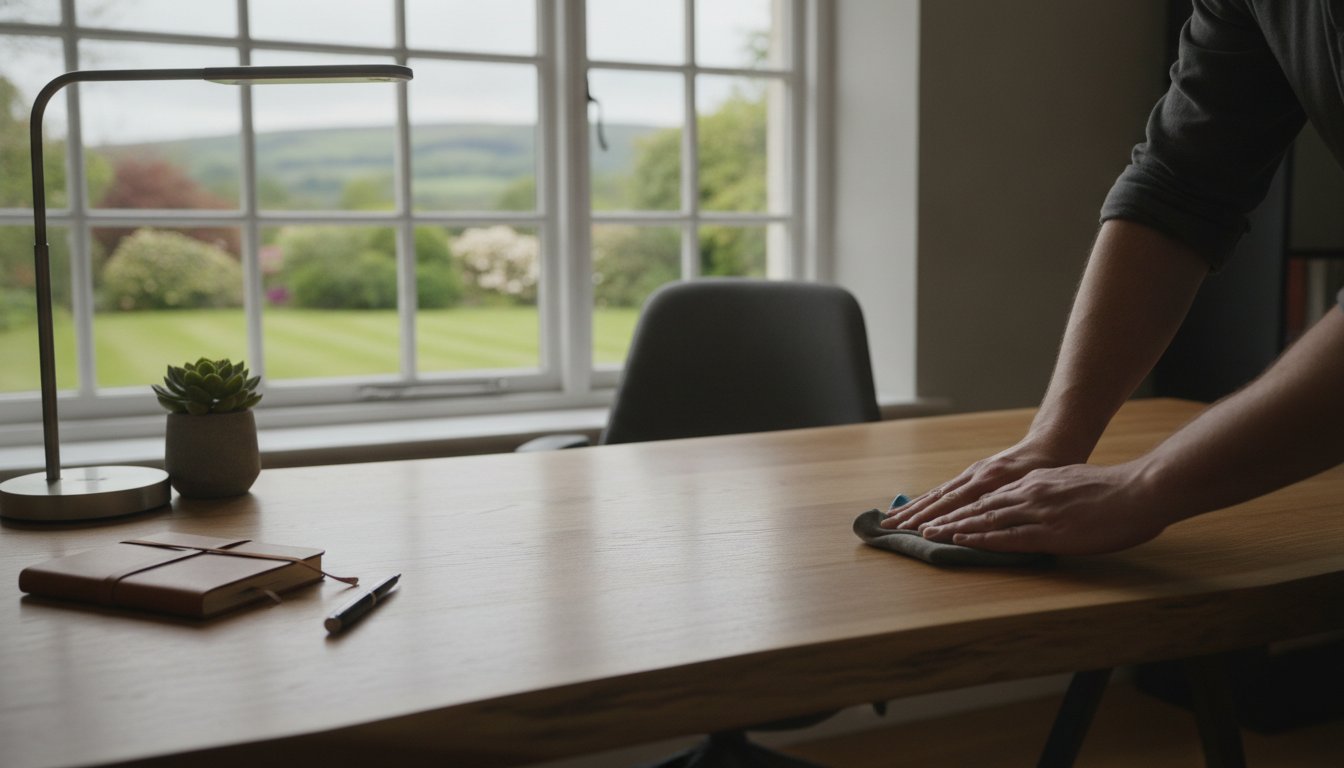
What if your workspace wasn't just a flat surface for a laptop, but a living record of British woodland history that actually stood the test of time? Many people feel a deep frustration with the flimsy, mass-produced furniture that dominates the high street. It's exhausting to decipher vague marketing claims about sustainability, only to end up with a desk that feels hollow or reacts poorly to the dry air of a centrally heated home. You deserve a centrepiece that reflects your values and provides a tactile connection to the natural world.
Investing in a bespoke handmade wooden desk UK allows you to preserve the narrative of a fallen tree rather than contributing to industrial waste. This guide walks you through the artistry and technical journey of creating a heritage piece. You'll discover how to identify truly ethical timber, understand the methodical craftsmanship required to stabilise solid wood, and learn the simple rituals of care that keep a desk beautiful for generations. Let's explore how we can bring the quiet strength of the forest into your daily work life.
Key Takeaways
- Understand how traditional joinery techniques provide the structural integrity needed to outlast the short lifespan of mass-produced office furniture.
- Discover the environmental benefits of using naturally fallen timber for your handmade wooden desk UK to support woodland biodiversity and carbon preservation.
- Compare the distinct characteristics of British Oak, Ash, and Elm to find the perfect balance of grain texture and durability for your workspace.
- Gain practical knowledge on managing natural wood movement to keep your solid timber surface stable amongst the dry air of modern central heating.
- Learn how the intersection of fine art and woodcraft can turn a functional desk into a heritage storypiece that honours the history of the tree.
The Value of a Handmade Wooden Desk: Beyond High-Street Furniture
There is a quiet movement growing amongst those who work from home. It’s a shift away from the "disposable" mindset that has defined the last few decades of interior design. Choosing a handmade wooden desk UK is about more than just aesthetics; it’s a decision to step out of the cycle of waste and into a relationship with the material world that values patience over speed. When we look at the history of the desk, we see these objects were once considered heirlooms, built to accommodate the steady rhythm of thought and craft. Today, that heritage is being reclaimed by those who want their workspace to tell a story of British woodland rather than industrial efficiency.
Owning a piece with a traceable origin provides an emotional resonance that mass-produced items simply cannot match. Knowing that your desk began its life as a standing tree in a local wood, and was later salvaged after a natural fall, creates a deep sense of integrity. It’s a functional sculpture that serves as a sustainable investment, intended to be passed down to future generations rather than replaced every few years.
The Flaws of Mass-Produced Office Furniture
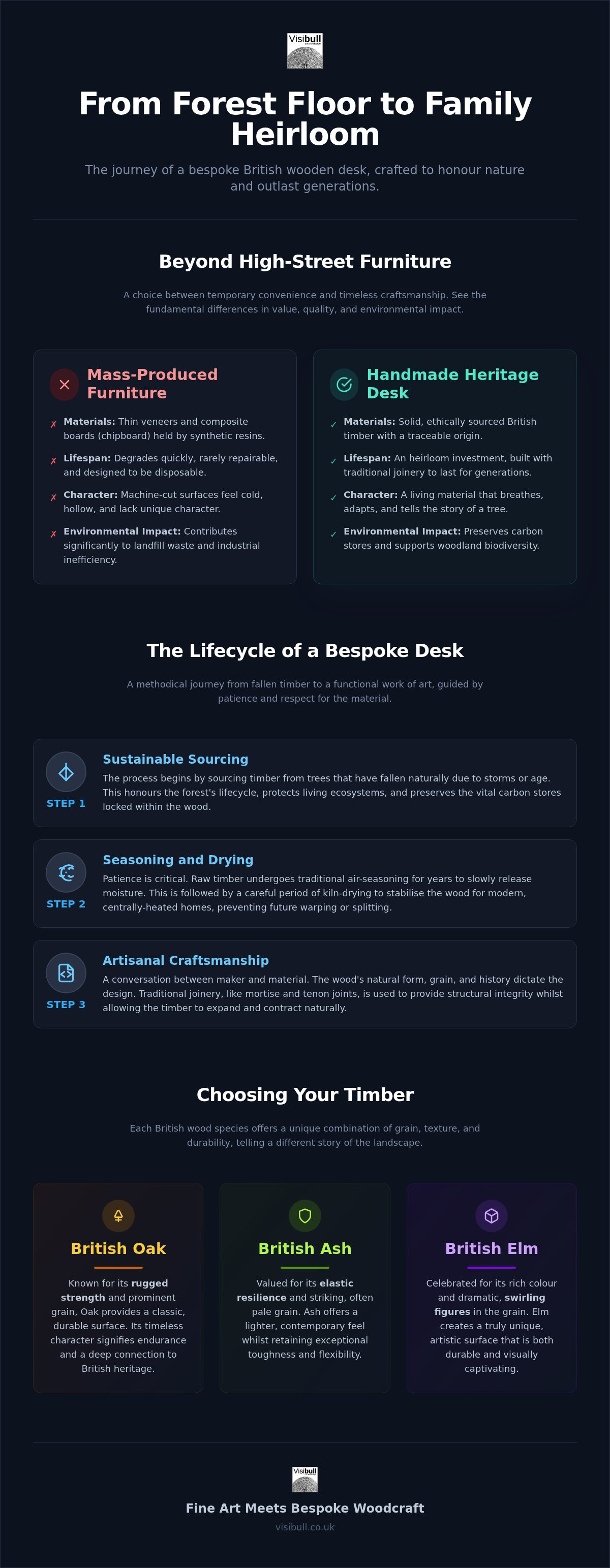
High-street options often rely on thin veneers and composite boards held together by synthetic resins. These materials are brittle. They don't age; they simply degrade. When a chipboard desk breaks, it’s rarely repairable, which contributes significantly to the furniture waste problem in the UK. There is a certain emptiness in a machine-cut surface that lacks the unique knots and soul of a living tree. It feels cold and temporary, a placeholder rather than a permanent fixture in your home office.
The Artisanal Alternative
Bespoke woodcraft represents a conversation between the maker and the timber. In the studio, the process begins by observing the natural form of the wood, allowing its history to dictate the final structure. A handmade wooden desk UK isn't a static object. It’s a living material that breathes and moves. Whilst many worry about how solid wood reacts to central heating, a properly crafted piece is designed with these shifts in mind. Traditional joinery, such as mortise and tenon joints, allows the timber to expand and contract naturally. This structural integrity ensures your desk remains a stable, tactile centrepiece that adapts to the unique atmosphere of your home over time.
From Forest Floor to Study: The Lifecycle of a Bespoke Desk
Sustainable woodcraft is the ethical utilisation of fallen timber to create functional art without disrupting living ecosystems. This philosophy guides the creation of every handmade wooden desk UK artisans produce. By focusing on trees that have surrendered to time or storms, we protect the forest's biodiversity and keep vital carbon stores locked within the wood. It’s a process that honours the lifecycle of the tree rather than interrupting it. Taking only what the earth has already released allows us to preserve the delicate habitats that standing trees provide.
Sourcing Fallen Timber Sustainably
Commercial felling often prioritises uniformity and speed, but artisanal sourcing is a slower, more observant practice. We look for timber that has fallen due to natural causes. These trees carry the record of their environment in every ring and knot. When you commission a handmade wooden desk UK, you're choosing a piece where the grain tells a specific story of the British landscape. Whether it's the rugged strength of Oak, the elastic resilience of Ash, or the swirling figures of Elm, each species reflects a different chapter of our heritage. Following the principles outlined in the UK Forestry Standard helps ensure that even small-scale artisanal work respects the broader ecological balance.
The Seasoning and Drying Process
Patience is the artisan's most vital tool. Raw timber is saturated with moisture; rushing it into a warm home is a recipe for disaster. We begin with traditional air-seasoning, letting the wood rest outdoors under cover for years. This slow release of tension allows the fibres to relax. Later, a careful period of kiln-drying brings the moisture content down to a level that's compatible with modern central heating. This two-stage process prevents the heartbreaking warping or splitting that often plagues poorly prepared wood. It’s a methodical journey from the damp forest floor to the dry sanctuary of your study. If you're curious about how these natural textures translate into your home, you might enjoy exploring our bespoke wooden tables and homewares which celebrate this very transition.
Once seasoned, the timber enters the workshop not as a blank slate, but as a partner. The maker's role is to hone the raw elements whilst retaining the wood’s natural history. We don't sand away the character to achieve a sterile, plastic-like finish. Instead, we use hand tools to follow the natural undulations of the grain, ensuring that the final desk feels as organic as the tree it once was. This careful execution turns a simple piece of furniture into a functional legacy.
Choosing the Right Timber: A Comparison of UK Wood Species
Selecting the material for your handmade wooden desk UK is an act of translation. You're choosing which part of the British landscape you want to bring indoors. Oak remains the quintessential choice for many, prized for its immense strength and the classic, reliable grain that has defined our furniture for centuries. It carries a weight and a presence that feels permanent. It's a timber that doesn't just sit in a room; it anchors it.
Ash and Elm offer a different energy. Ash is celebrated for its pale, warm tones and surprising resilience; it’s a wood that absorbs shock well, making it a wonderful companion for a focused workspace. Elm, however, is the storyteller’s timber. Its grain is often wild and intricate, with swirling patterns that capture the eye. For those seeking something truly rare, native Walnut or Cherry provide deep, soulful colours that darken beautifully as they age, though these species are harder to find in large, fallen planks. Matching the species to your needs involves balancing these aesthetic desires with the functional demands of your daily routine.
Grain Patterns and Natural Features
The choice between a "live edge" and a straight-cut finish defines the desk's relationship with the room. A live edge preserves the natural silhouette of the tree, keeping the organic curves where the bark once sat. We believe in celebrating "imperfections" rather than hiding them. Knots, burrs, and the shimmering medullary rays found in quarter-sawn oak aren't flaws. They're the fingerprints of the tree. The direction of the grain influences how light moves across the surface, helping to establish the visual flow and the quiet centre of your office.
Durability and Practicality for Daily Use
A busy home office demands a surface that can handle the weight of monitors and the constant movement of a laptop. Hardness is key. Oak and Ash sit high on the hardness scale amongst UK hardwoods, offering a writing surface that resists indentations from pens or equipment. The tactile experience also varies between species. Oak is an open-grain wood, meaning you can feel the physical texture of the vessels beneath your fingers. Closed-grain woods like Cherry or Walnut feel smoother and more uniform to the touch. When deciding on your handmade wooden desk UK, consider how the wood feels beneath your palms during a long day of work.
Caring for Handcrafted Wood: Ensuring a Heritage Lifespan
A handmade wooden desk UK is more than a static object; it's a living participant in your home office. Because timber is hygroscopic, it "breathes" by absorbing and releasing moisture from the surrounding air. This movement is a natural, healthy behaviour of solid wood. Understanding this rhythm is the first step in ensuring your desk becomes a heritage item that lasts for generations. Daily care is simple. Dust the surface with a soft, dry cloth and avoid harsh chemical cleaners that can strip away the wood’s natural character.
Choosing the right finish is essential for long-term protection. Whilst synthetic lacquers provide a hard, plastic-like seal, they often mask the tactile beauty of the grain. We prefer natural oils and waxes. These finishes penetrate deep into the fibres, protecting the wood from within whilst allowing you to feel the physical texture of the timber. If a minor spill or scratch occurs, a natural oil finish makes repair straightforward. You can gently sand the affected area and re-apply oil yourself. With a lacquer finish, a single deep scratch often requires a full professional strip-back to fix.
Managing Humidity and Heat
The British climate can be temperamental. In winter, central heating dries out the air, whilst summer brings higher humidity. To keep your desk stable, aim for a consistent indoor environment. Positioning is crucial. Don't place your desk directly against a radiator or in the path of intense, direct sunlight. These concentrated heat sources can cause the timber to dry too rapidly, potentially leading to small cracks or "shakes" in the grain. Using coasters and heat mats is a simple mark of respect for the material, preventing heat rings from becoming permanent features of your workspace.
Periodic Refinishing and Rejuvenation
Re-oiling your desk is a meditative ritual that nourishes the timber. Every 12 to 18 months, give the surface a gentle refresh. You only need a few lint-free cloths and a high-quality furniture oil recommended by your maker. Apply the oil sparingly, following the direction of the grain. Let it soak in for a short period, then buff away any excess until the surface feels smooth. This process restores the deep, organic glow of the wood and reinforces its protective barrier. If you ever encounter a significant structural issue, it’s best to contact the original artisan for professional restoration. Ready to start your journey with a piece built for longevity? Explore our collection of handmade tables and bespoke desks to find your next home office centrepiece.
The Visibull Approach: Where Fine Art Meets Bespoke Woodcraft
At Visibull, our work isn't just about building furniture; it's about revealing a hidden history that has been centuries in the making. Every handmade wooden desk UK we create is informed by our deep study of timber through the lens of fine art. We don't see a plank as a mere commodity. Instead, we see it as a map of past seasons, a living record of the wind, rain, and sun that shaped the tree. This perspective changes how we approach design, moving away from rigid, industrial plans toward a more fluid, appreciative method of making.
Celebrating Dendrochronology in Furniture
Our expertise in tree ring art prints UK directly informs the way we prepare and finish our desk surfaces. This scientific art, known as dendrochronology, allows us to read the history of a tree through its growth rings. We use these insights to highlight the most evocative features of the timber, ensuring that the age and character of the wood are the primary focus. There is an intimate connection between the pressure used in printmaking and the careful hand-planing of a desk top. Both require a sensitivity to the material’s resistance. The result is a "storypiece" that serves as a quiet, powerful conversation starter in your home, grounding your modern work life in the slow, steady rhythm of the forest.
Bespoke Design for Modern Living
The philosophy of the "Humble Artisan" means we listen to the wood before we pick up a tool. We let the timber's natural history dictate the form, allowing its unique knots and undulations to guide the final silhouette. This bespoke journey is a collaborative effort between the client, the maker, and the timber itself. We tailor every dimension to suit your specific architectural space, ensuring the desk fits perfectly amongst your existing surroundings. We often integrate sculptural elements into our functional office furniture, turning a simple leg or support into a work of organic art. To create a cohesive aesthetic that spans the boundaries of your home, you might consider pairing your indoor desk with natural wood garden sculptures UK. This extends the narrative of the woodland from your study into the garden office or outdoor living area.
Your commission journey with Visibull begins with a shared observation of the raw material. We don't rush you toward a purchase. Instead, we invite you to appreciate the texture and origin of the timber we've salvaged. By understanding the "how" and "why" behind the creation, you gain a deeper connection to your handmade wooden desk UK. It becomes a functional legacy that honours the tree’s past whilst supporting your future work. Every detail, from the choice of joinery to the final coat of oil, is a testament to our shared reverence for the natural world.
Cultivating a Legacy in Your Workspace
Choosing a workspace that honours the natural world is a profound way to ground your daily life. We've explored how the journey from forest floor to study preserves the integrity of British woodlands, ensuring that every handmade wooden desk UK is a unique celebration of British timber heritage. By prioritising the slow seasoning of naturally fallen trees and the meticulous joinery of an independent artist-designer, you invest in a piece that breathes with your home. It's a choice for longevity that avoids the cycle of waste.
A bespoke commission is more than a purchase; it's a collaborative preservation of a tree’s story. This connection between artisanal woodcraft and the science of dendrochronology ensures your desk remains a soulful centrepiece for years to come. If you're ready to bring the raw beauty of the outdoors into your office, we invite you to explore our bespoke handmade wooden desks and commissions. Let's create something that stands as a testament to your values and the enduring spirit of our native trees.
Common Questions About Bespoke Woodcraft
How long does a handmade wooden desk typically take to craft?
A bespoke commission typically takes between 8 and 12 weeks to complete from the initial design consultation. This duration allows for the careful selection of seasoned timber and the methodical execution of traditional joinery. Rushing this process would compromise the structural integrity of the wood. Each handmade wooden desk UK makers produce requires time to acclimatise to the workshop environment before final finishing, ensuring the piece is stable before it reaches your home.
Is a solid wood desk better than a reclaimed wood desk?
Both have merit, but solid wood from naturally fallen trees offers a more predictable grain structure and superior long-term stability. Reclaimed wood often carries hidden stresses or old fixings that can affect the timber’s movement. Whilst reclaimed wood has a wonderful history, our focus on salvaged British timber ensures you receive a heritage piece with a clear, traceable life story that hasn't been compromised by previous industrial use or chemical treatments.
Will my handmade desk change colour as it ages?
Yes, all natural timber undergoes a subtle shift in colour as it reacts to light and oxygen. This process, known as patination, is a beautiful sign of a living material. Oak tends to deepen into a richer, golden hue, whilst species like Cherry or Walnut may darken significantly over the first year. This evolution isn't a flaw; it’s a deepening of the wood’s character that makes the desk feel more established in your home.
Can I use a handmade wooden desk in a room with underfloor heating?
You can use a solid wood desk with underfloor heating provided the timber has been seasoned to the correct moisture content. We ensure our wood is dried slowly to resist the stresses of modern heating systems. It’s best to avoid placing the desk directly over a high-heat manifold. Maintaining a consistent room temperature helps the wood "breathe" naturally without the risk of significant movement or shaking in the grain.
What is the most durable wood species for a desk in the UK?
English Oak and Ash are amongst the most durable native species for a hard-working desk surface. Oak is renowned for its density and resistance to indentations, making it ideal for those who use heavy equipment or write directly on the surface. Ash offers similar hardness with a slightly more elastic nature. Both timbers provide a resilient writing surface that, when finished with natural oils, can withstand the rigours of daily office use for decades.
How can I verify if the wood for my desk was sustainably sourced?
You can verify sustainability by asking about the specific origin of the timber and looking for adherence to the UK Forestry Standard. Truly ethical makers focus on naturally fallen trees or salvaged wood rather than commercial clear-felling. A transparent artisan will be able to tell you where the tree stood and why it was removed. This local provenance is the most reliable way to ensure your handmade wooden desk UK supports living ecosystems.
What is a live edge desk and is it practical for writing?
A live edge desk incorporates the natural, organic silhouette of the tree’s outer trunk into the design. It is perfectly practical for writing because the top surface is planed completely flat and smooth. The "live" element is usually reserved for the front or back edges, providing a tactile, sculptural quality that reminds you of the material’s origin. It turns a functional piece into a unique, comfortable work of art that feels soft to the touch.
Do I need to assemble a handmade wooden desk myself upon delivery?
Most heritage-quality desks are delivered fully assembled or with minimal setup required, such as bolting on a set of hand-crafted legs. Unlike mass-produced flat-pack furniture, a handmade piece relies on permanent joinery like mortise and tenon joints for its strength. We believe the maker should oversee the final integrity of the piece. You won't need to spend your afternoon deciphering complex diagrams or struggling with flimsy cam-locks and synthetic glues.