
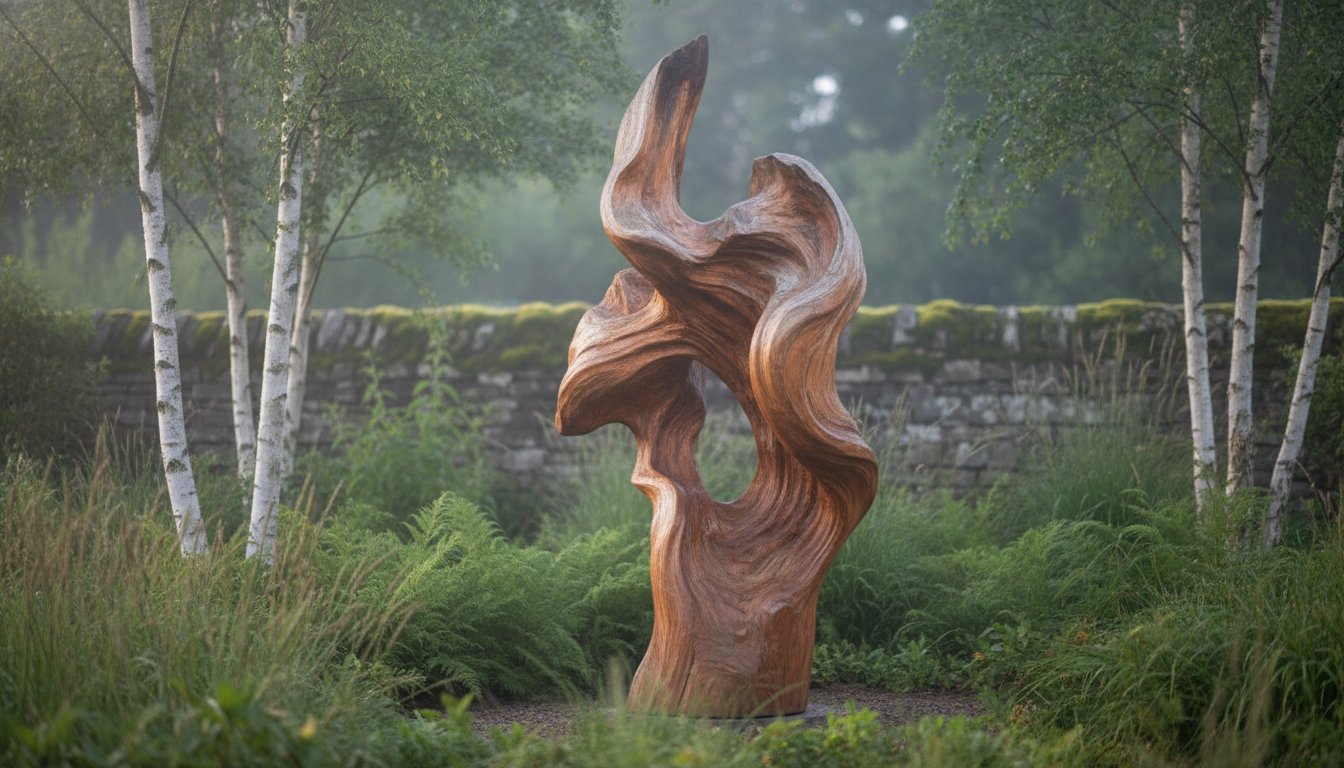
What if your garden could speak with the ancient voice of the forest, rather than the hollow clatter of mass-produced plastic? Most of us have felt the quiet sting of disappointment when a bargain ornament begins to weather poorly after its first British winter; we've felt the disconnect of placing a factory-made object amongst living, breathing plants. You likely want your outdoor space to feel like a curated sanctuary, a place where every element has a heartbeat and a history. By investing in handcrafted garden art UK makers offer, you can finally bridge that gap between the wild woodland and your own back door.
We believe that garden art should be a continuation of the landscape, not a disruption of it. In this guide, you'll discover how soulful timber sculptures, shaped from fallen trees, can transform your garden into a narrative-rich sanctuary that celebrates our natural heritage. We'll explore the tactile beauty of British-made pieces, the importance of supporting independent artisans, and how to choose art that tells a lasting story of the forest floor. It's time to move away from the cold and the commercial, and instead, embrace a garden that feels as alive as the trees themselves.
Key Takeaways
- Learn why moving away from mass-produced resin towards sustainable, maker-led pieces is defining the British garden aesthetic in 2026.
- Discover the unique tactile warmth of timber and how wood art gracefully patinas over time to become a living part of your outdoor space.
- Master the art of organising your outdoor gallery by identifying natural focal points and balancing scale to complement your planting.
- Understand the collaborative process of commissioning handcrafted garden art UK artisans create to turn fallen timber into a lasting legacy for your home.
- Explore how abstract organic forms and the intricate history found in tree rings can serve as the soulful centrepiece of a narrative-rich sanctuary.
Defining Handcrafted Garden Art in the UK
In 2026, the definition of a beautiful garden has shifted. It's no longer just about the symmetry of a hedge or the vibrancy of a flowerbed; it's about the stories we tell through the objects we place amongst the greenery. True handcrafted garden art UK artisans produce is a far cry from the hollow, mass-produced resin statues found in high-street centres. Instead, it represents a deliberate choice to celebrate individual skill and the raw, unyielding character of natural materials. Placing a piece of soulful sculpture in your outdoor space creates a focal point for reflection, turning a simple patch of grass into a sanctuary for mental wellbeing. This connection to the material world helps us ground ourselves, offering a tactile reminder of the lifecycle of the forest whilst we sit and breathe in the fresh air.
The Artisanal Movement vs. Mass Production
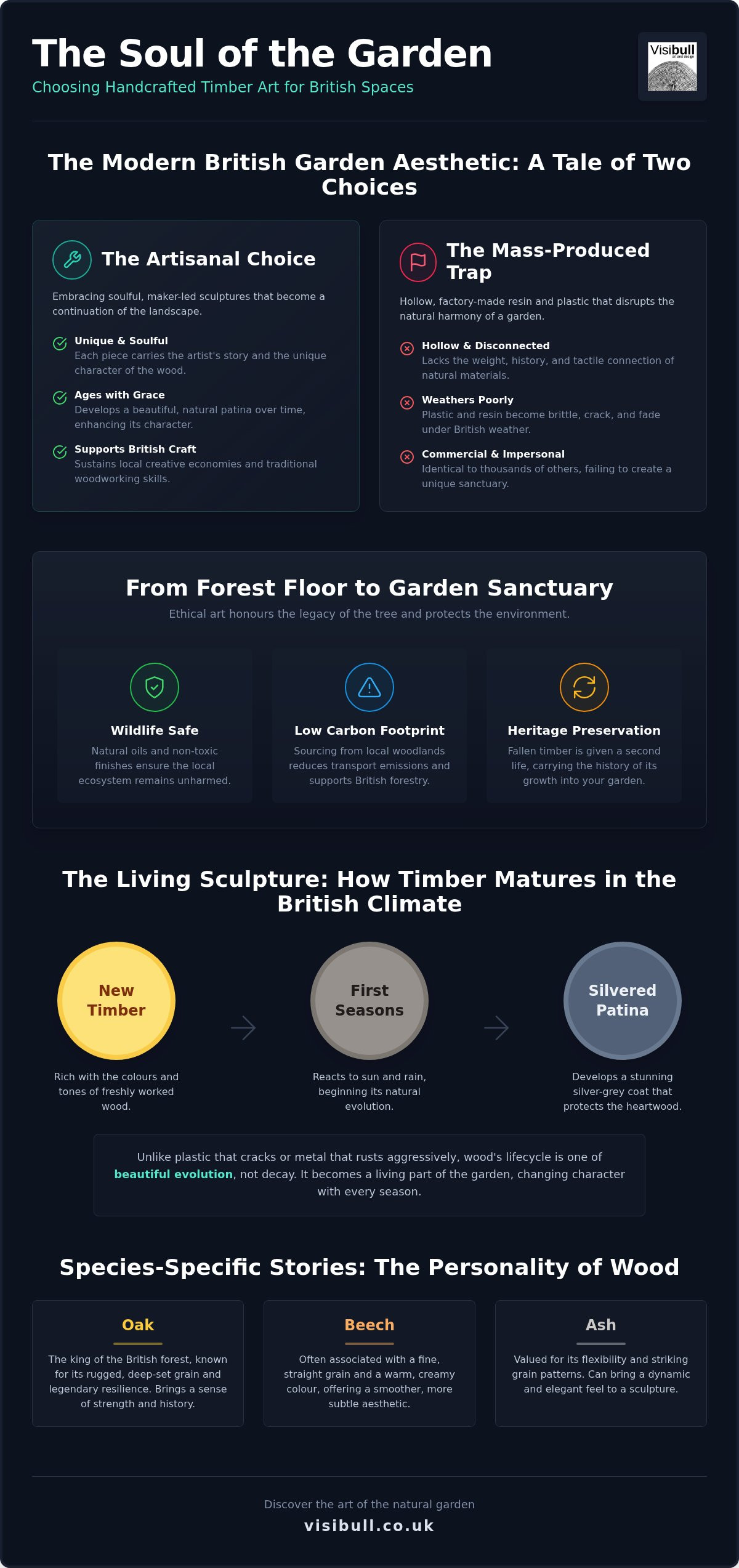
Choosing a bespoke sculpture means inviting a piece of the artist's journey into your home. Unlike factory-made decor that weathers into a brittle, faded version of itself, timber art possesses a unique longevity. It ages with grace, developing a patina that tells of the seasons it has endured. When you support an independent British studio, you aren't just buying an object; you're sustaining the local creative economy and preserving traditional woodworking techniques that might otherwise fade. You can often find the "makers mark" in these pieces; a subtle chisel stroke or a specific choice of grain that proves a human hand, rather than a machine, guided the material's transformation.
Sustainable Sourcing: From Forest Floor to Garden
Sustainability is the heartbeat of modern garden design. By 2025, wood became the largest revenue-generating material for UK outdoor furniture, reflecting a massive shift toward organic textures. Choosing sculptures crafted from fallen timber rather than felled trees ensures that your garden's beauty doesn't come at the cost of the forest's health. This approach honours the legacy of the tree, giving it a second life as art.
- Low carbon footprint: Sourcing wood from local woodlands reduces transport emissions and supports British forestry.
- Wildlife safety: Using natural oils and non-toxic finishes ensures that the local ecosystem remains unharmed.
- Heritage preservation: Each piece of fallen wood carries the history of its growth, from the nutrients in the soil to the storms it weathered over decades.
This ethical approach to handcrafted garden art UK ensures a piece of art that feels right in its environment, sitting comfortably amongst the birds and the bees without introducing harmful chemicals into the soil. It's a way of decorating that gives back to the earth, rather than just taking from it.
The Allure of Timber: Why Wood Defines British Outdoor Spaces
There is a quiet, radiating warmth in timber that metal and stone simply cannot replicate. Whilst a steel sculpture might stand in stark, cold contrast to its surroundings, wood feels like a natural extension of the soil. It breathes. It holds the sun's heat long after the light has faded, and it invites a tactile connection that encourages you to reach out and touch the grain. For those seeking to create a "hidden garden" or a traditional woodland walk, timber is the essential medium. It doesn't disrupt the landscape; it anchors it. When you introduce handcrafted garden art UK makers have shaped from the forest, you aren't just adding a decoration. You're bringing a piece of the woodland's soul back to the earth.
Durability and Weathering in the British Climate
Many worry that wood won't survive the relentless damp of a British winter. However, the lifecycle of timber art is one of beautiful evolution rather than decay. Unlike plastic, which becomes brittle and cracks under UV light, or metal, which can feel overly industrial as it rusts, wood matures. Untreated timber undergoes a stunning silvering process, a natural defence mechanism that protects the heartwood whilst creating a soft, weathered aesthetic that blends seamlessly with winter frosts. Understanding how different species react to rain and sun allows you to appreciate the sculpture as a living entity that changes its character with every passing season.
Species-Specific Stories: Oak, Beech, and Ash
Every tree carries a different narrative within its rings, and the choice of species dictates the personality of the finished piece. Oak is the undisputed king of the British forest, known for its rugged, deep-set grain and legendary resilience. It brings a sense of ancient strength to a landscape. In contrast, Beech offers a silk-like smoothness and a tighter, more uniform texture that feels contemporary yet grounded. Ash provides intricate, swirling patterns that can look almost liquid when polished. Choosing a material that reflects the existing flora in your garden helps create a cohesive, curated feel. If you're ready to find a piece that resonates with your specific landscape, exploring soulful garden sculptures crafted from these heritage timbers is a wonderful place to start.
By selecting a sculpture that matches the heritage of your local environment, you create a symbolic bridge between the art and the living trees that surround it. This harmony is what makes handcrafted garden art UK so special; it's a celebration of our native landscape, carved into forms that will stand as a legacy for years to come.
Inspiring Examples of Handcrafted Wooden Garden Sculptures
The beauty of handcrafted garden art UK makers produce lies in its unpredictability. Unlike a cast-metal statue that looks identical in every garden, a timber sculpture is entirely dictated by the specimen from which it was born. Some pieces are designed to be subtle, resting amongst the ferns like a forgotten relic of the forest, whilst others act as bold, large-scale statement pieces that define the very boundary of a vista. These larger works can draw the eye toward a specific view, acting as a frame for the rolling hills or garden borders beyond. Whether it's a towering vertical form or a low-slung, horizontal piece, the goal is always to enhance the natural geometry of your outdoor space.
Organic and Abstract Timber Forms
Many of the most compelling works don't seek to replicate a specific object, but rather to mimic the fluid, rhythmic flow of nature itself. By following the natural curvature of a root or the twisted path of a weathered branch, the artisan allows the material to dictate the final form. These abstract pieces invite a sense of quiet contemplation, as their meaning shifts depending on the light and the angle from which they are viewed. For those interested in how these shapes can transform a landscape, you can explore more in our guide to natural wood garden sculptures UK. These forms celebrate the raw, unpolished elegance of the woodland, turning what might have been discarded timber into a sophisticated centrepiece.
Wildlife and Nature-Inspired Motifs
Whilst some prefer abstraction, others find comfort in art that offers a subtle nod to the woodland creatures that share our spaces. This isn't about the kitsch, brightly coloured figurines often found in garden centres; it's about carved textures that suggest the presence of a bird's wing or the rough bark of a badger's sett. Some handcrafted garden art UK is even designed with a dual purpose, providing a habitat for local insects or birds within its crevices. This creates a narrative of the "wild" within a managed garden space, encouraging a symbiotic relationship between the art and the ecosystem.
We also see this in functional art, where a sculpture might serve as a sculptural bench or a handmade table, allowing you to literally sit within the story of the forest. By celebrating the intricate patterns of tree rings and the scars of age, these pieces ensure that the legacy of a fallen tree continues to support life and beauty for decades. These works remind us that art doesn't have to be a static object on a pedestal. It can be a place to rest, a home for a beetle, or a tactile record of a century's growth.
Organising Your Outdoor Gallery: Placement and Preservation
Transforming your garden into a curated gallery requires more than just picking a beautiful object; it's about understanding how that object interacts with the space around it. When you introduce handcrafted garden art UK artisans have poured their soul into, you must consider the sightlines from your home. Think about where your gaze naturally rests whilst you're washing up at the kitchen sink or stepping out onto the patio. Placing a sculpture where it can be seen from indoors ensures that its narrative-rich presence provides comfort even during the bleakest winter months. Light and shadow are your greatest allies here. Low winter sun can catch the ridges of a carved timber surface, casting long, dramatic shadows that emphasise the raw texture of the wood.
Creating Focal Points in Different Garden Zones
Scale is vital. A piece that is too small will be swallowed by a summer border, whilst something too large can feel aggressive in a courtyard. You might place a vertical sculpture at the end of a winding path to draw the eye forward, creating a sense of purpose and destination. Alternatively, integrating smaller works amongst herbaceous borders offers a "discovery" feel, where the art is only revealed as you walk through the planting. For those dealing with awkward, shaded spots where plants struggle to thrive, using a bespoke garden sculpture UK makers have designed specifically for that space can turn a problem corner into a sanctuary. These pieces anchor the garden, providing a permanent structure that remains beautiful even when the perennials have retreated for the season.
Caring for Your Handcrafted Wood Art
The longevity of timber art depends on a balance between protection and letting nature take its course. Whilst many owners love the silvered patina that develops over time, others prefer to maintain the deep, original hues of the wood through annual maintenance. Investing in handcrafted garden art UK makers provide is a commitment to a piece that evolves, but a little care ensures it lasts for generations.
- Inspect the base for moisture traps annually to ensure airflow.
- Brush away fallen leaves or moss to prevent unwanted fungal growth.
- Apply breathable natural oils during a dry spell in late spring to replenish the grain.
If you're unsure about the technical steps required for different species, our guide on how to preserve wooden garden sculpture provides a methodical approach to keeping your piece in peak condition. Every crack and silvered thread tells a story of the rain and sun it has endured. Ready to find a piece that fits perfectly within your own landscape? You can explore our collection of garden sculptures to see how different forms can harmonise with your outdoor space.
Commissioning Bespoke Garden Art: A Legacy for Your Landscape
Commissioning a piece of sculpture is a deeply personal act of co-creation. It moves beyond the simple transaction of a shop-bought ornament and enters the realm of intimate storytelling. When you choose to work with an artisan, you're embarking on a collaborative journey where your vision for your outdoor space meets a maker’s reverence for the material. At the Visibull studio, we approach every fallen tree commission by seeking out its "soul". We look for the hidden rhythms in the grain and the unique scars left by decades of growth. This is the essence of handcrafted garden art UK collectors cherish; it’s a way to preserve the legacy of a specific woodland specimen, ensuring its story continues long after it has left the forest floor.
The Process of Creating a Bespoke Piece
The journey begins with a quiet consultation, often on-site, to understand the atmosphere of your garden and the sightlines we discussed earlier. We select the perfect specimen together, perhaps choosing a cross-section of ancient Oak or a weathered limb of Beech that resonates with your personal history. It's important to understand that true art cannot be rushed. The wood must be understood, seasoned, and worked with a patient hand to ensure the final form is both structurally sound and emotionally resonant. There is an immense, quiet joy in seeing a piece of timber that was once destined for decay transformed into a permanent, soulful installation that anchors your landscape.
Investing in Art That Lasts
There is a fundamental difference between a purchase and an investment in heritage. Whilst mass-produced items are designed for the moment, handcrafted garden art UK artisans create is intended to be a multi-generational heirloom. These pieces add a layer of sophisticated character to a property, potentially increasing its value by creating a mature, curated environment that feels established and deeply rooted. You aren't just buying a sculpture; you're securing a piece of British woodland history that will patina and evolve alongside your family for years to come.
If you feel ready to move away from the temporary and embrace a more meaningful connection with the natural world, the first step is exploring the possibilities of the material. We invite you to browse the Visibull garden sculptures collection to begin your journey toward a more narrative-rich sanctuary. Whether it’s a tribute to a fallen tree from your own grounds or a new centrepiece for a quiet corner, a bespoke commission is a gift of beauty to both the present and the future.
Cultivating a Legacy in Your Garden
Choosing a piece of sculpture for your outdoor space is an invitation to slow down and reconnect with the natural world. We've explored how the tactile warmth of timber offers a soulful alternative to industrial materials, evolving gracefully alongside your planting through every passing season. By understanding the importance of sightlines and the collaborative joy of bespoke commissions, you can ensure your landscape tells a story that is uniquely yours. Handcrafted garden art UK artisans produce is more than just decor; it's a way to honour the lifecycle of the forest whilst creating a sanctuary for your own mental wellbeing.
Every piece we create is a celebration of sustainable, British-made woodcraft, from original artist prints to large-scale installations designed for unique landscapes. We believe that by giving fallen timber a second life, we can help you build a garden that feels as ancient and enduring as the woodland itself. It's about finding beauty in the reclaimed and making it a permanent part of your home's heritage.
Discover the soul of the woodland in our handcrafted garden sculptures and find a piece that truly resonates with your sanctuary.
Frequently Asked Questions
Is handcrafted garden art in the UK weather-resistant?
Yes, provided the sculpture is crafted from durable British hardwoods like Oak or Sweet Chestnut. These species possess a natural resilience to the damp and frost of our climate. Whilst the surface will eventually silver, this is a protective layer that preserves the heartwood. High-quality handcrafted garden art UK artisans produce is designed to evolve with the seasons, often outlasting mass-produced resin or plastic alternatives that become brittle after a few winters.
How do I choose the right size sculpture for a small garden?
Focus on verticality rather than width to preserve precious floor space. A tall, slender timber form can draw the eye upward, making a compact courtyard feel more expansive. Ensure the piece is in proportion with your largest plants; a sculpture that is too small might look like a forgotten ornament, whilst one that is too large can stifle the garden's flow. Aim for a piece that sits comfortably within a single sightline.
What is the best type of wood for outdoor garden art in the UK?
Oak is the undisputed gold standard for British landscapes due to its high tannin content and legendary strength. It resists decay naturally and matures into a stunning silver hue. Sweet Chestnut and Larch are also excellent choices for their durability. When choosing handcrafted garden art UK makers offer, ensure the timber is sourced from slow-growing hardwoods, as these possess the density required to withstand the cycle of rain and sun.
Can I commission a sculpture from a tree that has fallen in my own garden?
Yes, transforming a fallen tree from your own grounds into a bespoke sculpture is a wonderful way to honour its history. We specialise in these types of commissions, working with the specific grain and character of your timber. It turns a potential loss into a narrative-rich legacy for your landscape. The process usually begins with an assessment of the wood's condition to ensure it is sound enough for our studio's artisanal techniques.
How do I stop my wooden garden sculpture from rotting?
Preventative placement is key; never sit a timber sculpture directly on damp soil or grass. Instead, use a stone plinth, gravel bed, or stainless steel pins to allow air to circulate beneath the base. This simple step prevents moisture from being wicked up into the grain. Regularly clearing away fallen leaves and moss from the surface also reduces the risk of fungal growth, ensuring your art remains a permanent, soulful feature of your garden.
Does handcrafted garden art require a concrete base for installation?
Not necessarily. Smaller or lower-slung pieces often sit securely on a level bed of gravel or a flat paving stone. However, for large-scale statement pieces or tall vertical forms, we recommend using stainless steel rods or a small concrete pad for stability. This ensures the sculpture remains upright during high winds whilst keeping the wood clear of the ground. Always check the specific weight and balance of your piece before finalising its position.
What is the difference between reclaimed wood art and art from fallen trees?
Reclaimed wood art uses timber salvaged from man-made structures like old barns, piers, or railway sleepers. In contrast, art from fallen trees uses raw woodland specimens that have come down naturally due to age or storms. At Visibull, we prefer fallen timber because it allows us to celebrate the organic cross-sections and tree rings that tell a story of the forest's growth, rather than the industrial history of an old building.
How often should I treat my wooden garden art with oil?
An annual treatment in late spring or early summer is ideal for maintaining the wood's deep, original colours. Use a breathable, natural oil that replenishes the grain without sealing it in plastic. If you prefer the natural silvering process, you don't need to oil the piece at all; the wood will simply develop its own weathered protection. However, we still recommend an annual brush-down to remove any organic debris that might trap unwanted moisture.