
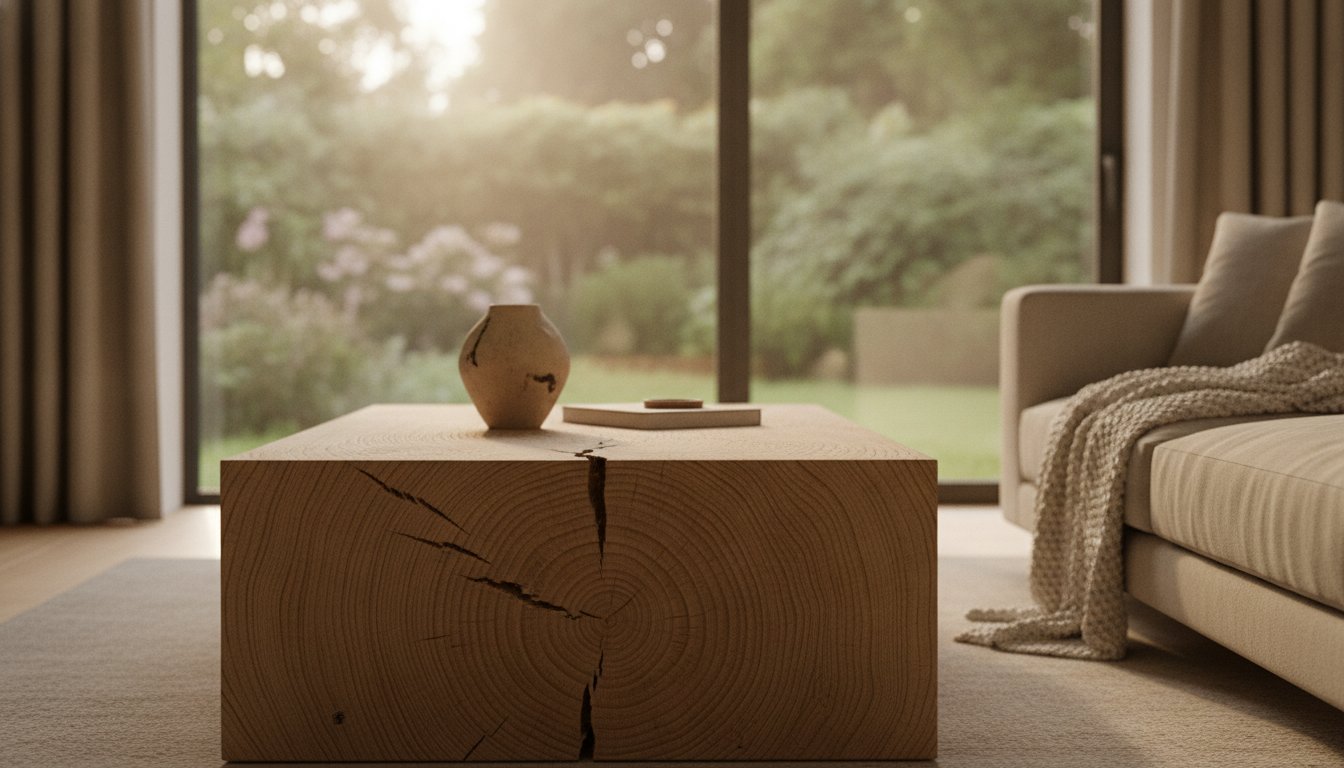
If your new "sustainable" side table travelled five thousand miles across an ocean to reach your hallway, is it truly helping the planet? You likely crave a sanctuary that feels deeply connected to the earth, yet the high street is often saturated with clever marketing that hides a heavy carbon footprint. It is exhausting to seek out high-end design only to find it wrapped in the hollow promises of greenwashing that feels more corporate than conscious.
Finding genuine eco friendly home decor UK homeowners can trust shouldn't feel like a chore. You deserve a space that tells a soulful story through the raw grain of fallen timber and the tactile beauty of artisan craftsmanship. This article provides a clear framework for evaluating ethical materials and supporting the independent makers who work in harmony with our local landscapes. We will walk you through our comprehensive 2026 styling checklist, ensuring every choice you make respects the lifecycle of the natural world whilst elevating your interior aesthetic.
Key Takeaways
- Learn how to distinguish between "fast eco" marketing and genuine eco friendly home decor UK by prioritising local craftsmanship and transparent material origins.
- Discover the essential checklist for sustainable materials, from identifying fallen timber specimens to selecting textiles with verified GOTS certification.
- Explore how to use organic textures and tree ring patterns as a sophisticated, neutral base that connects your interior spaces to the natural world.
- Understand why investing in bespoke, made-to-order furniture and heritage art prints offers a lower carbon footprint than mass-produced alternatives.
- Gain a room-by-room strategy for curating a home that reflects your ethical values without compromising on high-end design or artisan quality.
Evaluating the UK Eco-Decor Landscape: Beyond the Greenwash
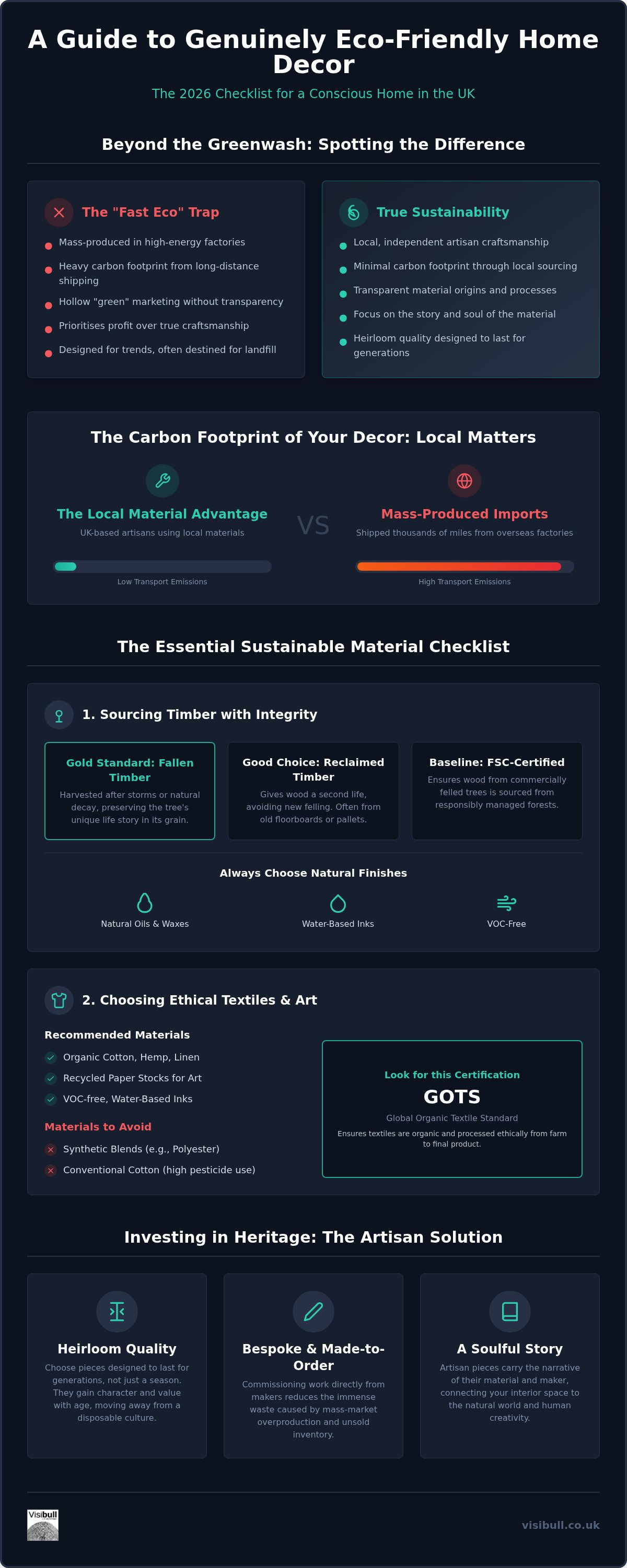
The search for eco friendly home decor UK enthusiasts can trust often leads to a sea of labels that look green but feel hollow. In 2026, the definition of sustainability has shifted from simple recycling to a deeper understanding of materials, miles, and makers. We are seeing a rise in "Fast Eco," where mass-produced lines use sustainable materials like bamboo but process them in high-energy factories thousands of miles away. True integrity lies in the journey of the object, from the forest floor to your living room. Mass-market imitations often lack the soul and texture of authentic artisan pieces, prioritising profit over the slow, methodical pace of true craftsmanship. Identifying these pieces requires looking past the surface to find the story behind the grain.
What Makes Decor Truly Sustainable in 2026?
Authentic sustainability begins with low-impact extraction. Instead of commercial felling, we look to the quiet potential of fallen timber, trees that have reached the end of their standing life naturally. This reverence for the material extends to the finishes. Natural oils and water-based inks replace harsh VOCs, ensuring the air in your home remains as pure as the woods themselves. By choosing heirloom quality over disposable trends, you honour the years it took for that timber to grow. It's about moving away from a disposable mindset and embracing pieces that gain character with age, rather than those destined for a landfill.
The Carbon Footprint of Your Living Room
Shipping distances matter. The "Local Material Advantage" is clear when you compare a handmade wooden table crafted in a UK studio to a bamboo piece shipped from overseas. Sourcing within the UK supports a circular economy where natural elements are reclaimed and repurposed. Independent makers operate with lower industrial overheads, focusing on the "how" and "why" of creation. This local approach ensures that the beauty of your home doesn't come at the cost of the planet's health. When you choose eco friendly home decor UK from independent studios, you are directly investing in the preservation of British timber heritage and the reduction of global transport emissions. It's a choice that supports the artisan whilst protecting the landscape that inspires them.
The Essential Sustainable Material Checklist
Curating eco friendly home decor UK homeowners can be proud of requires a shift from looking at the price tag to examining the pedigree of every object. It's about understanding the raw origins of the pieces we invite into our sanctuaries. While FSC-certified timber provides a solid baseline for commercial sourcing, the gold standard for a truly ethical home lies in materials that hold a history before they ever reached the workshop. This includes seeking out reclaimed stone or metals to avoid the heavy ecological toll of new mining. Every piece should ideally represent a second life rather than a fresh extraction from the earth's limited reserves.
Sourcing Timber with Integrity
There is a profound difference between reclaimed wood and the use of fallen tree specimens. Reclaimed timber often carries the industrial marks of its previous life as a floorboard or a pallet. In contrast, art and furniture created from fallen trees preserve the organic narrative of the forest itself. These specimens aren't felled for profit; they are harvested after a storm or natural decay, allowing the wood to tell a story of growth and seasonal change through its rings. This history adds an irreplaceable narrative value to your space. When selecting these pieces, ensure they are treated with natural oils or waxes. These breathable finishes protect the wood whilst allowing you to feel the true, tactile texture of the grain.
Ethical Textiles and Soft Furnishings
The fabrics we drape over our furniture impact our health as much as the planet's. Prioritising organic cotton, hemp, and linen with GOTS (Global Organic Textile Standard) certification ensures that your home remains free from the pesticides used in conventional farming. These natural fibres are essential for maintaining indoor air quality, as they don't off-gas synthetic chemicals. It's also vital to avoid synthetic blends like polyester, which shed microplastics into our water systems every time they are cleaned. Choosing pieces like tree ring art prints that celebrate natural materials connects your daily rituals to the rhythms of the earth.
For the walls, the same scrutiny applies. Seek out artist prints that utilise recycled paper stocks and VOC-free, water-based inks. These choices ensure that the beauty on your walls doesn't come at the cost of the environment. By following this material checklist, you build a home that is not just a collection of things, but a testament to the enduring beauty of the natural world. Every choice is an opportunity to support independent makers who value the lifecycle of their medium over mass-market perfection.
The Aesthetic of Authenticity: Styling with Tree Rings and Raw Wood
Styling a space with the natural world in mind requires an appreciation for the quiet complexity of organic patterns. These textures serve as a sophisticated, neutral base for eco friendly home decor UK enthusiasts who want to move beyond flat, synthetic surfaces. The intricate lines of a tree's life story offer more visual depth than any mass-produced wallpaper or plastic finish. By pairing the raw, tactile grain of timber with the softness of organic linens, you create a room that feels balanced and grounded. This biophilic approach isn't just about looks; it's about the psychological calm that comes from being surrounded by materials that mirror the outdoors.
The impact of scale shouldn't be underestimated. Choosing large wood wall art UK pieces allows a single, powerful element to define the energy of a room. These substantial works of art draw the eye and anchor the space, reminding us of the immense scale of the forests they represent. Tree ring art prints, in particular, provide a rhythmic, meditative quality that fosters a deep connection to nature, even in the heart of a city build. It's a way to bring the steady, slow pulse of the woods into the fast-paced rhythm of modern life.
The Power of Narrative Decor
Every piece of fallen tree art UK creators produce acts as a silent storyteller. It invites a conversation about forestry and the lifecycle of British timber. In 2026, we have moved away from the need for "perfect" wood; instead, we celebrate the knots, cracks, and erratic rings as symbols of a new luxury. This is decor with a pulse. By curating nature inspired wall art UK, you transform a house into a sanctuary that honours the history of the materials within it.
Minimalist vs. Maximalist Eco-Styling
Eco-styling is versatile enough to suit any design philosophy. For the minimalist, a single bespoke wooden table can speak for the entire space, its form and grain providing all the necessary ornamentation. Those with a maximalist heart might prefer layering different wood species and organic prints to create a rich, woodland feel. Integrating rustic wood wall art UK is an effective way to add warmth and history to modern homes, ensuring your choice of eco friendly home decor UK feels timeless and intentional.
Your Home Eco-Audit: A Room-by-Room Strategy
Performing a room-by-room audit is a methodical way to align your living space with your values. It's about identifying where mass-market items can be retired in favour of eco friendly home decor UK makers produce with integrity. This process isn't about rushing to replace everything at once. It's a slow, deliberate transition toward a home that feels connected to the British landscape. By evaluating each room, you can ensure that every object serves a purpose and carries a story of ethical craftsmanship.
Transitioning the Living Area
The living room is often the heart of the home, but it's also where "fast furniture" tends to accumulate. These pieces, frequently made from composite materials and harsh glues, rarely last a decade. Investing in a bespoke wooden table UK artisans have crafted from solid timber ensures you have a piece that will age gracefully alongside your family. To complement this, look to your walls. Replace generic prints with tree ring art prints UK studios create directly from fallen tree cross-sections. These original pressings capture a specific moment in time, offering a tactile connection to the woods that a digital copy simply cannot replicate. Adding texture with sustainable homewares that use natural dyes further softens the space whilst maintaining your eco-credentials.
Sustainable Outdoor Living
Our connection to nature shouldn't stop at the patio door. Many outdoor decorations rely on plastics or imported metals that feel out of place in a British garden. Choosing natural wood garden sculptures UK makers have designed allows art to sit harmoniously within the landscape. These pieces weather naturally, changing with the seasons and eventually returning to the earth without leaving a trace of pollution. It’s biophilic design in its most honest form, supporting a garden that feels like a cohesive extension of the wild. Using timber that is suited to the UK climate ensures your sculptures remain a long-term part of your outdoor sanctuary.
Your commitment to the environment can also extend into your daily wear. Choosing eco friendly nature inspired clothing UK brands offer is a simple way to carry the ethos of your home with you. These garments, often made from organic fibres, reflect the same reverence for the natural world found in your furniture. Every small shift, from the art on your walls to the clothes on your back, contributes to a more sustainable lifestyle. Ready to begin your transition? Explore our collection of hand-crafted homewares and artist prints to find pieces that resonate with your story.
Investing in Heritage: The Artisan Solution
Choosing eco friendly home decor UK studios offer is an investment in the "Made-to-Order" model, a system that stands in quiet opposition to the waste of mass production. When an object is created only when it's needed, the environmental toll is significantly reduced. There's no warehouse full of unsold stock, no industrial surplus, and no energy wasted on items destined for a bargain bin. This intentionality ensures that every piece of timber or scrap of paper is used with purpose. It's a slower way of working, one that respects the time it took for the material to grow in the first place.
Transparency is the heartbeat of this artisan approach. When you buy from a maker, you often gain the rare privilege of knowing exactly which fallen tree your art or furniture came from. This level of detail is impossible to find in a large-scale marketplace. Handmade pieces carry a much lower "hidden" environmental cost than factory-made eco-goods, as they bypass the heavy industrial processes and global logistics that even "green" corporations rely on. Building a collection of sustainable gifts for nature lovers UK creators have hand-pressed or carved ensures that your generosity supports the planet as much as the recipient.
The Maker-to-Home Connection
Buying direct from a UK studio shortens the supply chain to its absolute minimum. This direct connection isn't just about reducing carbon; it's about the value of bespoke commissions. A table or a sculpture designed for a specific corner of your home is a piece you'll never feel the need to replace. It also helps preserve traditional woodworking and printmaking skills that are at risk of being lost to automation. These crafts are part of our cultural heritage, and keeping them alive is a vital part of a sustainable future. You aren't just buying an object. You're supporting a lineage of makers who understand the weight and warmth of their medium.
Closing the Loop: A Sustainable Future
Artisan decor does more than just fill a room. It supports forest conservation by raising awareness of the beauty found in our local woodlands. There's a profound psychological benefit to living in a home filled with natural heritage. Surrounding yourself with the textures of the forest creates a sanctuary that feels alive and restorative. Every ring in a print and every knot in a table serves as a reminder of our place within the natural world. It's time to move away from the cold and the clinical. Start your sustainable journey today by exploring the Visibull collection, where every piece is a tribute to the enduring spirit of the woods.
Cultivating a Home That Honours the Earth
Your journey toward a more conscious home doesn't require a total overhaul overnight. It begins with a single, intentional choice to favour the local over the mass-produced and the organic over the synthetic. By understanding the pedigree of your materials and the stories of the makers behind them, you move beyond the surface-level aesthetics of greenwashing. You create a sanctuary that breathes with the history of the British landscape, from the tactile grain of a bespoke table to the rhythmic lines of a hand-pressed print.
Embracing eco friendly home decor UK means investing in pieces that celebrate the natural lifecycle of timber. Our independent creative studio is dedicated to this philosophy, offering nature-inspired designs that bring the outdoors in without compromising your ethical standards. Whether you are seeking a focal point for your living room or a meaningful gift, every object should reflect a reverence for the earth.
Discover the Visibull collection of sustainable tree-ring art and bespoke woodcraft, featuring original prints made directly from fallen UK trees. It's time to build a space that feels as authentic and enduring as the woods themselves.
Frequently Asked Questions
What is the most eco-friendly material for home decor in the UK?
Locally sourced fallen timber and reclaimed materials are the most sustainable choices for eco friendly home decor UK residents should consider. These materials bypass the carbon-heavy felling and transportation processes associated with new imports. By choosing wood that has naturally fallen or reached the end of its previous life, you ensure no fresh trees are cut down for your interior aesthetic. This approach honours the natural lifecycle of the forest whilst providing a tactile, organic warmth to your home.
Is reclaimed wood better than new FSC-certified wood for the environment?
Reclaimed wood and fallen timber are often superior to new FSC-certified wood because they don't require the energy-intensive felling of living trees. Whilst FSC certification ensures responsible management, utilising wood that has already completed its lifecycle naturally or served a previous purpose is the ultimate circular choice. These materials carry a unique history and narrative grain that new timber cannot replicate. Choosing fallen specimens specifically allows the wood to tell its final story as a functional piece of art.
How can I tell if a brand is greenwashing its home decor products?
Identifying greenwashing requires a close look at a brand's transparency regarding their supply chain and specific material origins. Genuinely sustainable brands will provide details about where their timber was sourced or which certifications their textiles hold, such as GOTS. Be wary of vague marketing terms like "earth-friendly" or "natural" if they aren't backed by verifiable data. Authentic artisans often share the journey of a material from the forest floor to the finished object, proving their commitment to ethical practices.
Where can I find UK-based independent artists for sustainable wall art?
UK-based independent artists who specialise in sustainable wall art can often be found through dedicated artisan studios rather than large marketplaces. Studios like Visibull Art and Design create original artist prints directly from the cross-sections of fallen trees, ensuring every piece is unique and ethically sourced. Supporting these independent makers ensures your eco friendly home decor UK investment directly benefits the local creative economy. It also guarantees a level of transparency and craftsmanship that mass-market retailers simply cannot provide.
Does eco-friendly decor cost more than standard high-street furniture?
Eco-friendly decor may have a higher initial price point than mass-produced high-street furniture, but it represents a better long-term investment. You are paying for heirloom quality, artisan skill, and materials that are built to last for generations rather than years. When you consider the "cost per use" and the environmental impact of replacing "fast furniture" every few seasons, the handmade route is far more economical. It's a shift from disposable consumption toward a heritage-focused lifestyle that values quality over quantity.
Can natural wood art prints be used in humid rooms like bathrooms?
Natural wood art prints can be displayed in humid environments like bathrooms, provided they are correctly protected by a high-quality frame and the room has adequate ventilation. It's important to ensure the print is not in direct contact with water. Using natural, breathable finishes on the timber elements of your decor allows the wood to adjust to atmospheric changes. However, for longevity, we recommend placing these delicate organic works away from the direct path of steam or constant moisture.
What are the benefits of buying handmade wooden furniture over mass-produced items?
Handmade wooden furniture offers a soulful connection to the material that mass-produced items lack. Every bespoke table or sculpture features unique grain patterns and knots that tell the story of a specific tree's growth. Beyond the aesthetic, the "made-to-order" model significantly reduces waste and the carbon footprint associated with large-scale manufacturing. You are investing in a piece that has been crafted with patience and reverence, resulting in a durable object that carries genuine narrative value and supports local skills.
How do I maintain sustainable wood decor to ensure it lasts for decades?
Maintaining sustainable wood decor is a simple process of nourishment using natural oils or waxes rather than synthetic polishes. These traditional finishes allow the timber to breathe and age gracefully, deepening the character of the grain over time. Avoid using harsh chemical cleaners that can strip the wood's natural protection or release VOCs into your home. A gentle dust and an occasional re-oiling will ensure your handmade furniture and sculptures remain beautiful and resilient for decades to come.