
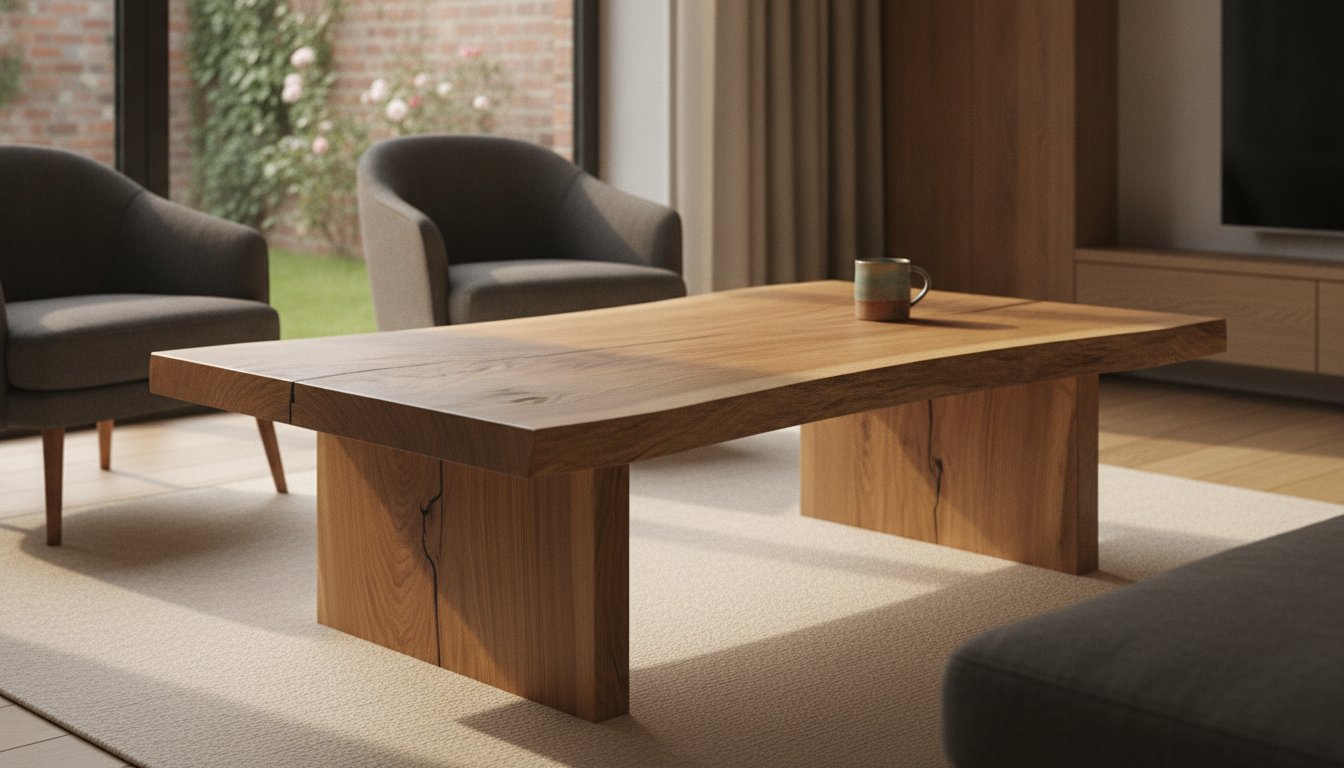
What if the most used piece of furniture in your home was actually a living record of British woodland history? Most of us have grown weary of the flimsy, flat-pack alternatives that lack soul and struggle to survive the rigours of daily life. You likely want a piece that doesn't just fit an awkward alcove but commands the room with its weight and texture. Choosing a custom wood coffee table in the UK allows you to step away from the anonymous assembly line and move toward a piece that reflects the honest, rugged beauty of natural timber.
In this guide, you'll discover how to commission a bespoke centrepiece that balances sustainable sourcing with uncompromising craftsmanship. It's about more than just dimensions; it's about finding a durable, beautiful focal point that supports independent artists and respects the environment. We'll walk through the process of selecting the right grain, understanding the lifecycle of the wood, and collaborating with a maker to create a true heirloom. From the first sketch to the final finish, you'll learn how to bring the quiet strength of the forest into your living space.
Key Takeaways
- Learn how to move away from "fast furniture" by creating a heritage piece that perfectly fits the unique layout of your home.
- Understand the sensory differences between classic British Oak and elegant Ash to find the grain that best reflects your aesthetic.
- Discover how to commission a custom wood coffee table UK by balancing raw live edges with the specific proportions of your living room.
- Uncover the patient, artisanal process of seasoning timber from fallen trees to ensure your furniture stands the test of time.
- Master the steps of a bespoke commission, from sharing your initial vision to hand-selecting the specific slab of wood for your table.
The Value of a Bespoke Wood Coffee Table in the UK
The UK furniture market is saturated with "fast furniture" that often feels hollow and disposable. These pieces lack the weight and history required to ground a home. When you invest in a custom wood coffee table UK, you aren't just buying a surface for your tea; you're commissioning a piece of woodland history. Looking into the history of the coffee table, it's clear these objects have always been social hubs, yet modern mass production has stripped them of their character. A bespoke piece serves as a natural anchor, drawing the eye with the same hypnotic patterns found in my tree-ring prints. It's a bridge between the wild outdoors and your personal sanctuary.
UK homes, especially older cottages or Victorian terraces, often have idiosyncratic layouts. Standard furniture sizes can feel clumsy in these spaces. Bespoke craftsmanship allows for precise dimensions that respect the flow of your room, ensuring the table complements your sofa without crowding the hearth.
- Proportional balance with your existing seating.
- Specific heights to match your favourite armchair.
- Widths that accommodate narrow UK hallways or alcoves.
Supporting a local maker means your investment stays within the community. It fosters a revival of traditional skills that mass-market retailers simply cannot replicate. It's a soulful choice that prioritises the maker's hand over the machine's efficiency.
This ethos of supporting local, specialist businesses often extends to other aspects of a well-curated home; for example, you can discover Mosse and Mosse for a selection of independent wines that mirror this commitment to provenance and quality.
Why Handmade Trumps Mass-Produced
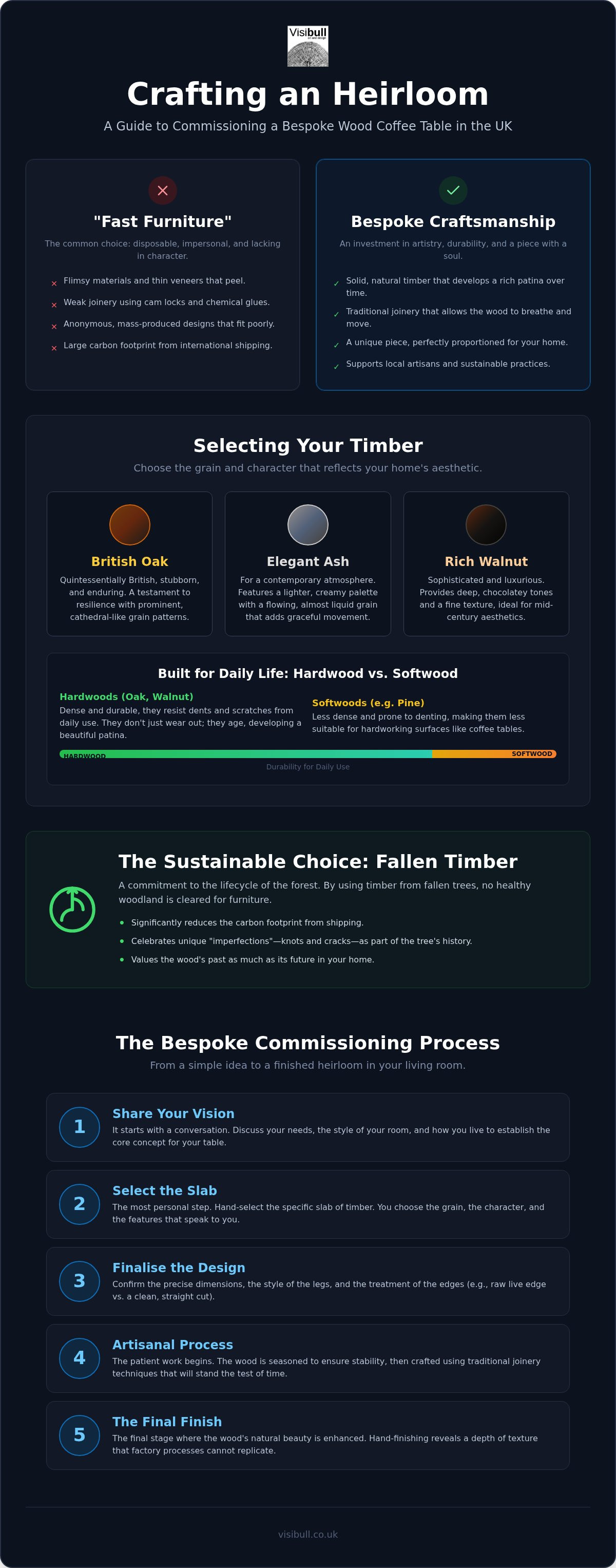
Mass-produced tables rely on cam locks and chemical glues that inevitably fail. In contrast, handmade tables use traditional joinery techniques that allow the wood to breathe and move with the seasons. Every slab of timber has a unique "thumbprint" in its grain. While flat-pack alternatives use thin veneers that peel, solid timber can be refurbished and sanded back for decades. It's a heritage piece designed to witness a lifetime of conversations. The tactile experience of running your hand over a hand-finished surface reveals a depth of texture that factory spray-guns simply mask.
The Sustainable Choice: Fallen Timber
Sustainability shouldn't be a corporate buzzword; it's a commitment to the lifecycle of the forest. By focusing on timber from fallen trees, we ensure that no healthy woodland is cleared for the sake of a furniture showroom. Choosing a custom wood coffee table UK made from local timber significantly reduces the carbon footprint associated with international shipping. We celebrate the "imperfections" that others might discard. Knots, natural cracks, and irregular edges aren't flaws. They're the scars and stories of a tree's life, preserved in a tactile form that invites you to reach out and touch the history beneath the finish. This approach values the wood's past as much as its future in your home.
Selecting Your Timber: Understanding Grain and Character
Selecting the specific timber for your project is an intimate process. It's about choosing the character that will live at the heart of your home for decades. Oak remains the quintessential British choice for a custom wood coffee table UK. It's a stubborn, enduring wood. Its prominent, cathedral-like grain patterns are a tactile testament to centuries of resilience in our temperate climate. For those who prefer a more ethereal, contemporary atmosphere, Ash offers a lighter, almost creamy palette. Its grain is often described as flowing or liquid, bringing a sense of graceful movement to a static room. If your space leans toward a sophisticated or mid-century aesthetic, Walnut provides deep, chocolatey tones and a fine texture that feels luxurious yet remains deeply grounded in nature.
Hardwood vs. Softwood for Daily Use
In a busy household, a coffee table is rarely just an ornament. It's a landing site for heavy art books, morning mugs, and perhaps the occasional pair of tired feet at the end of a long day. This is why hardwoods are essential for such a hardworking piece of furniture. Unlike softwoods, which can dent under the slightest pressure, hardwoods like Oak and Walnut possess the cellular density required for true longevity. Understanding timber properties is vital when commissioning bespoke work. It's about how the wood reacts to the shifting humidity of a UK winter or the accidental spill of a glass of water. Over time, these timbers don't just wear out; they age. They develop a rich patina, a soft, storied sheen that only comes from years of human touch and daily use.
The Artistic Appeal of Tree Rings
The grain within a slab of wood isn't just a random pattern. It's a biological diary of the tree's life. Every line represents a season of growth, a period of harsh drought, or a year of abundant rain. When we look at the surface of a custom wood coffee table UK, we're reading the forest's history. These concentric circles serve as a natural focal point, especially in minimalist interiors where the organic, chaotic lines contrast beautifully with clean, modern architectural edges. This deep connection between the material and the story is exactly what I explore through my tree ring art prints UK. Each piece of furniture becomes a functional canvas, celebrating the same intricate details found in a hand-pressed print. If you're curious about how these patterns translate from the forest floor to your living room, you can view my current timber selections to see the raw beauty of the grain for yourself.
Design Framework: Dimensions, Edges, and Styles
Designing a custom wood coffee table UK is where the raw history of the timber meets the specific needs of your home. It's a collaborative dance between the natural curves of the wood and the architectural constraints of your living room. Whilst the timber selection dictates the soul of the piece, the framework defines how it lives with you every day. Every millimetre is intentional, from the way the light hits a chamfered edge to the clearance required for a comfortable thoroughfare.
The Live Edge Aesthetic
A live edge preserves the original silhouette of the tree; it's the bark-side boundary where the wood grew. In many modern UK homes, where rooms can feel boxy or clinical, these organic lines provide a necessary softness. It's a reminder of the forest's chaotic grace. Choosing a live edge isn't just a trend; it's an artistic decision to let the tree dictate the final shape of your furniture. If your space requires more discipline, a straight edge offers a clean, contemporary feel that highlights the grain without the rustic profile.
Sizing Your Table for UK Living Spaces
Space is often at a premium in British homes. When commissioning a custom wood coffee table UK, you have the freedom to ignore standard retail sizes and follow the two-thirds rule. Your coffee table should be roughly two-thirds the length of your sofa. This creates a visual balance that prevents the piece from looking dwarfed or overbearing. It's about finding that sweet spot where the table is accessible but doesn't obstruct the room's natural flow.
Consider these functional benchmarks for your design:
- Clearance: Leave at least 35cm to 45cm between the table and the sofa for comfortable movement.
- Height: Most tables sit at 40cm to 45cm, matching the seat height of your sofa for a seamless profile.
- Utility: If you often find yourself working from the sofa, a custom height of 50cm might better suit your posture.
Designing with these proportions ensures the piece respects the flow of the room. This focus on domestic utility and longevity aligns with the broader UK's timber strategy, which encourages the use of local timber for sustainable, long-lasting objects. By creating a table that fits perfectly, you ensure it remains a permanent fixture rather than a temporary solution.
Finally, the leg style provides the finishing touch. Industrial steel frames offer a striking contrast to the warm timber, perfect for loft-style apartments. Traditional wooden legs, perhaps turned or tapered, maintain a quiet, unified aesthetic that lets the tabletop remain the undisputed hero of the room. Every choice, from the edge to the frame, contributes to a piece that tells your story as much as the tree's.
The Artisanal Process: From Forest Floor to Finished Piece
The journey begins in the quiet of the woodland. Unlike industrial logging that clears swathes of healthy forest, my process focuses on the overlooked and the reclaimed. I seek out fallen trees that have reached the end of their standing life but still possess a wealth of character within their grain. This ethical sourcing ensures that every custom wood coffee table UK I create carries a story of renewal rather than destruction. It's a methodical search for timber that exhibits unique burls, spalting, or irregular growth patterns that a factory would consider a defect. These features are the signatures of the tree's history, and they deserve to be celebrated.
Once a suitable trunk is identified, the patient work of seasoning begins. Wood is a living, breathing material that holds moisture deep within its fibres. Rushing the drying process leads to warping and structural failure. I allow the timber to air-dry slowly, often for years, followed by time in a kiln to reach the precise moisture levels required for indoor furniture. This deliberate pace mirrors the slow growth of the tree itself. It ensures that the table you bring into your home remains stable and true through the changing British seasons, resisting the cracks that plague mass-produced alternatives.
The Maker’s Touch
In my workshop, the "Humble Artisan" approach dictates every movement. Whilst modern precision tools help with the initial heavy lifting, the soul of the piece is found in the hand-finishing. I spend hours hand-sanding each surface, moving through progressively finer grits until the timber feels soft and inviting. This tactile quality is something a machine cannot replicate. It creates an intimate connection between you and the material. At Visibull Art and Design, I organise the commission journey as a shared exploration. We start with your vision, discuss the specific slab of timber, and I keep you updated as the raw wood transforms into your finished centrepiece.
Eco-Friendly Finishing Techniques
I believe that a custom wood coffee table UK should be as kind to your home's air quality as it is to the eyes. I avoid harsh chemical lacquers and plastic-heavy polyurethanes. Instead, I use a blend of natural oils and waxes that penetrate deep into the grain. These eco-friendly finishes allow the wood to "breathe" and respond naturally to humidity. They enhance the organic colour of the timber without creating a cold, artificial barrier. It's a finish that invites you to reach out and touch the history beneath your fingertips.
This focus on natural, subtle enhancement isn't limited to furniture; for those who appreciate a similar philosophy in personal aesthetics, you can read more about BROWS VIE and their specialist approach to microblading, which mirrors this dedication to handcrafted detail.
Maintaining this finish at home is straightforward. A simple application of high-quality furniture wax once or twice a year will keep the wood protected and hydrated. Over time, the finish will deepen, reflecting the life of your household and the stories told around the table. If you're ready to start your own story with a bespoke piece, you can enquire about a commission today to begin selecting your timber.
Commissioning Your Custom Wood Coffee Table
Stepping away from the "add to cart" culture of modern retail is a shift in mindset. When you decide to commission a custom wood coffee table UK, you're moving from being a consumer to becoming a collaborator. This journey begins with an honest conversation about your home and how you intend to use the piece. It isn't just about providing a set of numbers; it's about sharing your vision for the atmosphere you want to create. Whether you need a rugged surface for a busy family hub or a delicate, sculptural piece for a quiet reading nook, the process is rooted in understanding your specific needs.
The consultation phase is the most evocative part of the journey. This is where we move beyond abstract ideas and look at the physical material. I often share photographs or invite clients to view specific slabs of timber that have been seasoned in the workshop. You might find yourself drawn to a particular swirl of grain or a unique knot that tells a story of a specific storm the tree weathered decades ago. Selecting the exact piece of wood ensures that the final result is a true reflection of your taste. It's a deeply personal way to bring a slice of the British woodland into your daily life.
Because every piece is truly handmade, patience is a vital part of the artisanal process. A bespoke table cannot be rushed through a factory line. From the final selection of the timber to the meticulous hand-sanding and the slow curing of natural oils, the timeline reflects the care required to create a heritage object. Whilst lead times can vary depending on the complexity of the design, this period of waiting adds to the story of the piece. When the table finally arrives, it isn't just a new delivery; it's a new arrival that has been crafted specifically for your home.
What to Prepare for Your Consultation
To make the most of our initial conversation, it helps to have a few details ready. Start by measuring your living space carefully, noting the length of your sofa and the clearance needed for comfortable movement. Taking photographs of the room at different times of day helps me understand the light and the existing colours of your interior. Think about your favourite timber species and leg styles, but remain open to suggestions based on the character of the wood we find. Finally, consider your budget for what is essentially a functional piece of art designed to last a lifetime.
The Visibull Experience
My background in creating original nature prints UK deeply informs how I approach furniture design. I look at a slab of wood with the same reverence I have for a printing block, seeking out the hidden rhythms and histories within the rings. Owning a Visibull table means owning a tangible connection to the forest floor. It's a soulful, sustainable choice that celebrates the raw beauty of our natural heritage. If you're ready to begin this collaborative journey, you can enquire about a bespoke table commission and we can start exploring the possibilities together.
Bringing the Forest into Your Home
Choosing a custom wood coffee table UK is an act of preservation; it's a decision to value the slow, honest growth of a tree over the hollow efficiency of modern manufacturing. We've explored how selecting your favourite timber allows you to anchor your living space with a piece of British woodland history. By understanding the artisanal journey from the forest floor to the final hand-sanded finish, you can ensure your furniture isn't just a functional object but a storied heirloom that respects the natural world.
At Visibull Art and Design, every project is an artist-led design process rooted in integrity. We work exclusively with sustainably sourced fallen timber, hand-crafting each piece in our UK studio to ensure it meets the unique proportions of your home. This collaborative approach turns a simple furniture purchase into a meaningful connection with craftsmanship and the environment. If you're ready to move away from the temporary and toward the timeless, it's time to start the conversation.
Commission your bespoke handmade table today and let us help you find the perfect slab of history for your sanctuary. Your home deserves a centrepiece that tells a story as deep as the rings within the wood.
Frequently Asked Questions
How long does it take to make a custom wood coffee table?
A bespoke piece usually takes between 8 to 12 weeks to complete. This timeline allows for the careful selection of timber and the methodical application of hand-finished oils. Because we don't rush the seasoning or crafting stages, every custom wood coffee table UK receives the patience it deserves. This ensures the wood is stable and the finish is durable enough to last for generations in your home.
What is the best wood for a coffee table in the UK?
Oak and Ash are often considered the best choices for British homes due to their density and resilience. Oak provides a traditional, heavy feel with a prominent grain; Ash offers a lighter, more contemporary silhouette. Both are hardwoods that resist the daily wear of a busy household. We focus on these species because they develop a beautiful patina over time, telling the story of the wood's second life.
Is a live edge coffee table hard to maintain?
Maintaining a live edge table is straightforward and requires very little effort. Because we use natural oils and waxes, you only need to dust the surface with a soft, dry cloth. Every six to twelve months, applying a fresh coat of high-quality furniture wax will keep the timber hydrated and protected. The irregular edge doesn't require special tools; it simply needs to be kept free from standing water.
Can I choose the specific piece of wood for my table?
Yes, selecting the specific slab of timber is a fundamental part of our collaborative commission process. During your consultation, we'll look at the unique grain patterns and character marks of available wood. This ensures you're happy with the "thumbprint" of the timber before any work begins. It's an intimate way to ensure your furniture reflects your personal aesthetic and the history of the forest.
Do you deliver custom furniture across the UK?
We provide secure delivery for our handmade furniture to addresses across the UK. Each piece is carefully wrapped to protect the hand-finished surfaces during transit. Because these tables are solid timber and often quite heavy, we coordinate delivery times that suit your schedule. This ensures your new centrepiece arrives safely and is placed exactly where you want it to sit within your living room.
How do I clean and care for a handmade wooden table?
Cleaning your table involves little more than a gentle touch and a soft cloth. Avoid using commercial spray polishes or harsh chemicals, as these can strip away the natural oils and leave a sticky residue. For daily care, a slightly damp cloth followed by a dry one is sufficient. Keeping the table away from direct heat sources, like radiators, will also help the wood maintain its natural moisture levels.
What happens if the wood cracks or moves over time?
Wood is a living material that naturally responds to changes in humidity and temperature. Whilst our patient seasoning process minimizes movement, very small seasonal shifts are normal and add to the character of a handmade piece. If a significant crack were to appear, it can often be stabilised with traditional techniques like butterfly joints. These repairs don't hide the wood's journey; they become a beautiful part of its story.
Are bespoke wooden tables more expensive than high-street options?
Bespoke tables represent a higher initial investment than mass-produced high-street furniture. This cost reflects the use of premium, sustainably sourced hardwoods and the many hours of artisanal labour involved in hand-finishing. When you choose a custom wood coffee table UK, you aren't buying a disposable item. You're investing in a durable, one-off art piece that won't need replacing in a few years, offering better long-term value.